What makes a valuation credible, decision-useful and appropriate for its intended reader
| Quick answer: Banks and investors do not assess a business valuation in exactly the same way. A bank considers the report within a wider credit assessment focused on repayment capacity, downside protection and, where relevant, recoverable security. An investor focuses more heavily on sustainable earnings, growth, risk, control and potential exit value. Neither group relies on a valuation method in isolation; both test the evidence, assumptions, independence and intended use of the report. |
|---|
A valuation can influence a financing, investment, acquisition, shareholder transaction or internal strategic decision. Yet the headline value is only the end of the analysis. The more important questions are what is being valued, for what purpose, on which valuation date, under which basis of value and with what evidence.
These questions matter in the UAE because businesses range from founder-led SMEs to multi-entity groups operating across free zones, mainland jurisdictions and the wider GCC. Data quality, ownership rights, related-party arrangements, customer concentration and cross-border operations can materially affect the conclusion.
This guide explains how business valuation services UAE work, how banks and investors read reports, which methods are commonly applied and what to check before appointing a valuation adviser.
Business valuation in the UAE: how banks and investors assess valuation reports.
What are business valuation services UAE?
Business valuation services estimate the value of a company, business unit, asset or ownership interest as at a defined date. The work combines financial analysis, valuation methodology, market evidence and professional judgement. The scope should be proportionate to the decision and the level of third-party reliance expected.
Common purposes include:
- Mergers, acquisitions and business sales.
- Debt financing and lender discussions.
- Equity fundraising and shareholder negotiations.
- Share transfers, buyouts and succession planning.
- Restructuring and strategic decision-making.
- Financial reporting, dispute or regulatory purposes where the applicable requirements are confirmed in advance.
| Important distinction: An internal estimate, an indicative transaction range and an independent valuation report are not interchangeable. The intended user may require a particular scope, standard, qualification, report format or reliance wording. Confirm those requirements before the work begins. |
|---|
Start with purpose, basis of value and valuation date
A defensible valuation starts by defining the assignment rather than selecting a multiple. The engagement should identify the subject interest, ownership rights, valuation date, purpose, intended users, basis of value, information relied upon, assumptions, limitations and reporting standard.
- Subject interest: Is the assignment for 100% of the company, a controlling stake, a minority interest or a specific business unit?
- Purpose: Is the report supporting negotiation, financing, financial reporting, restructuring, a shareholder matter or internal planning?
- Basis of value: Market value, investment value, fair value or another defined basis can produce different conclusions because each answers a different question.
- Valuation date: Value reflects information and market conditions at a point in time; later events may require separate consideration.
- Level of reliance: A report used by management internally may have a different scope from one intended for a named bank, investor, court or regulator.
International Valuation Standards provide a principles-based framework covering scope, bases of value, approaches, data and inputs, models, documentation and reporting. Where IVS or another framework is relevant, the engagement and report should state the basis clearly rather than imply compliance without meeting the applicable requirements.
How do UAE banks assess a business valuation report?
A bank normally reviews a business valuation as one input to a broader credit decision. The lender may consider historical and forecast cash flow, debt-service capacity, facility structure, guarantees, security, industry risk, management quality and the reliability of financial information. A valuation does not replace the bank’s own underwriting or guarantee approval.
- Repayment capacity. The bank tests whether operating cash flow can support interest, principal and covenant requirements under the proposed facility.
- Historical evidence. Audited statements, management accounts, cash conversion, working capital and existing obligations help establish whether forecasts are grounded in performance.
- Downside resilience. Growth, margin, collection, cost and funding assumptions may be stressed to understand how quickly coverage or liquidity deteriorates.
- Security and recoverability. Where collateral is relevant, the bank considers legal enforceability, liquidity, valuation uncertainty and potential recovery costs. Enterprise value should not be treated as automatically realisable collateral.
- Valuer suitability and report scope. The lender may specify eligibility, independence, methodology, reliance wording, valuation date or approved-provider requirements.
| No universal bank method: There is no single valuation method that every UAE bank accepts for every business. Method selection depends on the company, purpose, available evidence and the lender’s requirements. Obtain the bank’s instructions before commissioning the report. |
|---|
How do investors assess a valuation report?
Investors generally focus on the return that the business may generate relative to the risks and rights they will assume. They still examine historical evidence, but they may place greater weight on sustainable growth, future cash flow and exit scenarios than a lender does.
- Quality of earnings: Are earnings recurring, cash-generative and adjusted consistently for owner, related-party and one-off items?
- Growth evidence: Do contracts, pipeline conversion, capacity, market conditions and customer economics support the forecast?
- Scalability and reinvestment: How much working capital, capital expenditure and management capacity are needed to deliver growth?
- Concentration and key-person risk: How dependent is the business on particular customers, suppliers, founders, licences or employees?
- Transaction rights: Control, dilution, liquidation preferences, earn-outs, warranties and governance can change the economics of the investment.
- Exit value and timing: What future earnings, multiple and holding period are required to achieve the target return?
An investor may therefore agree with the analytical enterprise value but negotiate a different equity price after considering debt, cash, working capital, future funding and the rights attached to the investment.
Banks and investors: the practical difference
| Bank perspective | Investor perspective |
|---|---|
| Can the borrower service and repay the facility? | Can the investment produce an acceptable risk-adjusted return? |
| Focuses on cash-flow coverage, downside resilience and facility protections. | Focuses on sustainable earnings, growth, strategic value and exit potential. |
| May consider recoverable security where relevant. | Considers ownership rights, dilution, governance and deal structure. |
| Usually applies conservative lender cases and covenant tests. | Usually tests base, upside, downside and exit scenarios. |
| Uses the valuation within a broader credit decision. | Informs price and transaction terms. |
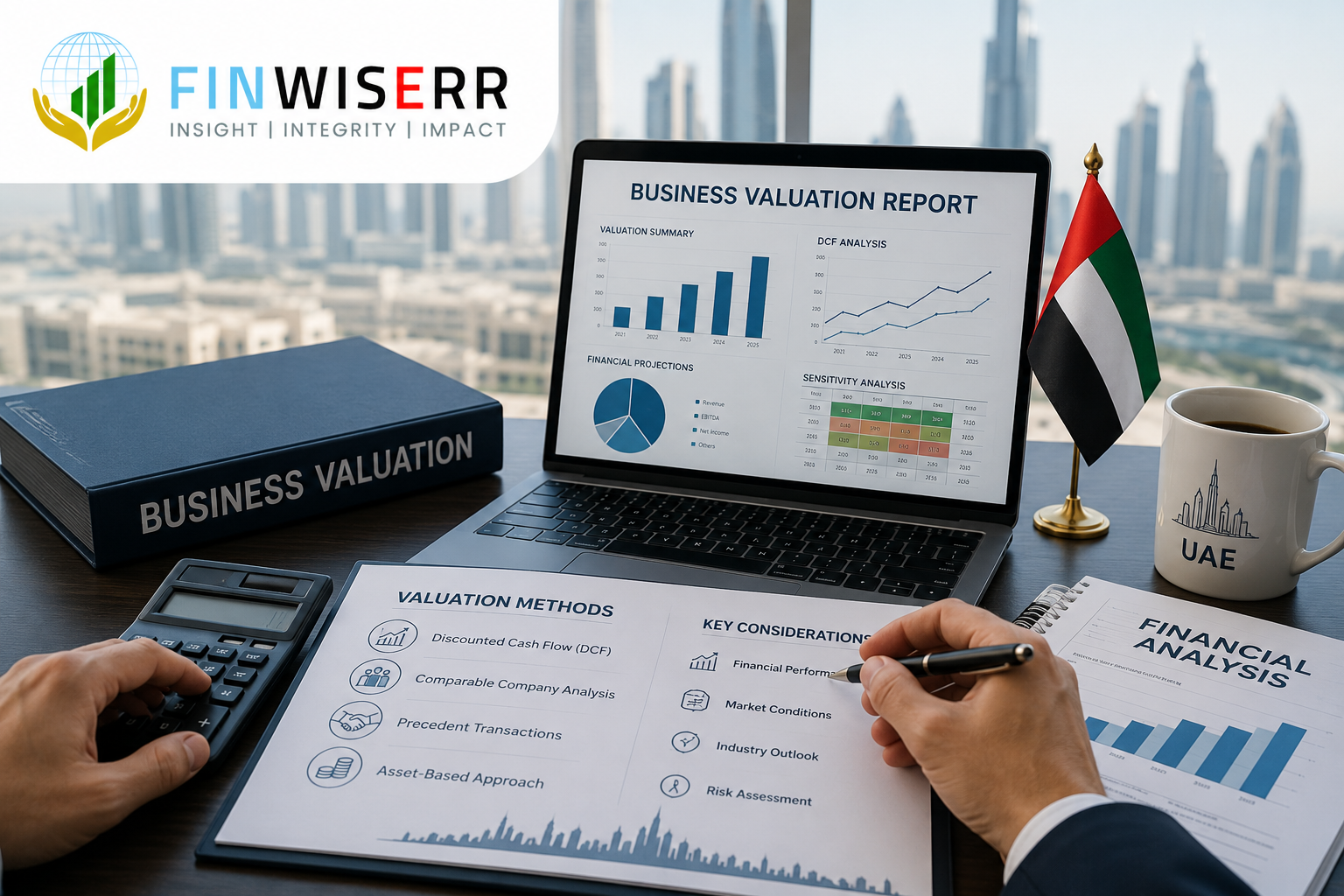
A credible valuation connects business evidence, methodology and decision context.
Which valuation methods are commonly used?
Three broad approaches are commonly considered. The appropriate method depends on the nature of the business, the quality of information and the purpose of the valuation.
- Income approach. Discounted cash flow estimates value from forecast cash flows and a risk-adjusted discount rate. It can reflect company-specific economics but is sensitive to forecast, terminal-value and discount-rate assumptions.
- Market approach. Comparable-company and precedent-transaction methods apply market evidence to relevant financial measures. The analysis must explain why the comparables, period and adjustments are appropriate.
- Asset approach. Adjusted net asset value considers the value of assets less liabilities. It can be relevant for asset-intensive, holding or early-stage businesses, but may understate valuable operations or intangible assets if applied mechanically.
A credible report may use more than one method and reconcile the results. Using several methods does not automatically improve quality; each method must be relevant, evidence-based and free from double counting.
What should a credible valuation report include?
- Purpose, intended users, subject interest, valuation date and basis of value.
- Scope of work, standards applied, assumptions, limitations and restrictions on reliance.
- Business, ownership, sector and economic context.
- Historical financial analysis and clearly supported normalisation adjustments.
- Forecasts linked to operational drivers and management evidence.
- Valuation approaches, selected methods and reasons for their use.
- Comparable-company or transaction selection and adjustments, where applicable.
- Discount rate, terminal value and other material inputs, where applicable.
- Sensitivity analysis and explanation of key valuation risks.
- Reconciliation of methods and a clearly stated conclusion.
- Valuer identity, relevant credentials, independence and conflicts disclosure.
| Red flag: Be cautious when a provider offers a firm valuation before receiving meaningful financial and operational information, or applies an industry multiple without explaining the comparable evidence, normalisation adjustments, debt, cash and working-capital position. |
|---|
How is a business valuation prepared?
- Define the assignment. Agree purpose, subject interest, intended users, basis of value, valuation date, standards and deliverables.
- Collect and validate information. Review financial statements, management accounts, forecasts, contracts, ownership records and operating data.
- Analyse performance and earnings quality. Assess trends, margins, cash conversion, concentration, related parties and non-recurring items.
- Develop and challenge forecasts. Connect projections to operational drivers, capacity, evidence and funding requirements.
- Apply relevant methods. Use the income, market and asset approaches as appropriate and document the material inputs.
- Test sensitivities and reconcile. Explain how key assumptions affect value and how the selected methods support the conclusion.
- Report for the intended reader. Present the analysis, conclusion, assumptions, limitations and reliance terms at the agreed level of detail.
How to choose a business valuation firm in the UAE
- Purpose-specific experience: Look for assignments serving a similar decision and intended reader, not only a similar industry.
- Relevant credentials: Confirm whether the bank, regulator, court, auditor or other user requires a particular qualification or approved-provider status.
- UAE and GCC market understanding: Regional context can improve the assessment of comparables, risk, ownership structures and market evidence.
- Independence and conflicts: Understand prior relationships, contingent fees and any involvement in the underlying transaction.
- Transparent methodology: The adviser should be able to explain inputs, assumptions, limitations and sensitivity to change.
- Clear engagement terms: The proposal should define scope, timetable, management responsibilities, reliance, revisions and fees.
How Finwiserr can support valuation decisions
Finwiserr supports business owners, management teams and investors with valuation analysis, financial modelling and transaction decision support. Depending on the agreed scope, the work may include:
- Business and equity valuation for strategic, transaction and fundraising discussions.
- Discounted cash-flow, market-multiple and adjusted-net-asset-value analysis.
- Earnings normalisation and historical-to-forecast analysis.
- Scenario and sensitivity modelling.
- Transaction-price, capital-structure and shareholder-impact analysis.
- Preparation of decision materials for management and stakeholder discussions.
For bank, financial-reporting, regulatory, court or other formal reliance, the required scope, standards, credentials and acceptance criteria should be confirmed with the relevant user before engagement.
Frequently asked questions
Which business valuation method is accepted by UAE banks?
There is no universal method. A bank may consider income, market and asset evidence within its wider credit assessment and may specify its own scope or provider requirements.
Is a business valuation the same as the price of a company?
No. Valuation is an analytical conclusion under defined assumptions. Transaction price can also reflect negotiation, synergies, control, financing, warranties, earn-outs and market conditions.
Do I need a different valuation for a bank and an investor?
Possibly. The underlying information may overlap, but purpose, intended users, assumptions, reliance wording and reporting depth can differ. Confirm the requirement before commissioning the report.
How long does a business valuation take?
Timing depends on complexity, data readiness, scope and review requirements. Clean financial information and a clearly defined assignment usually reduce delays.
Does Finwiserr provide business valuation services in the UAE?
Finwiserr provides valuation analysis, financial modelling and transaction decision support for UAE businesses, subject to the agreed purpose, reliance requirements and engagement scope.
Make the valuation fit the decision
A useful valuation is not simply a persuasive number. It is a transparent explanation of value that matches the asset, purpose, date and intended reader. The strongest reports make uncertainty visible, support material assumptions and allow banks, investors and management to understand what could change the conclusion.
Planning a financing, investment, acquisition or shareholder transaction?