$249.00
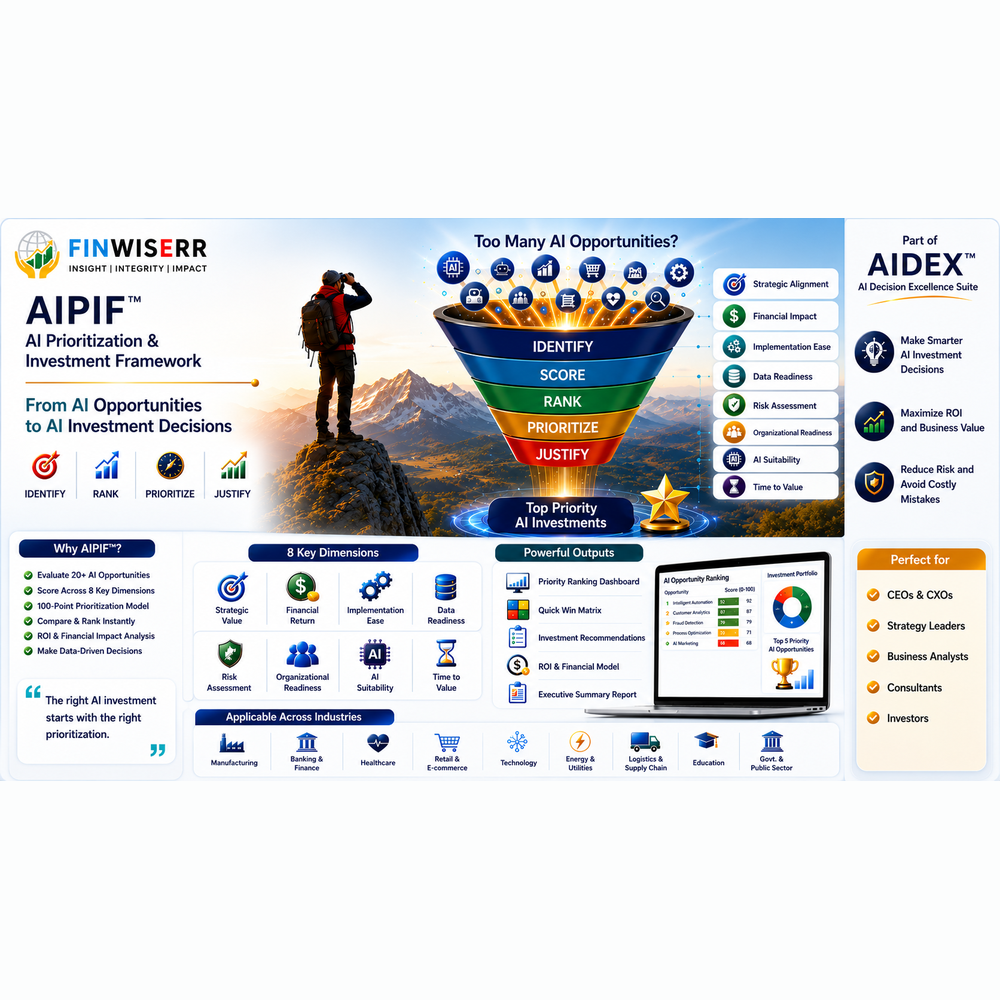
AIPIF™ — the AI Prioritization Framework — is a structured decision system that scores and ranks your AI use cases across six weighted dimensions, turning a shortlist of competing opportunities into a clear, evidence-based investment ranking. A consultant-grade tool, built in Excel.
Once an organisation decides it’s ready for AI, a harder question follows: of all the things you could do with AI, which should you fund first? Most teams answer it with gut feel — the loudest stakeholder, the shiniest use case, the trend of the moment. The result is scattered investment, misaligned leadership, and money spent on opportunities that were never the priority. This AI prioritization framework replaces that guesswork with a scored, defensible ranking.
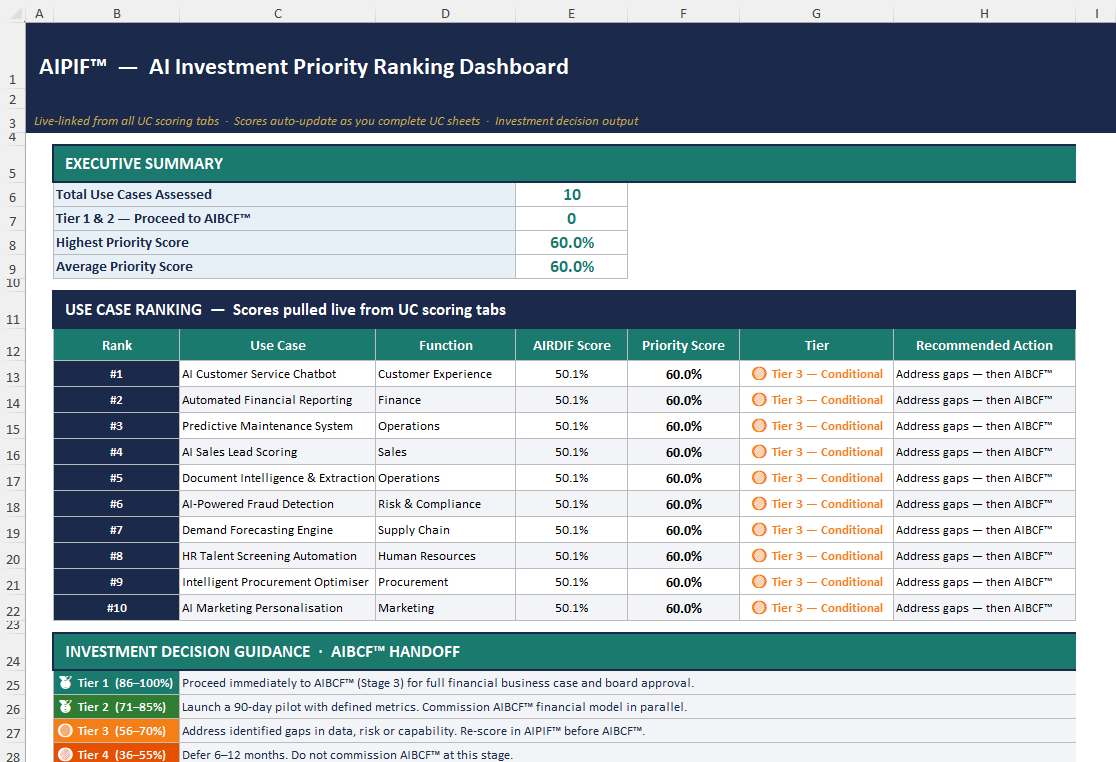
AIPIF™ is the second framework in the AIDEX™ AI Decision Excellence Suite. It takes the readiness scores produced by AIRDIF™ and uses them to assess up to ten AI use cases, each scored across six strategic dimensions through 48 evidence-based questions. The output is a ranked shortlist with clear investment tiers — telling you exactly which use cases to advance, which to pilot, and which to shelve.
Built for CEOs, strategy teams, consultants and CFOs, it turns the messy business of choosing between AI opportunities into a transparent, executive-ready decision — in under an hour.
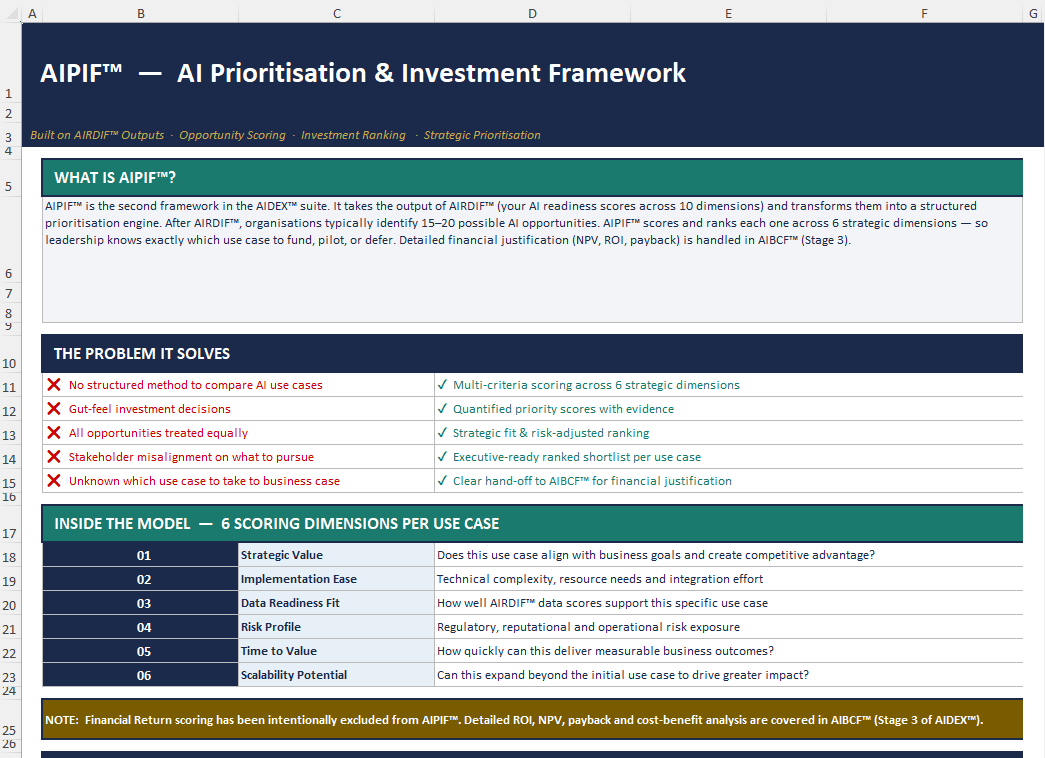
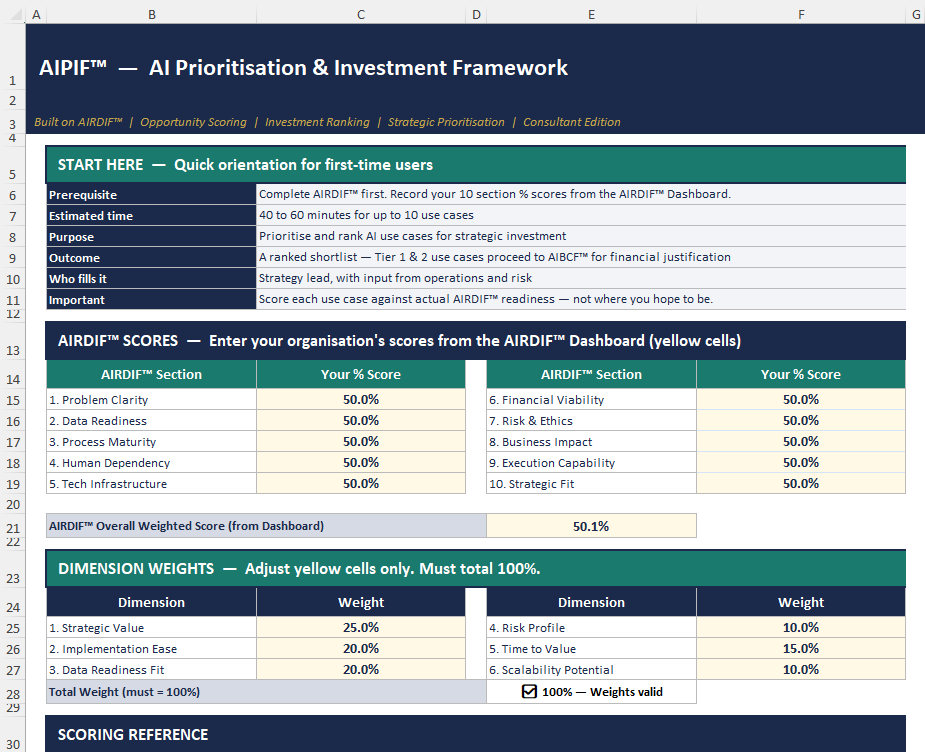
Each AI use case is scored across six weighted dimensions, with eight evidence-based questions per dimension:
| Strategic Value (25%) | Does this use case align with business goals and create competitive advantage? |
| Implementation Ease (20%) | Technical complexity, resource needs and integration effort |
| Data Readiness Fit (20%) | How well your AIRDIF™ data scores support this specific use case |
| Risk Profile (10%) | Regulatory, reputational and operational risk exposure |
| Time to Value (15%) | How quickly can this deliver measurable business outcomes? |
| Scalability Potential (10%) | Can this expand beyond the initial use case to drive greater impact? |
The default weights are calibrated for a typical enterprise, but you control them from the Home tab — tune them to your context, and the framework enforces that they total 100%. Each dimension is scored on a clear 1–5 reference scale, from strong fit down to poor fit, so scoring stays consistent across use cases and across the people doing the scoring.
What makes AIPIF™ different from every generic prioritisation matrix is its foundation. It’s the only AI prioritization framework built directly on top of a completed readiness assessment: your AIRDIF™ readiness scores are imported and feed directly into the Data Readiness Fit dimension of every use case.
That connection is what keeps the ranking honest. A use case that looks attractive on paper but depends on data your organisation doesn’t actually have will score down accordingly — because the framework reflects real capability, not aspirational thinking. You prioritise against where you genuinely are, not where you wish you were.
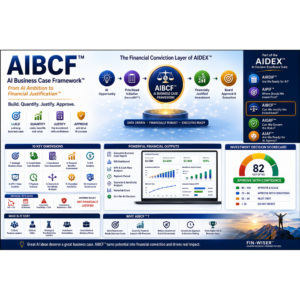
You’ll notice AIPIF™ scores strategic fit, readiness and risk — but not ROI. That’s by design. Detailed financial justification — ROI, NPV, payback and cost-benefit analysis — is a serious exercise that deserves a serious tool, and it belongs to the next stage of the suite, AIBCF™ (the AI Business Case Framework). AIPIF™’s job is to narrow the field first: to identify which two or three use cases, out of ten, are worth the effort of a full financial model. Prioritise strategically here, then justify financially there. Running the numbers on every idea before you’ve filtered them is exactly the waste this framework prevents.
Each use case’s weighted priority score resolves into one of five investment tiers, each with a defined next step:
AIRDIF™ scores feed in directly, so priorities reflect actual capability rather than wishful thinking.
Score up to ten opportunities on the same six dimensions and get a single, comparable shortlist.
Slots between AIRDIF™ readiness and AIBCF™ business case — a complete AI decision pipeline.
AIPIF™ is Stage 2 of the AIDEX™ AI Decision Excellence Suite, following AIRDIF™ and feeding AIBCF™. For a framework built to your organisation’s specification, or a facilitated prioritisation workshop, see our advisory services, or explore more in Business Transformation.
Score up to ten AI use cases across six weighted dimensions and get an executive-ready investment ranking — in under an hour.