$149.00
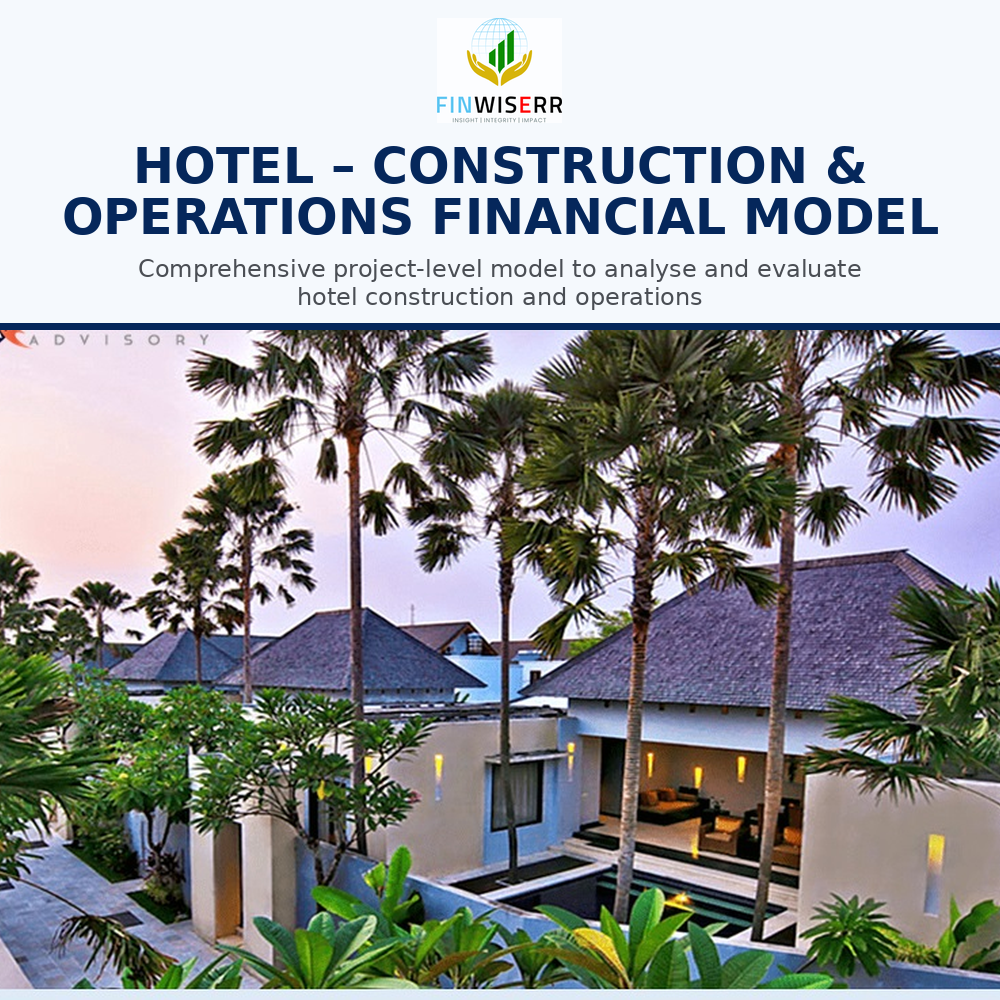
A detailed, institutional-grade hotel financial model for building and operating a hotel or resort, covering construction, operation and financing across a fully flexible timeline — with a cash waterfall, terminal value and complete lender metrics, built in Excel.
A hotel is a real estate development and an operating business at the same time, and the two rarely behave alike. Years of construction cost precede a single guest, and once the doors open, value turns on three numbers working together: how many rooms you have, how full they are, and what each night earns. Add food and beverage income, a cost base that is largely fixed regardless of occupancy, and a lender who needs to see debt serviced through a long ramp-up, and you have a project that a generic template cannot handle.
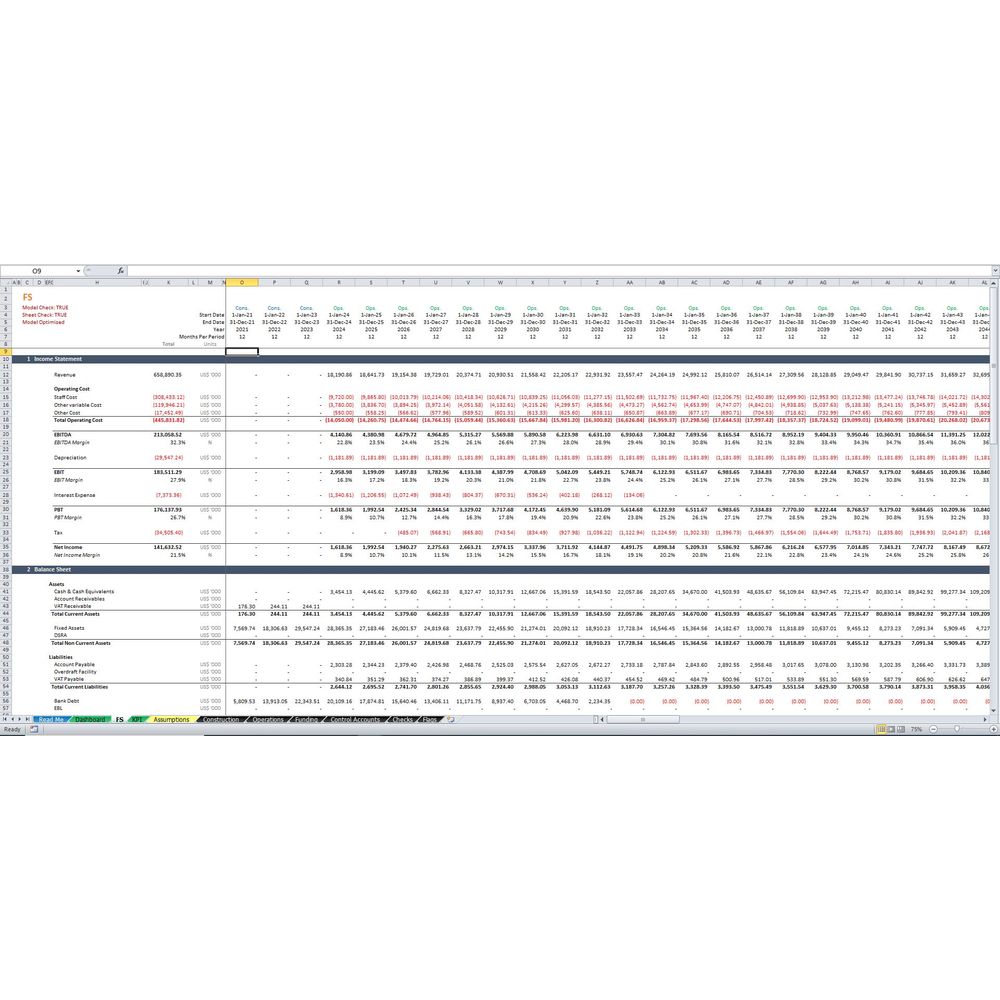
This hotel financial model was built for precisely that. It helps you assess the financial viability of building and operating a hotel, capturing every essential input across construction, operation and financing — and resolving them into the metrics a developer, sponsor or lender needs to reach a decision.
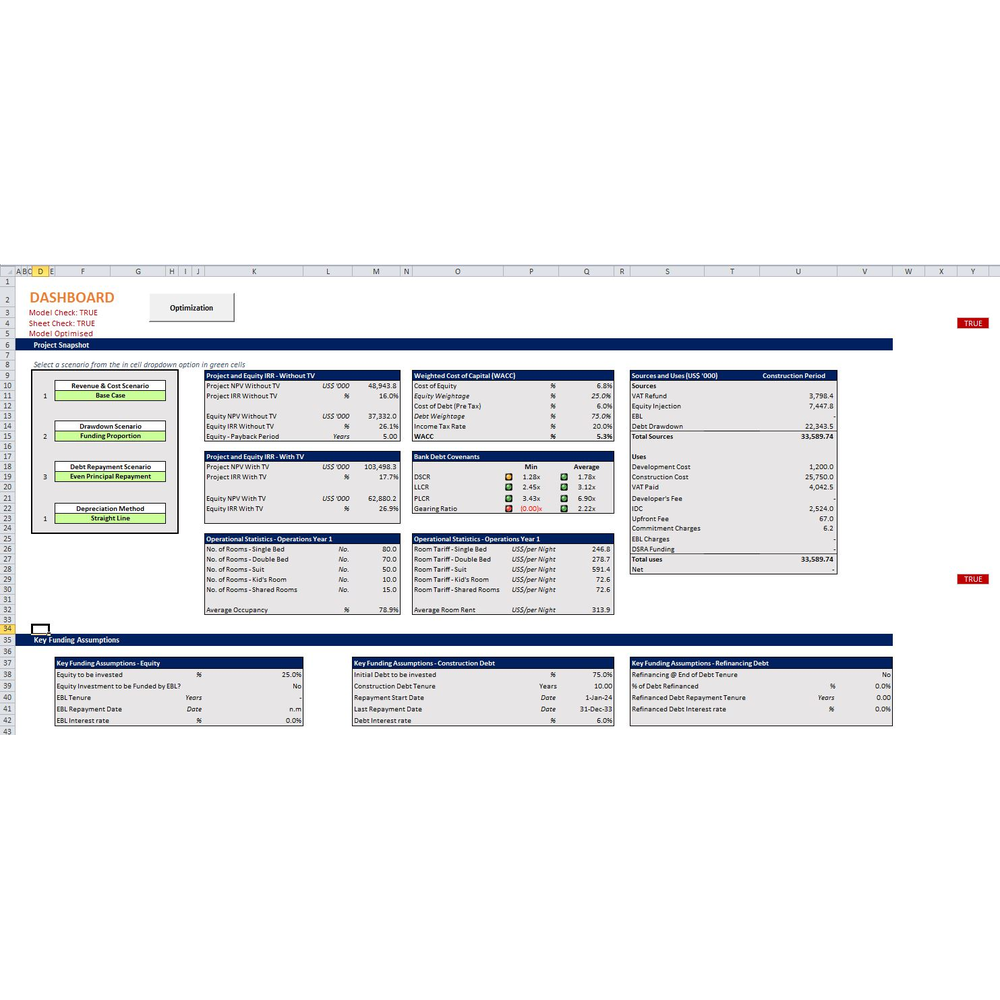
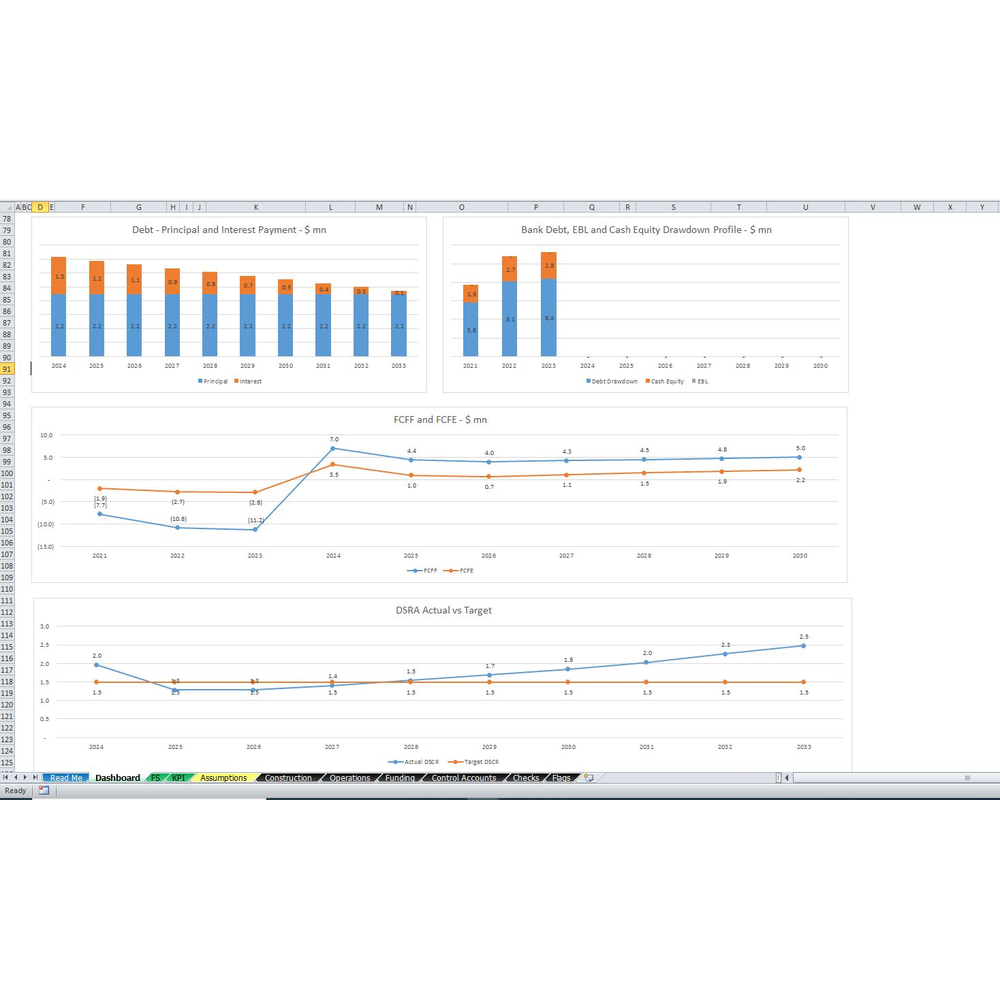
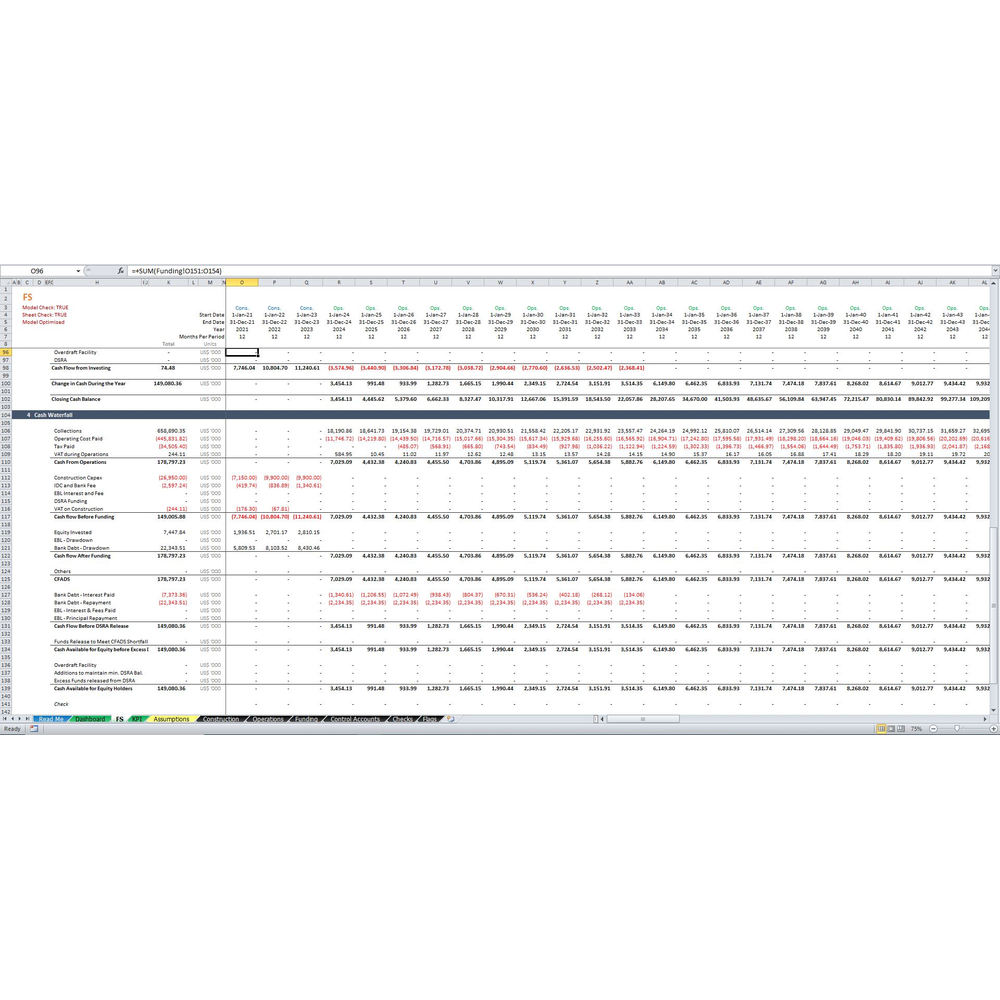
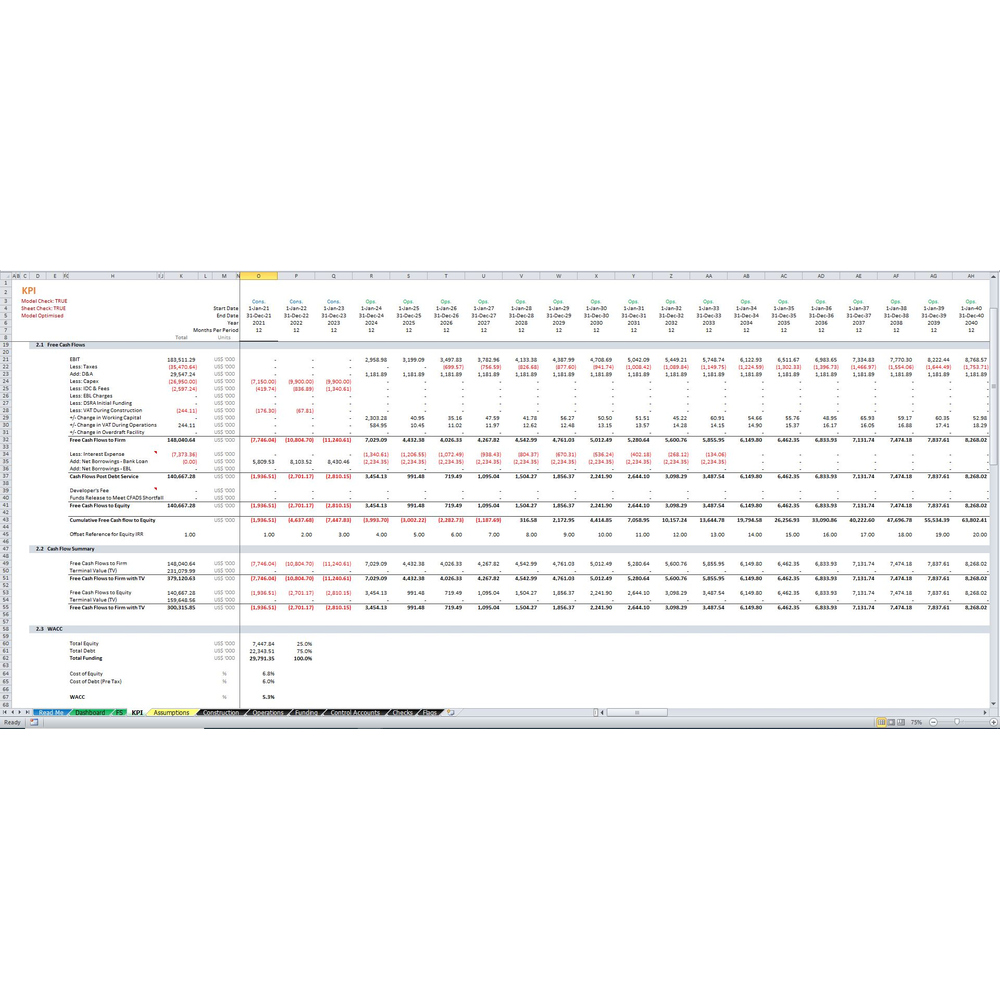
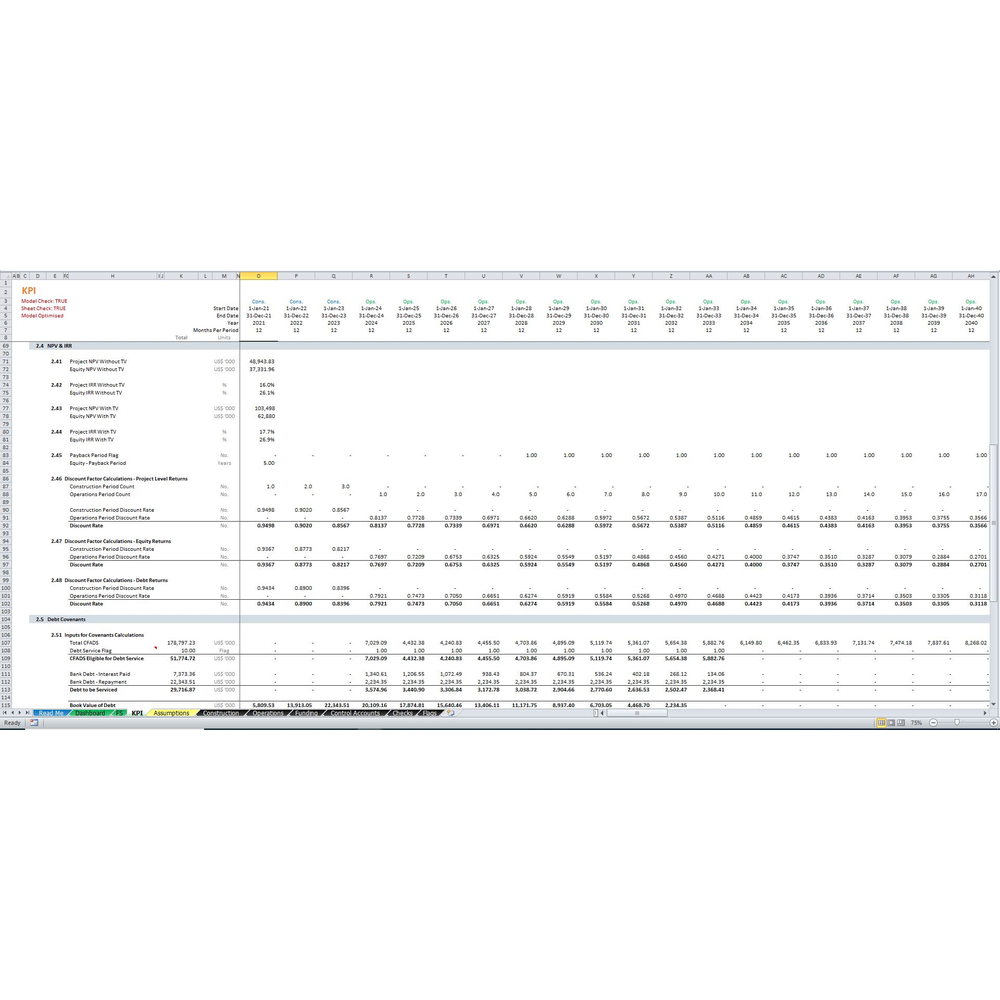
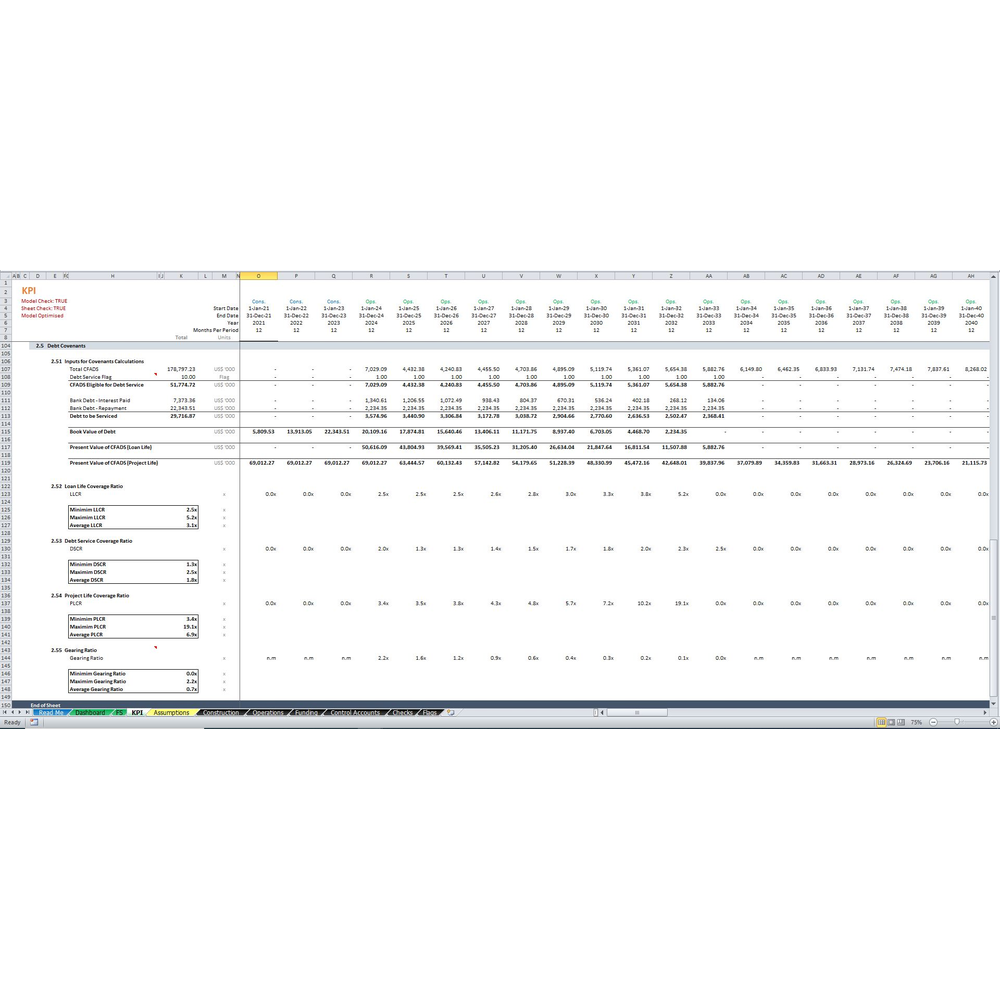
Because it follows project finance convention, the model produces the complete suite of bankability outputs — Project and Equity IRR and NPV, DSCR, equity payback, terminal value and a full cash waterfall — the numbers that decide whether a hotel project attracts funding.
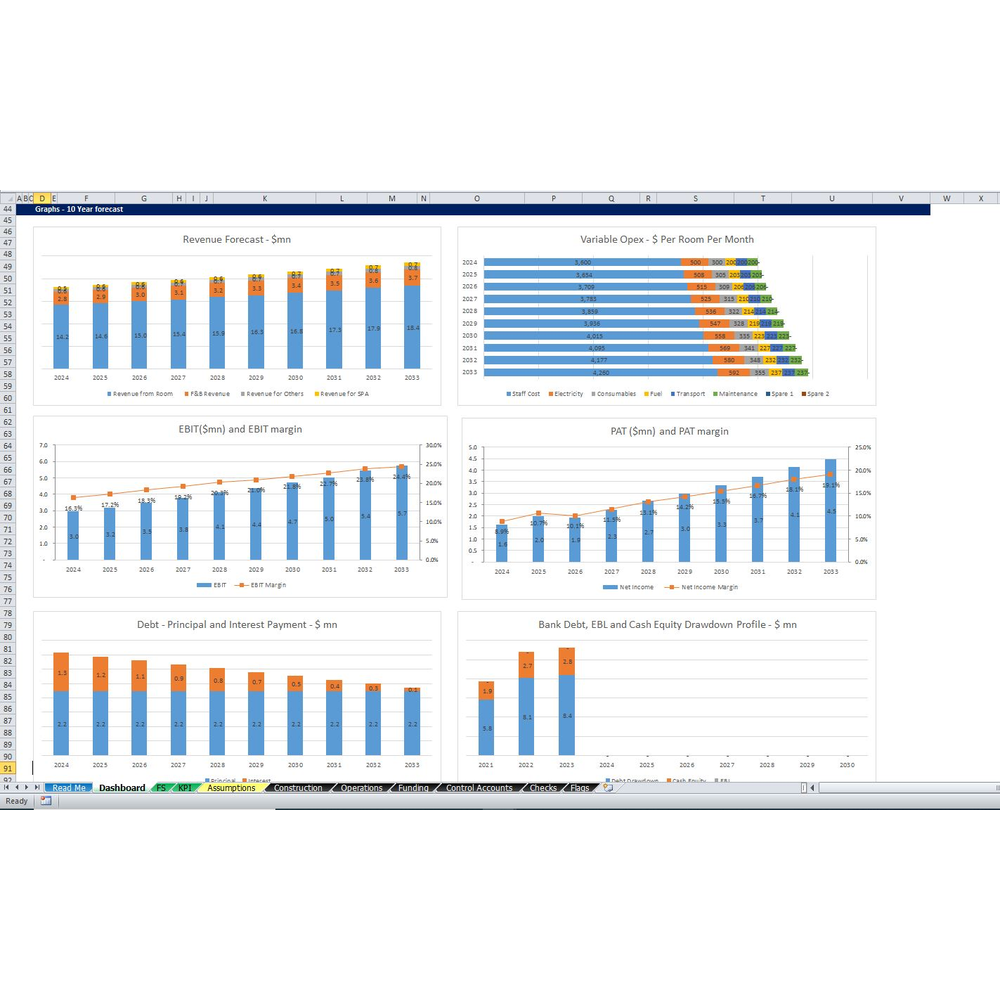
Revenue in this hotel financial model is built the way hospitality analysts build it — number of rooms multiplied by occupancy rate multiplied by room tariff, with occupancy flexed across the forecast period so you can model a realistic ramp-up rather than assuming full performance from day one.
Food and beverage sits alongside as a separate revenue stream, along with other income sources. That separation matters: F&B carries different margins and different sensitivities from rooms, and a model that merges them tells you nothing useful about where the profit actually comes from.
Every driver of viability is an explicit, editable input. The assumptions cover:
| Development & Construction | Development cost, construction cost and developer’s fee |
| Rooms & Occupancy | Number of rooms and occupancy rate across the forecast period |
| Revenue Streams | Room tariff, F&B revenue and other sources of revenue |
| Variable O&M | Cost per room across eight subheads — staff, electricity, consumables, transport, fuel and more |
| Fixed Costs | SPV cost, insurance, land lease, community payment, management fee and more |
| Funding Profile | Cash equity, bridge loan, bank debt, DSRA and bank overdraft |
| Debt Repayment | Annuity, sculpted and even-principal options |
| Adjustments | Inflation and indexation, VAT during construction and operations, depreciation options and working capital |
This is where the hotel financial model earns its keep — resolving your assumptions into the full set of metrics a funding decision turns on:
The model separates construction and operation cleanly, and lets you set the length and granularity of each — monthly, quarterly, semi-annual or annual — independently. That flexibility is particularly useful for hotels, where a monthly build schedule can sit alongside an annual operating view without bloating the file.
Every revenue and cost assumption can be entered across three scenarios and switched at a button, so a conservative occupancy case sits beside an optimistic one. The debt funding drawdown carries three scenarios of its own — valuable when negotiating terms with financial institutions — and repayment can be profiled as annuity, even-principal or sculpted.
Rooms, occupancy and tariff build the forecast, with occupancy flexed over time so you can model a realistic ramp-up.
The exit assumption is modelled explicitly — often the largest single component of a hotel’s valuation.
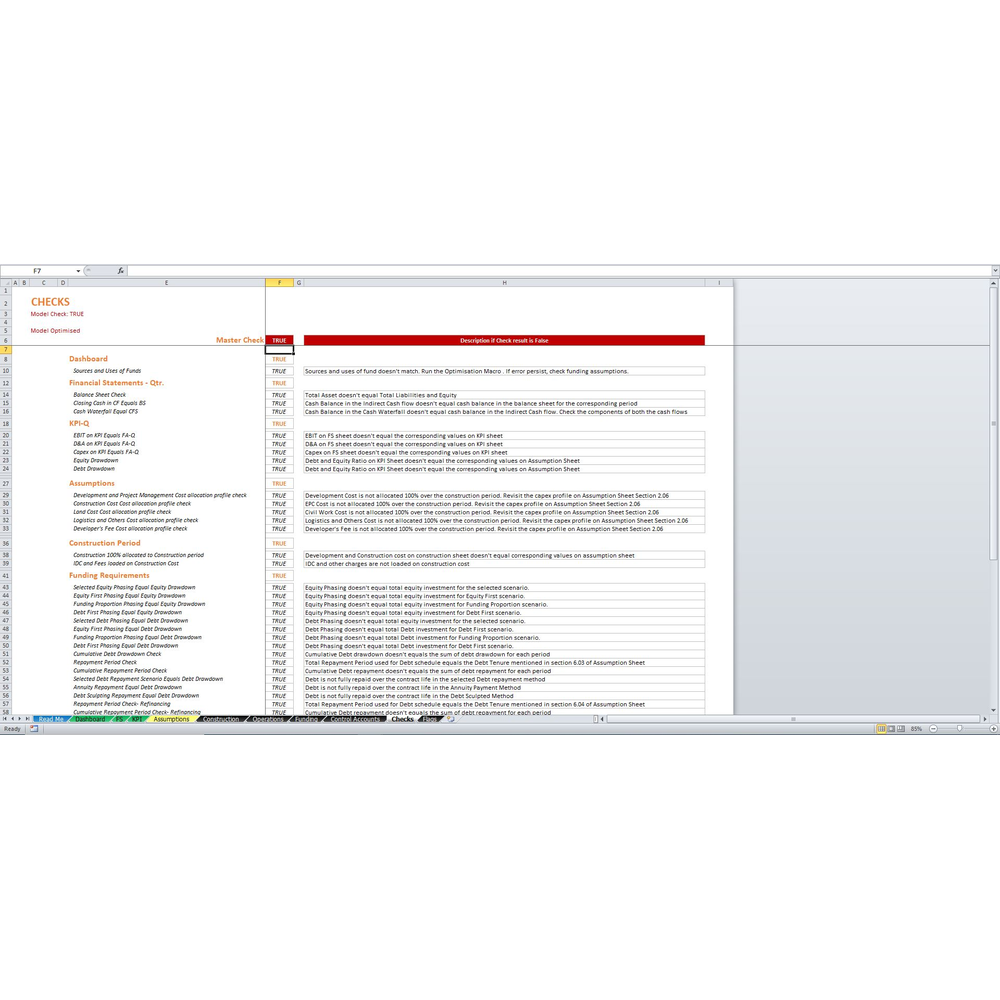
Clearly defined input, calculation and output cells, with a colour-coded heat map so even a first-time user can navigate it.
New to these metrics? Read an overview of the debt service coverage ratio. For a model built to your own specification, see our project finance advisory services, or browse the full range of PPP and project finance templates.
Construction and operation phases, a flexible timeline, three scenarios, terminal value and every lender metric from Project IRR to DSCR — ready in Excel.