$149.00
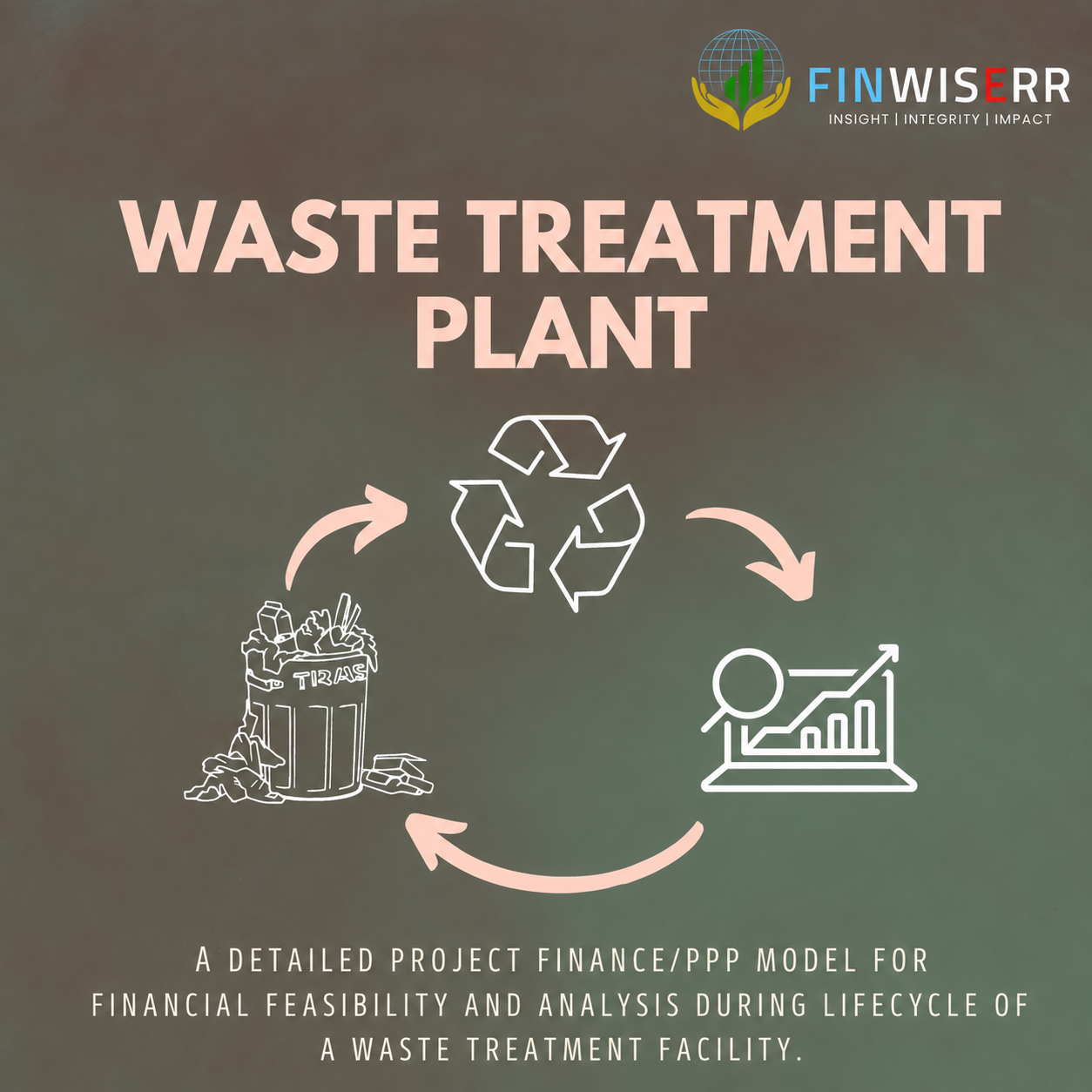
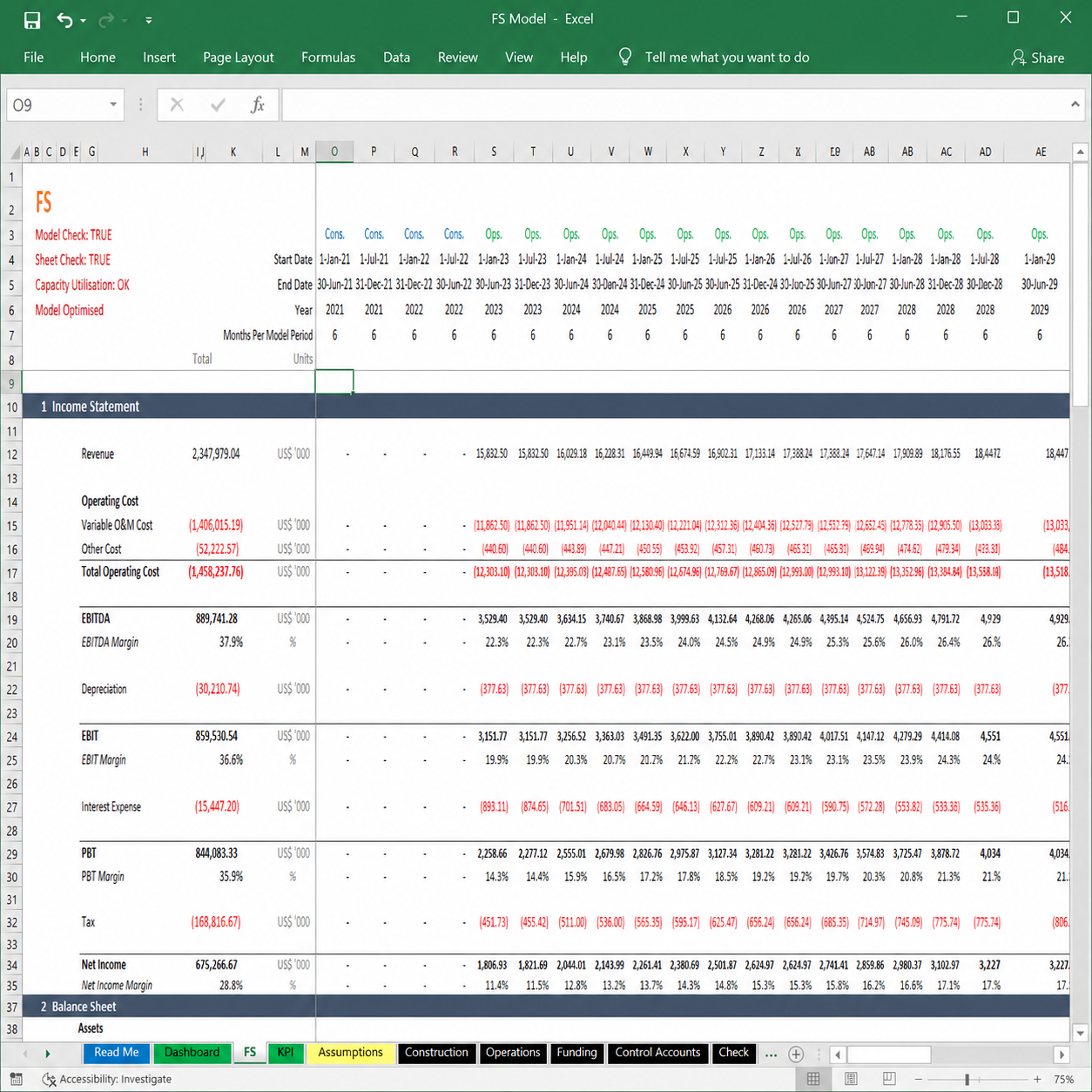
A detailed, institutional-grade waste treatment financial model for a solid waste treatment concession, capturing every essential input across construction, operation and financing — with three integrated statements, valuation, a cash waterfall and complete lender metrics, built in Excel.
Solid waste treatment is one of the more dependable infrastructure businesses to finance, and one of the more particular to model. Revenue rarely comes from a single source — a concession typically earns collection fees from residential and commercial users at different rates, and often sells compost or recovered material on top. The waste keeps arriving regardless of the economic cycle, which is what makes these assets attractive to lenders, but only if the model reflects how the concession actually earns.
This waste treatment financial model helps you assess the financial viability of a waste treatment concession by capturing all the essential inputs across construction, operation and financing — and resolving them into the metrics a developer, sponsor, municipality or lender needs to reach a decision.
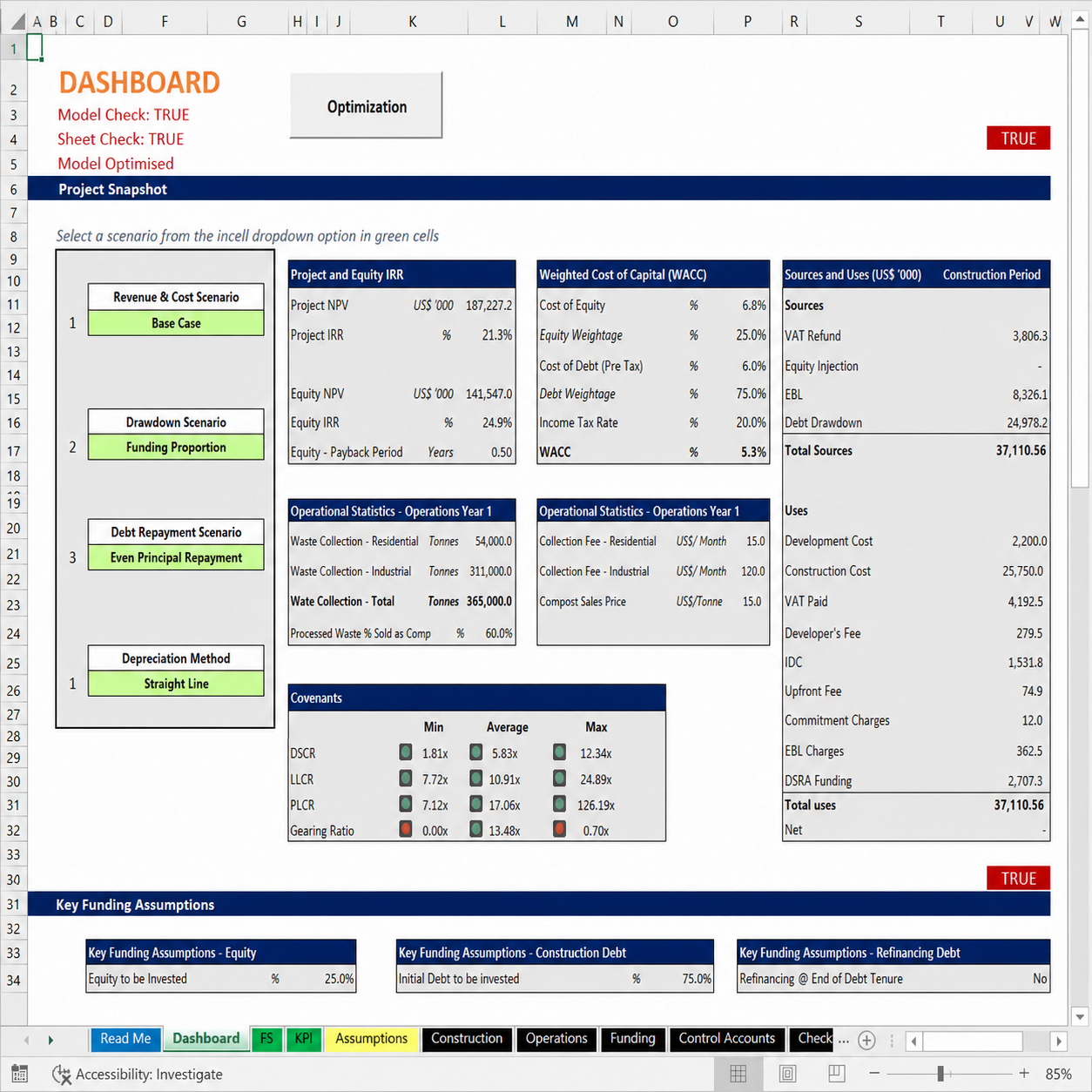
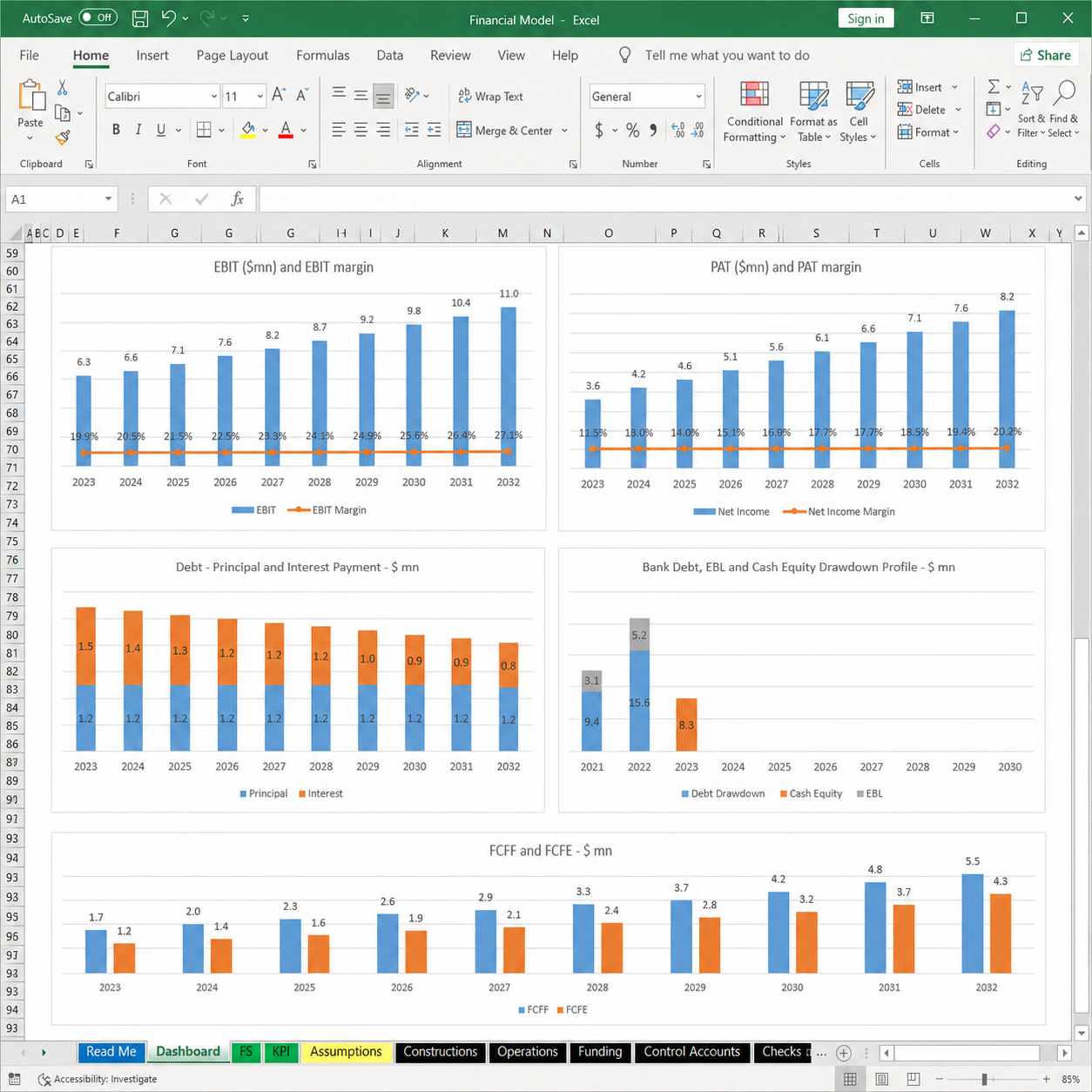
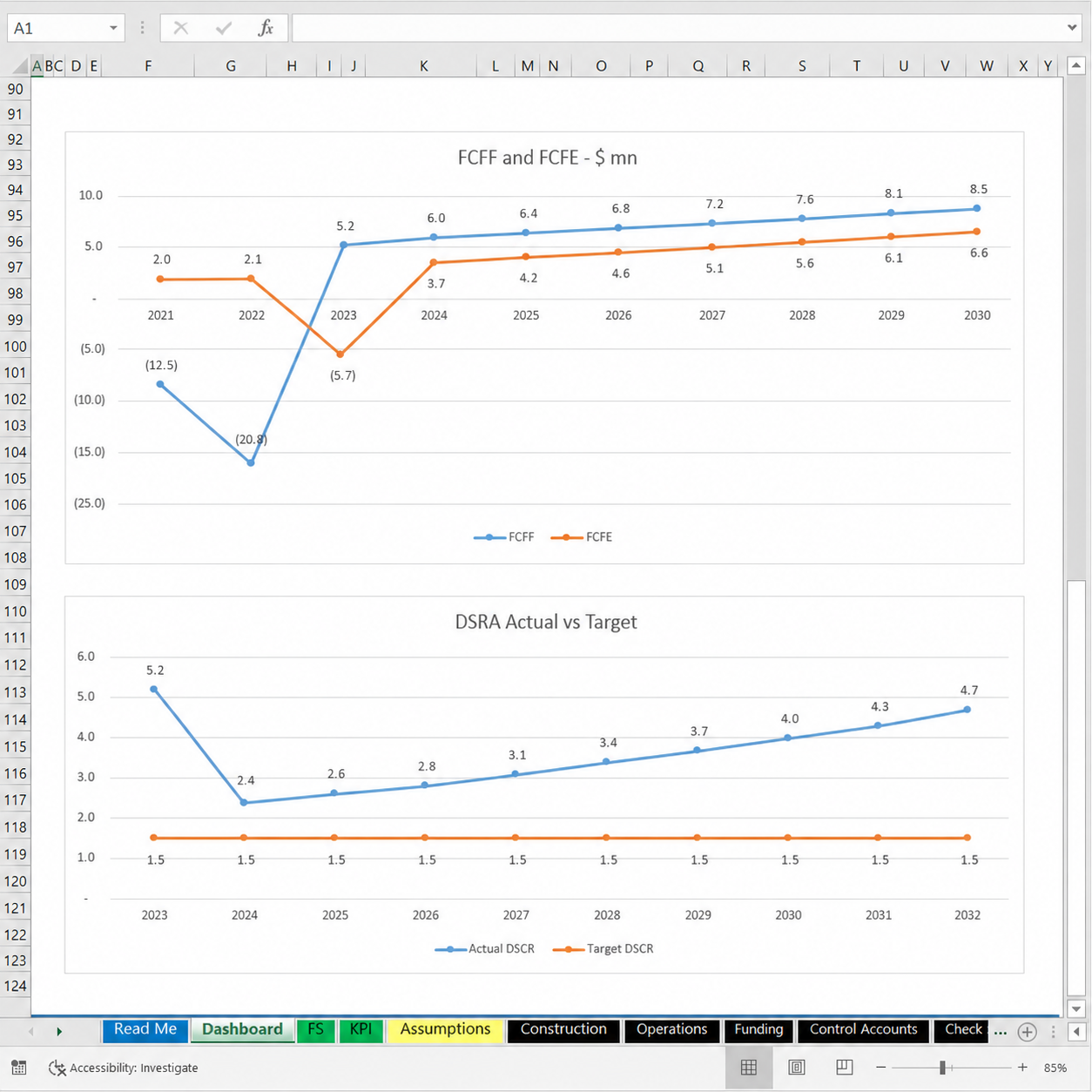
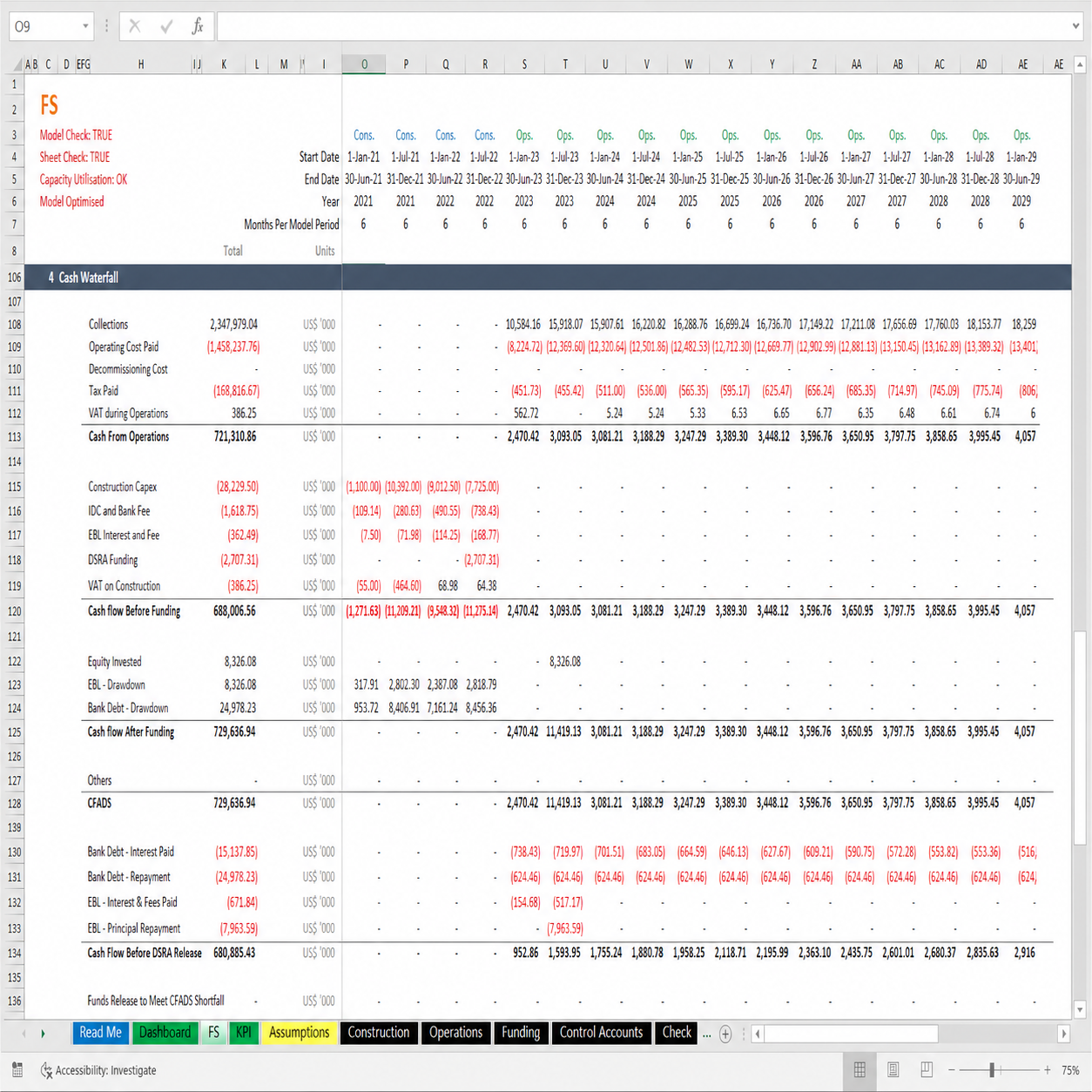
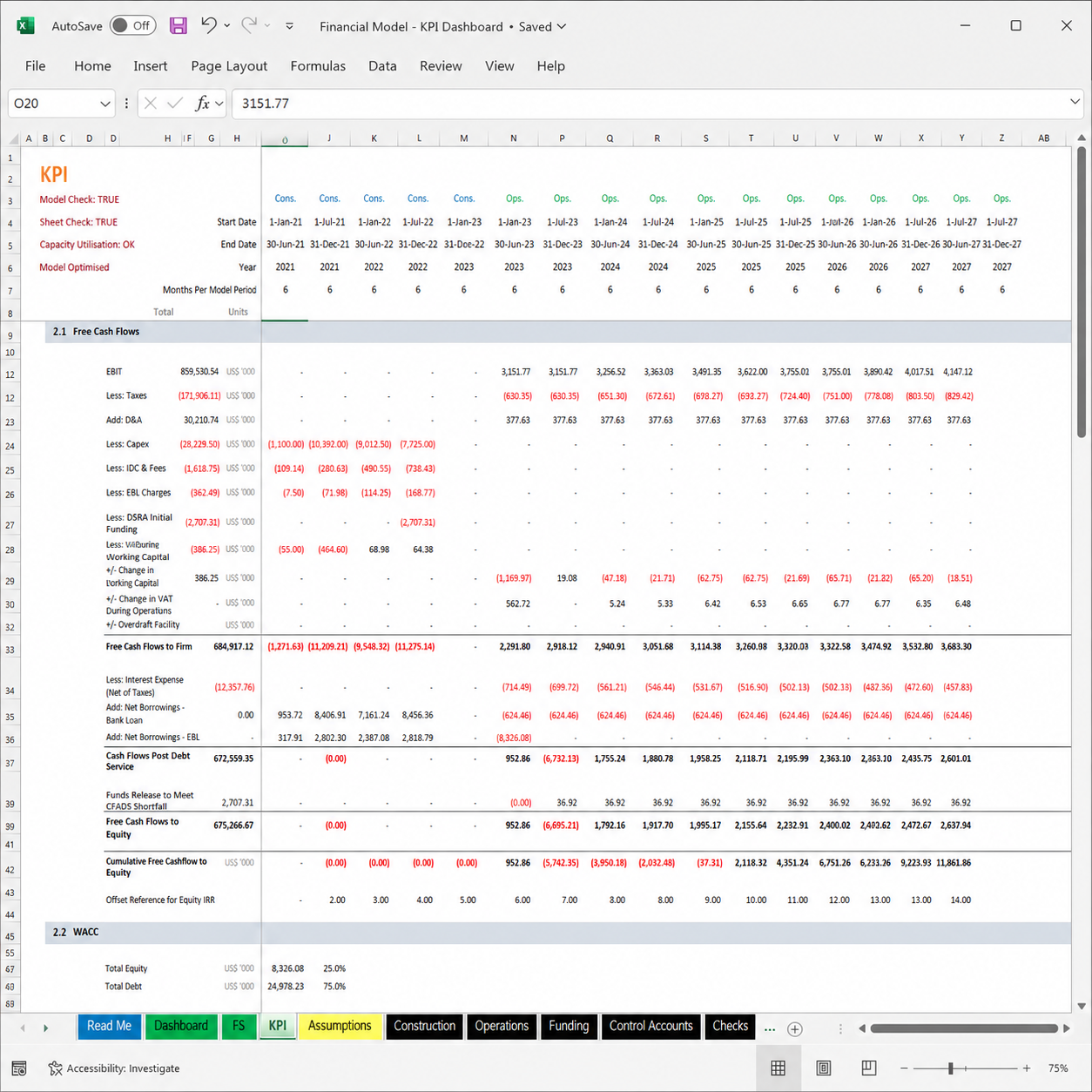
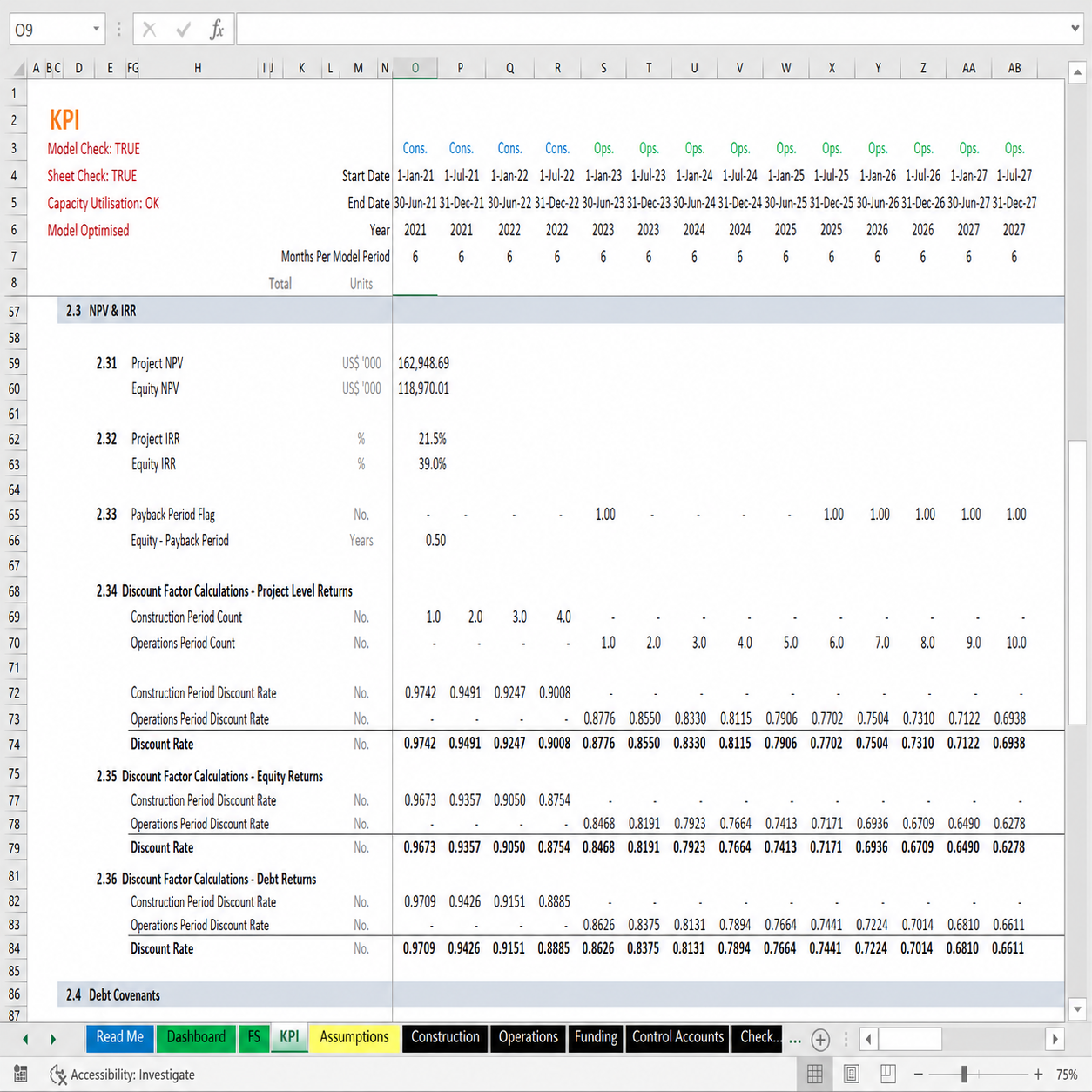
Because it follows project finance convention, the model produces the complete suite of bankability outputs — Project and Equity IRR and NPV, minimum and average DSCR, LLCR, PLCR, equity payback and a full cash waterfall — the numbers that decide whether a project reaches financial close.
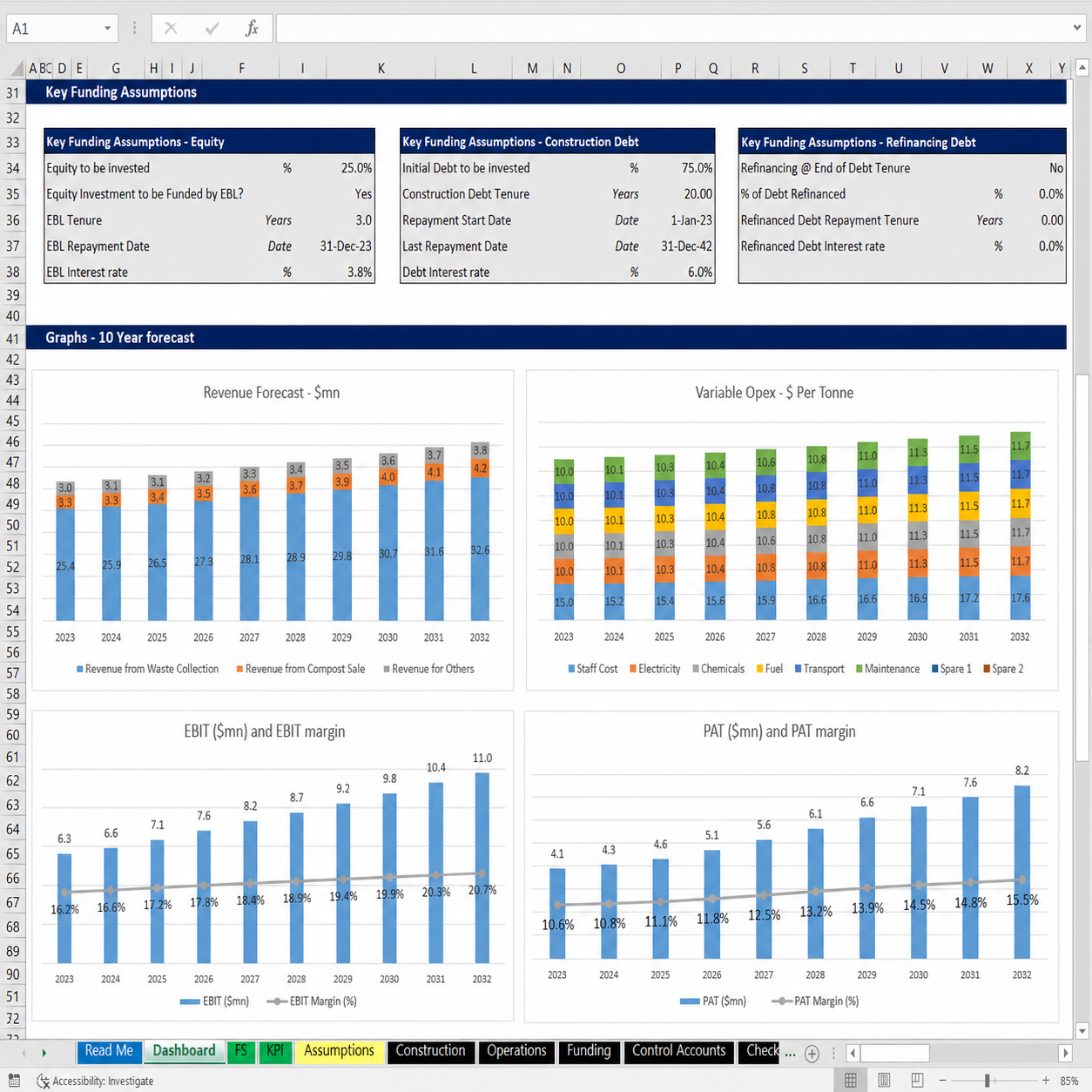
Revenue in this waste treatment financial model is built from daily processing capacity and collection volume, split between residential and commercial users — each paying a collection fee at its own rate. That distinction matters commercially: commercial waste streams are often higher-volume and better-paying, and the mix between the two moves both the revenue line and its stability.
The sale of compost sits as a separate revenue stream, alongside other income sources. Modelling it apart from collection fees lets you see how much of the return depends on the core concession and how much on recovered-product sales — a distinction a lender will want drawn clearly, since the two carry quite different certainty.
Every driver of viability is an explicit, editable input. The assumptions cover:
| Development & Construction | Development cost, construction cost and developer’s fee |
| Waste Volumes | Daily waste processing capacity and collection volume from residential and commercial users |
| Revenue Streams | Collection fee by user type, sale of compost and other sources of revenue |
| Variable O&M | Cost per tonne across eight subheads — staff, electricity, consumables, transport, fuel and more |
| Fixed Costs | SPV cost, insurance, land lease, community payment, management fee and more |
| Funding Profile | Cash equity, bridge loan, bank debt, DSRA and bank overdraft |
| Debt Repayment | Annuity, sculpted and even-principal options |
| Adjustments | Inflation and indexation, VAT during construction and operations, depreciation options and working capital |
This is where the waste treatment financial model earns its keep — resolving your assumptions into the full set of metrics a financing decision turns on:
The model separates construction and operation cleanly, and lets you set the length and granularity of each — monthly, quarterly, semi-annual or annual — independently. A precise monthly build can sit alongside an annual operating period, giving detail where it matters without an unwieldy file.
Every revenue and cost assumption can be entered across three scenarios and switched at a button. The debt funding drawdown carries three scenarios of its own — valuable when negotiating terms with financial institutions — and repayment can be profiled as annuity, even-principal or sculpted, each showing its impact on IRR immediately.
Residential and commercial collection fees are modelled apart, so the revenue mix and its stability are both visible.
Recovered-product income sits on its own line, so core concession revenue and upside are cleanly distinguished.
A colour-coded heat map marks every formula, so you can audit the logic end to end or adapt it to your own concession.
New to these metrics? Read an overview of the debt service coverage ratio. For a model built to your own specification, see our project finance advisory services, or browse the full range of PPP and project finance templates.
Collection fees by user type, compost revenue, a flexible timeline, three scenarios and every lender metric from Project IRR to PLCR — ready in Excel.