$120.00
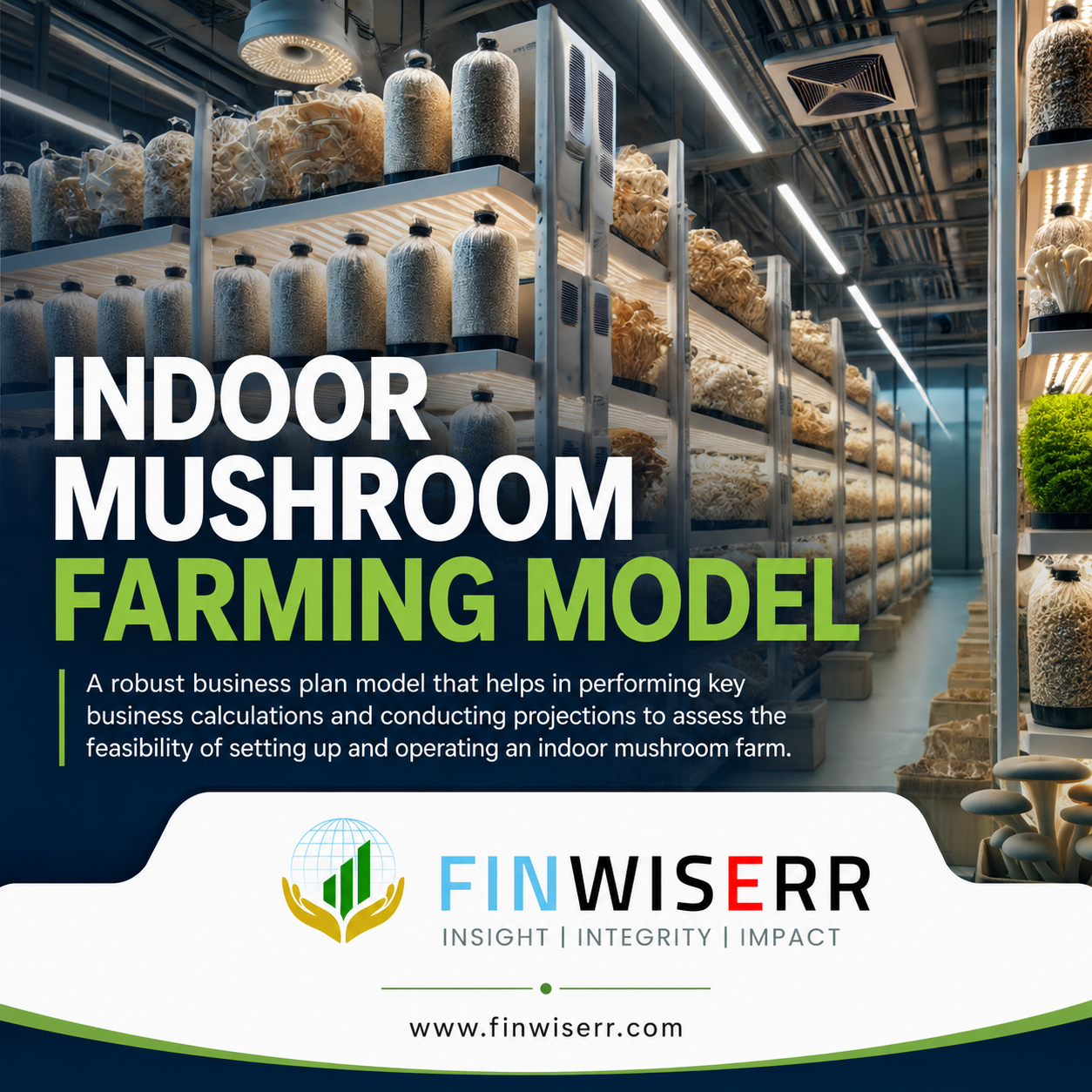
A detailed, investor-ready mushroom farming financial model for an indoor growing operation — with up to five varieties, each carrying its own monthly yield and price, plus 5-year monthly projections, break-even analysis and valuation, all in one integrated Excel model.
Indoor mushroom farming is one of the most capital-efficient ways into agriculture. It needs little land, runs year-round in a controlled environment, and turns over crop after crop on a cycle measured in weeks rather than seasons. But that fast, continuous production is exactly what makes it easy to misjudge — yields per cycle, the price gap between a common button mushroom and a premium shiitake, and the running cost of a climate-controlled grow room all compound quickly. A proper financial model is what turns an appealing idea into a fundable plan.
This mushroom farming financial model is built for precisely that. Growing space is allocated across up to five varieties — white button, oyster, king oyster, shiitake and maitake — each with its own monthly production yield and its own sales price. So you can model a value-led mix of premium varieties against a volume-led commodity crop, and see exactly how the choice moves the valuation.
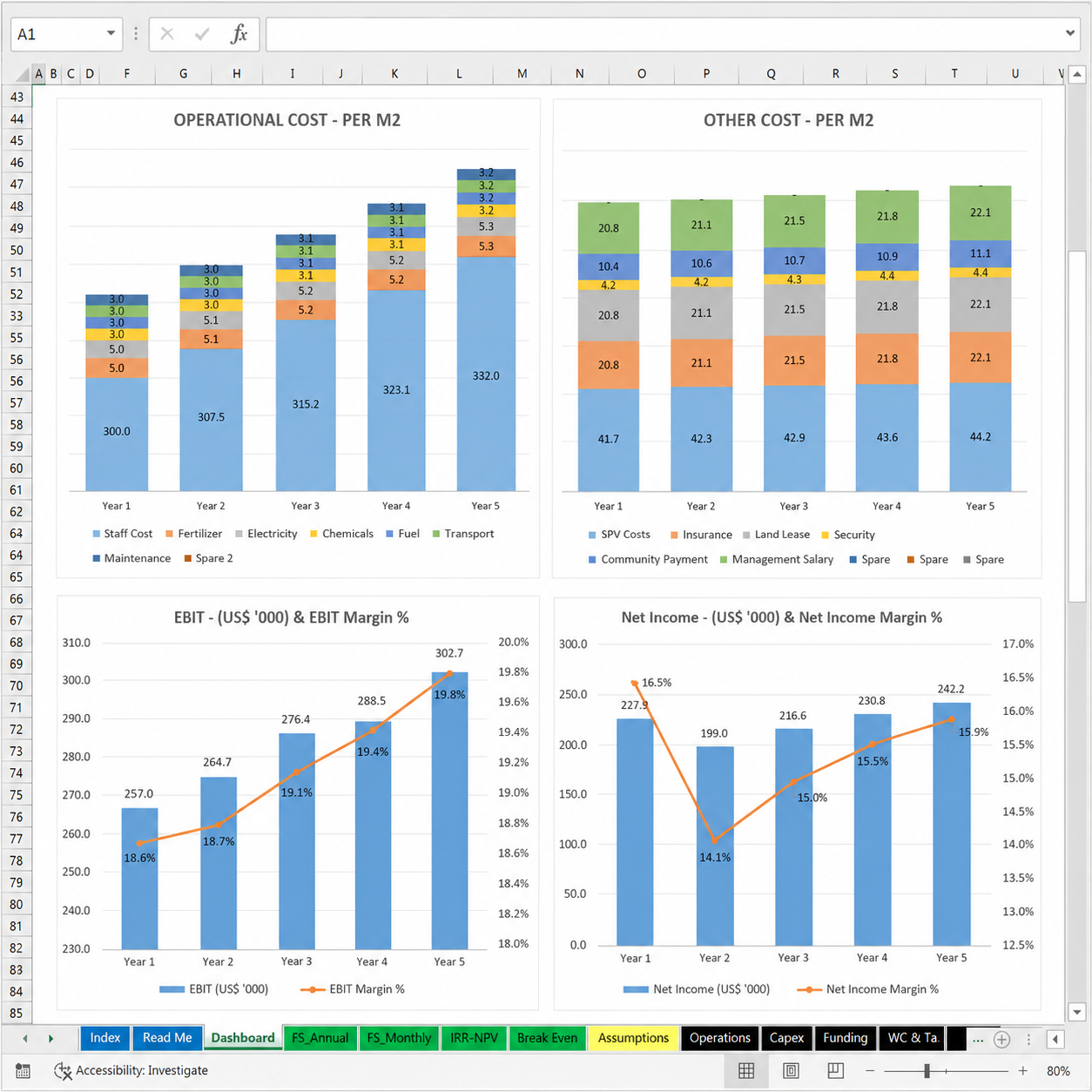
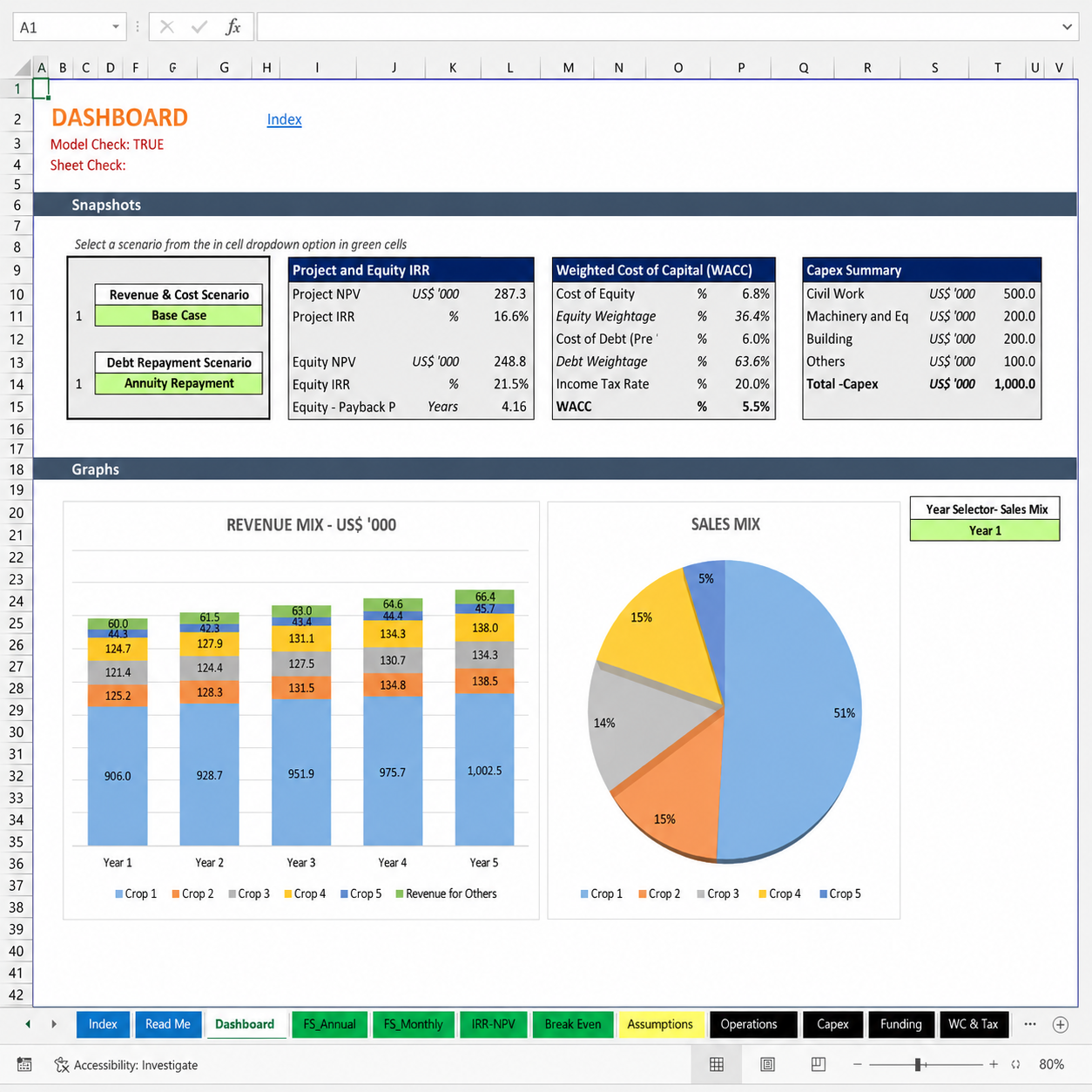
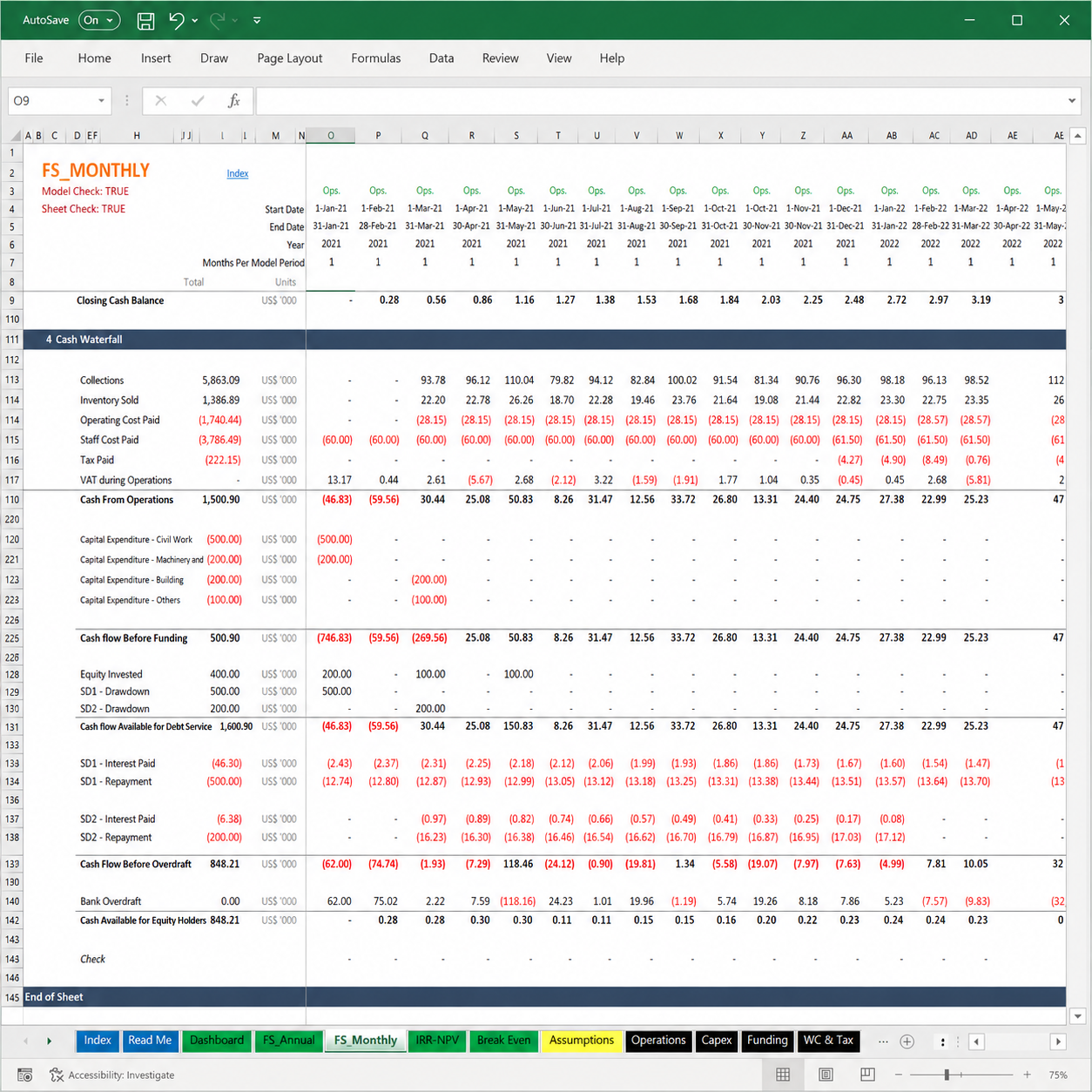
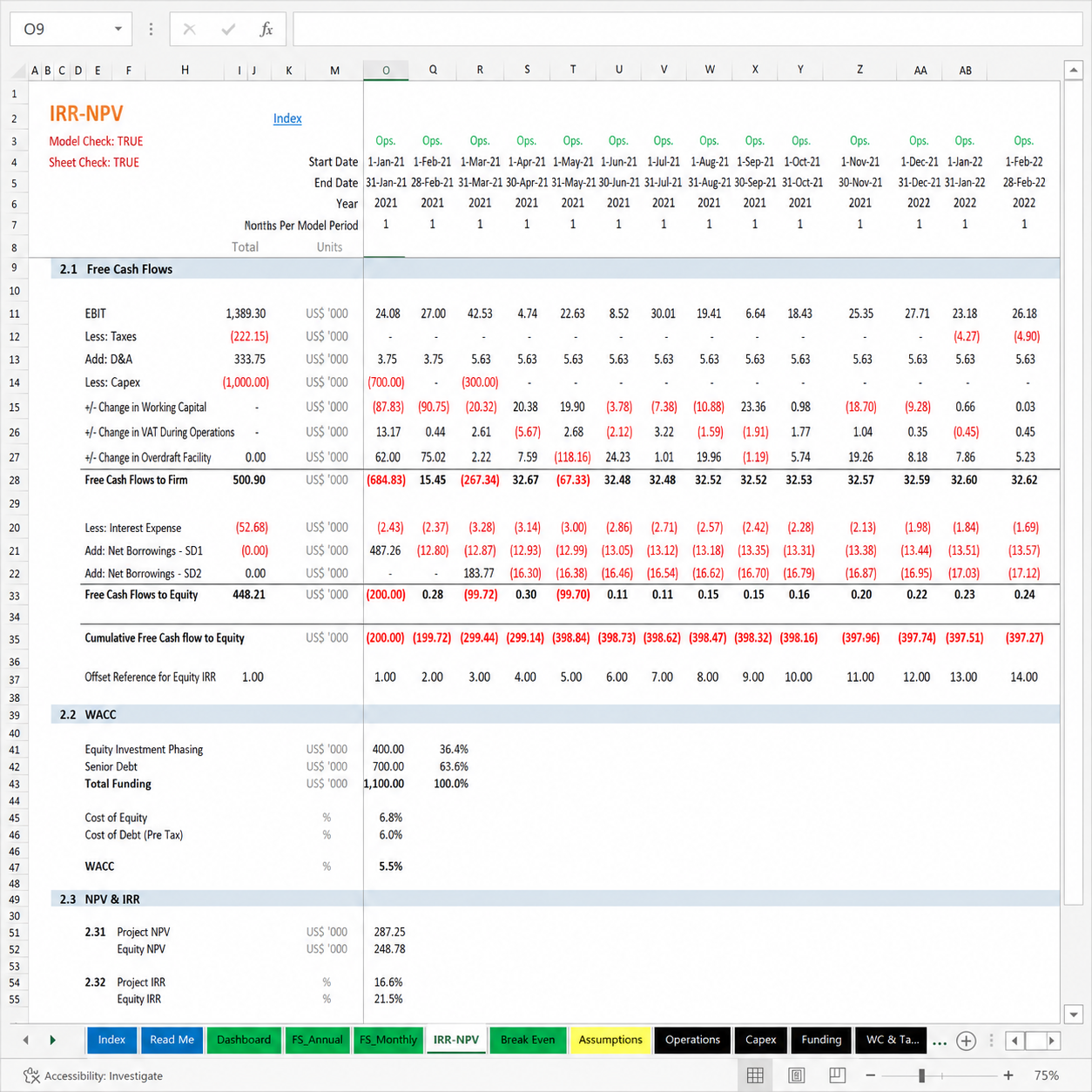
Whatever the size or stage of your operation, the model produces Project and Equity IRR and NPV, equity payback, break-even analysis, a cash waterfall, integrated financial statements and a fully linked dashboard.
The core of this mushroom farming financial model is that the five varieties are not one blended crop. Each has its own share of the growing space, its own monthly yield and its own price — because a maitake and a white button are entirely different businesses in the same room. One commands a premium and grows slowly; the other is cheap, fast and high-volume.
Modelling them separately lets you answer the question every mushroom grower faces: where is the money actually made? Test a shift toward specialty varieties, or a scale-up of a reliable volume crop, and the model shows the effect on revenue, margin and return without a rebuild.
Yield is entered month by month for each variety, so the continuous-but-uneven rhythm of indoor growing is captured directly. A staggered flush schedule, a variety that fruits faster than another, a ramp-up as new grow rooms come online — all of it shows in the monthly numbers rather than being lost in an annual average. For a business whose whole advantage is fast, repeated turnover, that granularity is essential.
Every driver of the operation is an explicit, editable input. The assumptions cover:
| Space & Varieties | Growing area and allocation across up to five varieties — white button, oyster, king oyster, shiitake and maitake |
| Production & Price | Monthly production yield per variety, production-to-sales ratio and sales price, plus other revenue |
| Staff Cost | Cost per employee per month, with headcount driven by growing area and employees per unit |
| Variable O&M | Substrate and nutrients, electricity, chemicals, fuel, transport and maintenance, with spare lines for your own inputs |
| Fixed Costs | SPV cost, insurance, land lease, security, community payment and management salary |
| Capex | Civil work, machinery and equipment, building and other, with useful-life depreciation |
| Funding Profile | Cash equity, bank debt and bank overdraft |
| Working Capital & Tax | Accounts receivable, inventory and payables; straight-line depreciation, inflation and indexation, and VAT during operations |
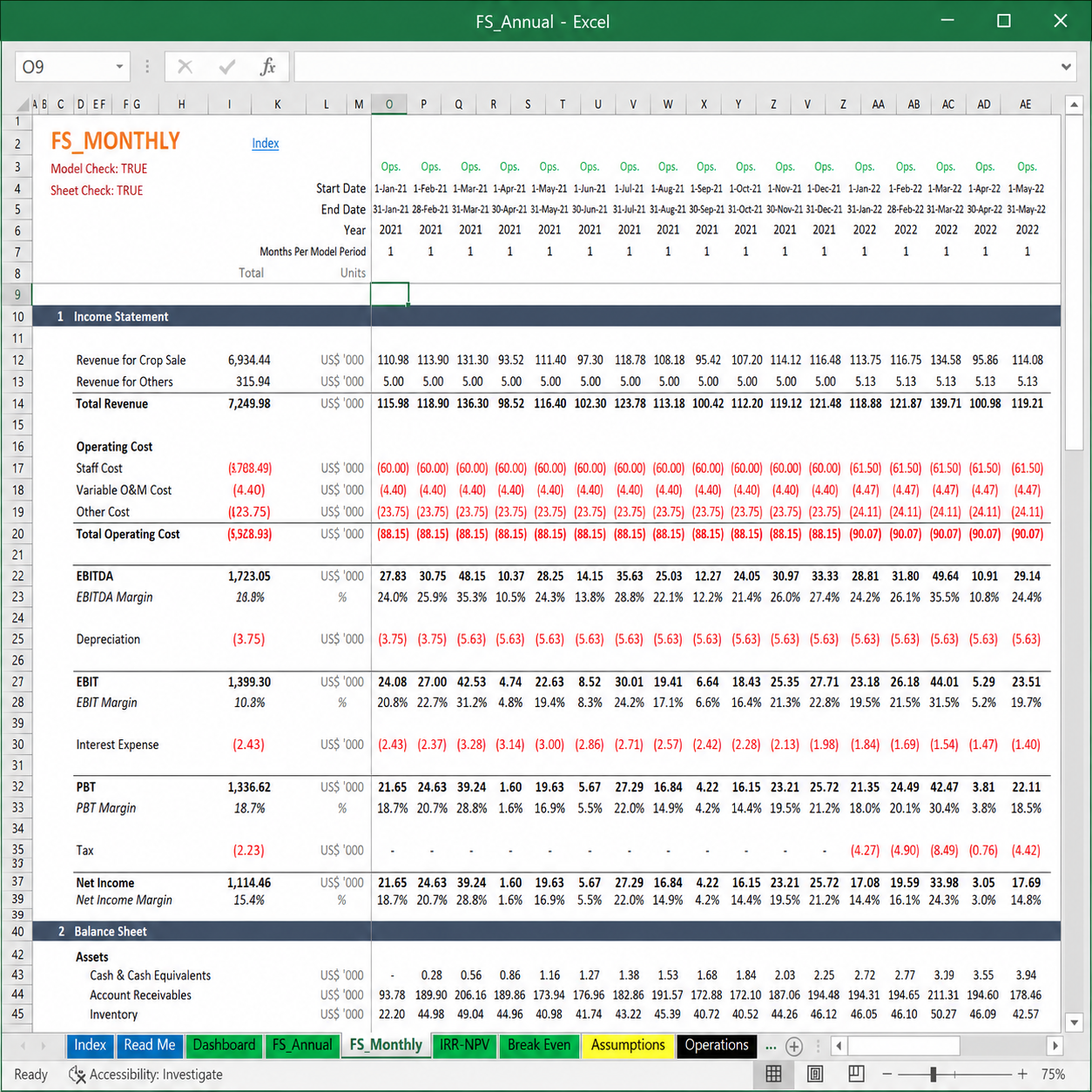
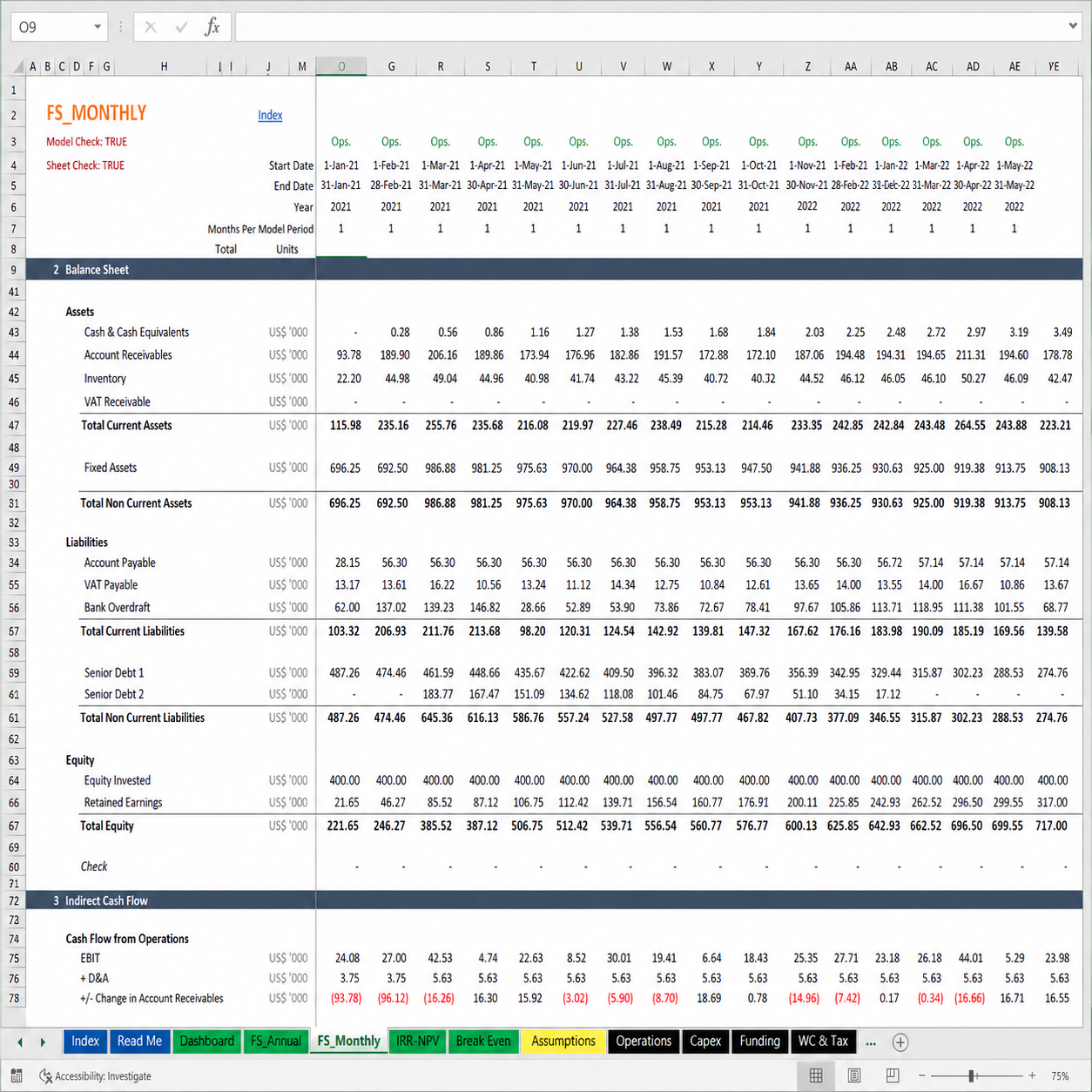
The model forecasts one to five years on a monthly basis, with financial statements on both a monthly and an annual view — the granularity a fast-cycling growing business genuinely needs, and the level of detail an investor or lender expects to see.
Every revenue and cost assumption can be entered across three scenarios and switched at the click of a button, so a cautious case sits beside an ambitious one. And because the model uses no macros, every change you make flows through to the outputs instantly, with no recalculation delay.
Button, oyster, king oyster, shiitake and maitake each carry their own yield and price, so premium and volume are modelled distinctly.
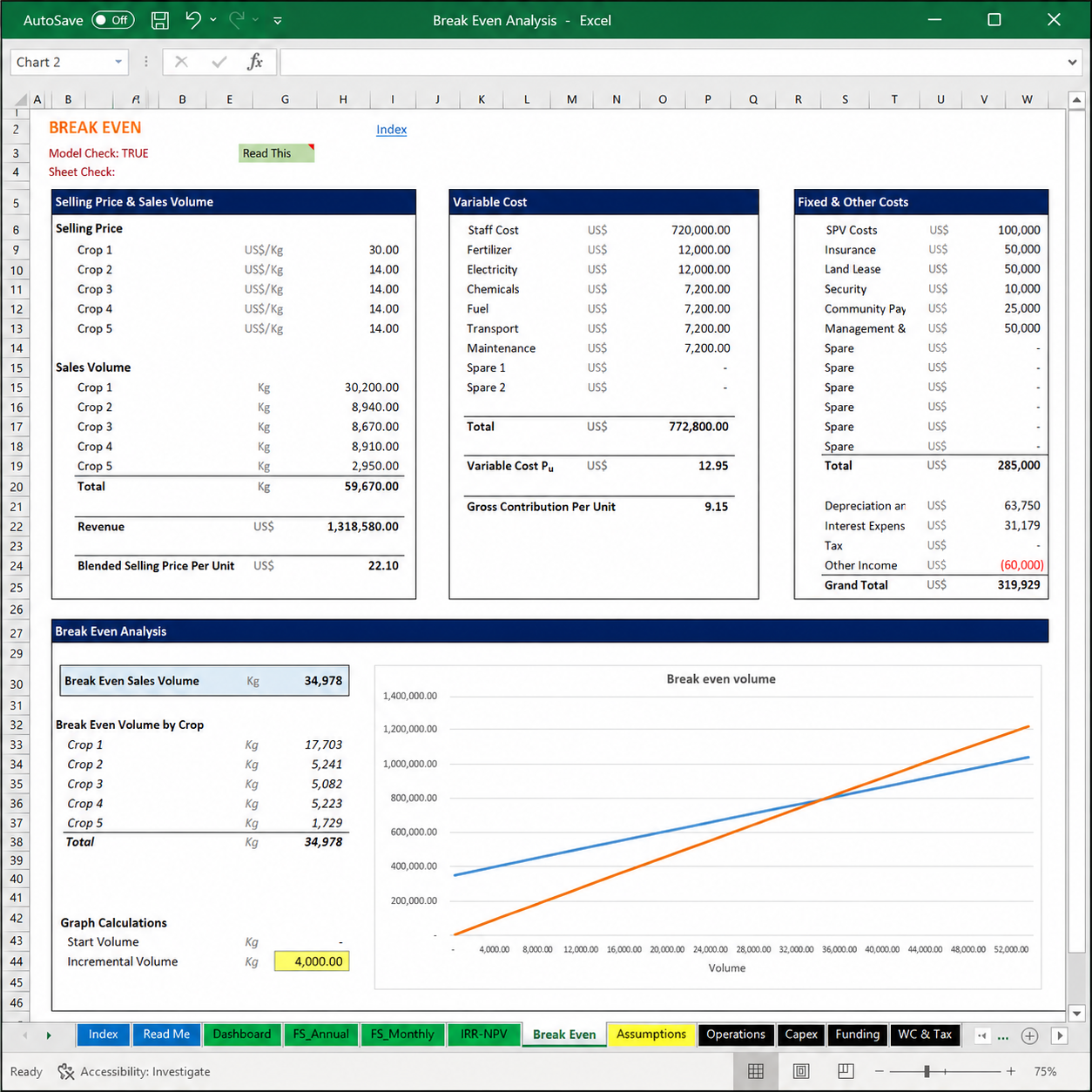
A dedicated break-even analysis shows when the operation starts to pay — the first question any backer asks.
Five years of monthly detail with no macros, so the fast grow cycle is visible and every input updates in real time.
New to these metrics? Read an overview of internal rate of return. For a model built to your own specification, see our financial advisory services, or browse the full range of business plan Excel models.
Five varieties with monthly yields, five years of monthly projections, break-even, three scenarios, valuation and a live dashboard — ready in Excel.