$249.00
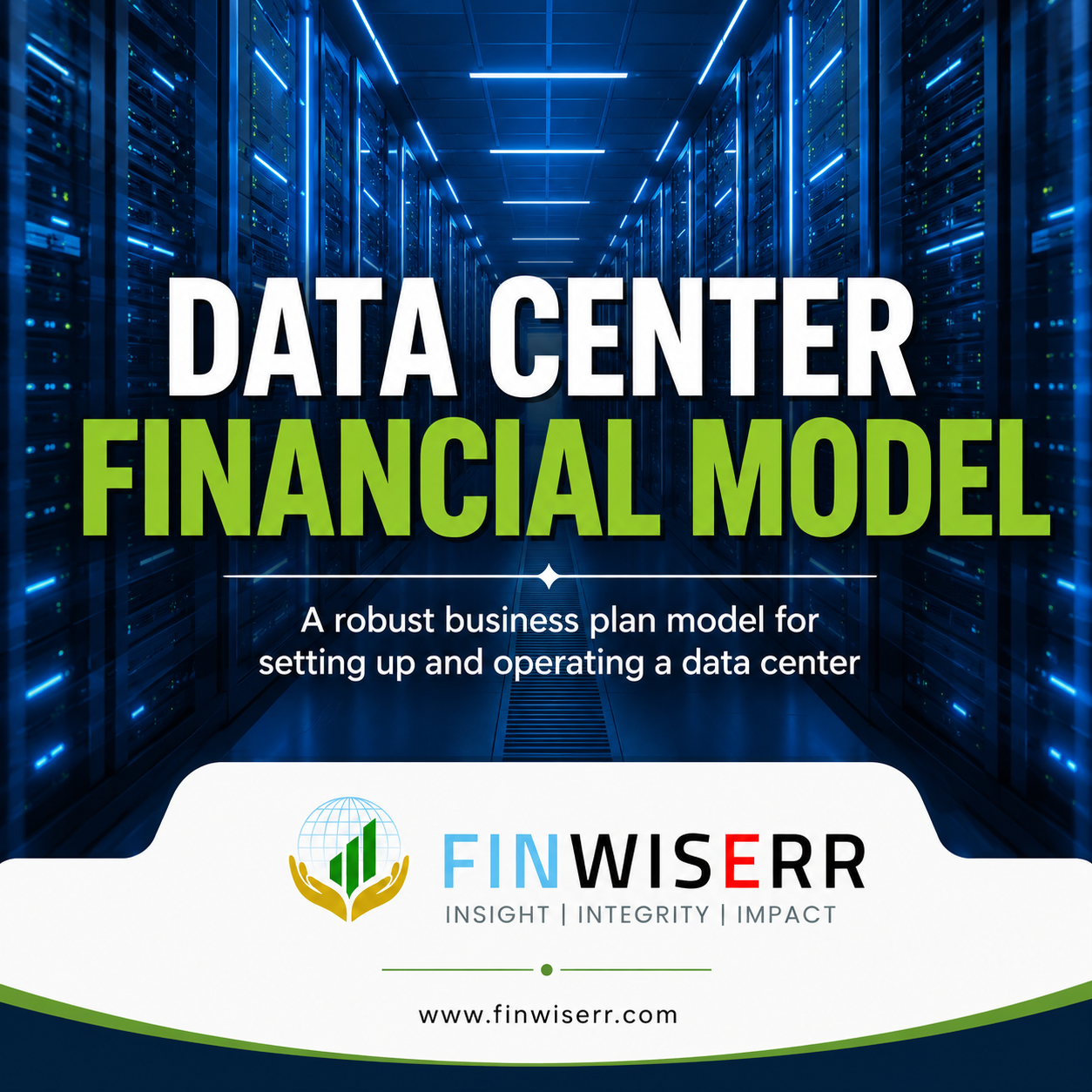
A flagship, institutional-grade data center financial model for the setup and operation of a colocation data center — bundled with a complete 29-slide Information Memorandum, so you can build the numbers and tell the investment story from a single package.
Data centers are among the most capital-intensive and fastest-growing infrastructure assets in the world, and financing one demands a model that treats it as the project it is. Enormous upfront cost across the building, the IT hardware and the power and cooling plant precedes any revenue. Once live, the facility earns by leasing rack space under subscription contracts. Debt has to be shown to service itself through a long ramp-up, and equity has to see a return that justifies the risk. A generic business template cannot carry that weight.
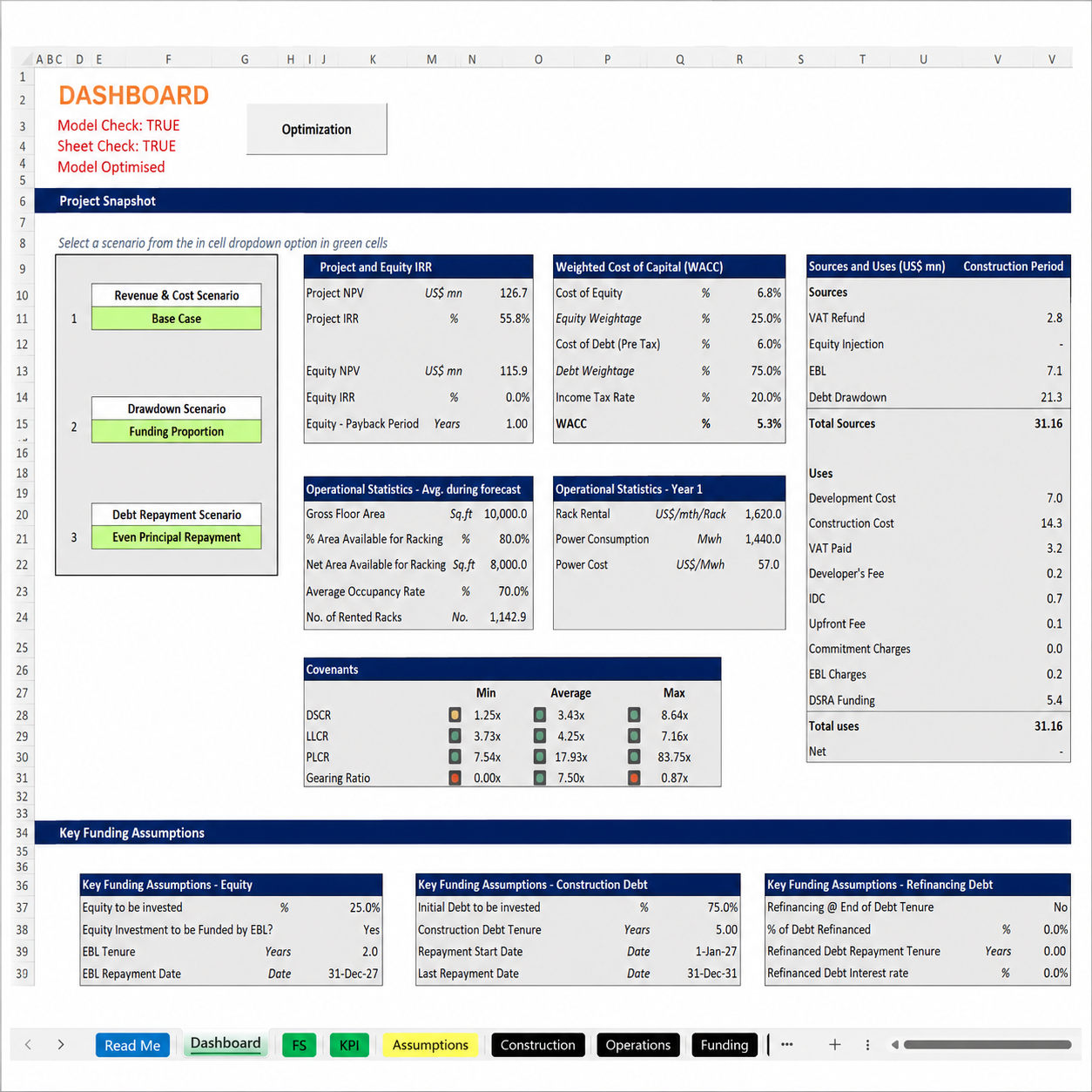
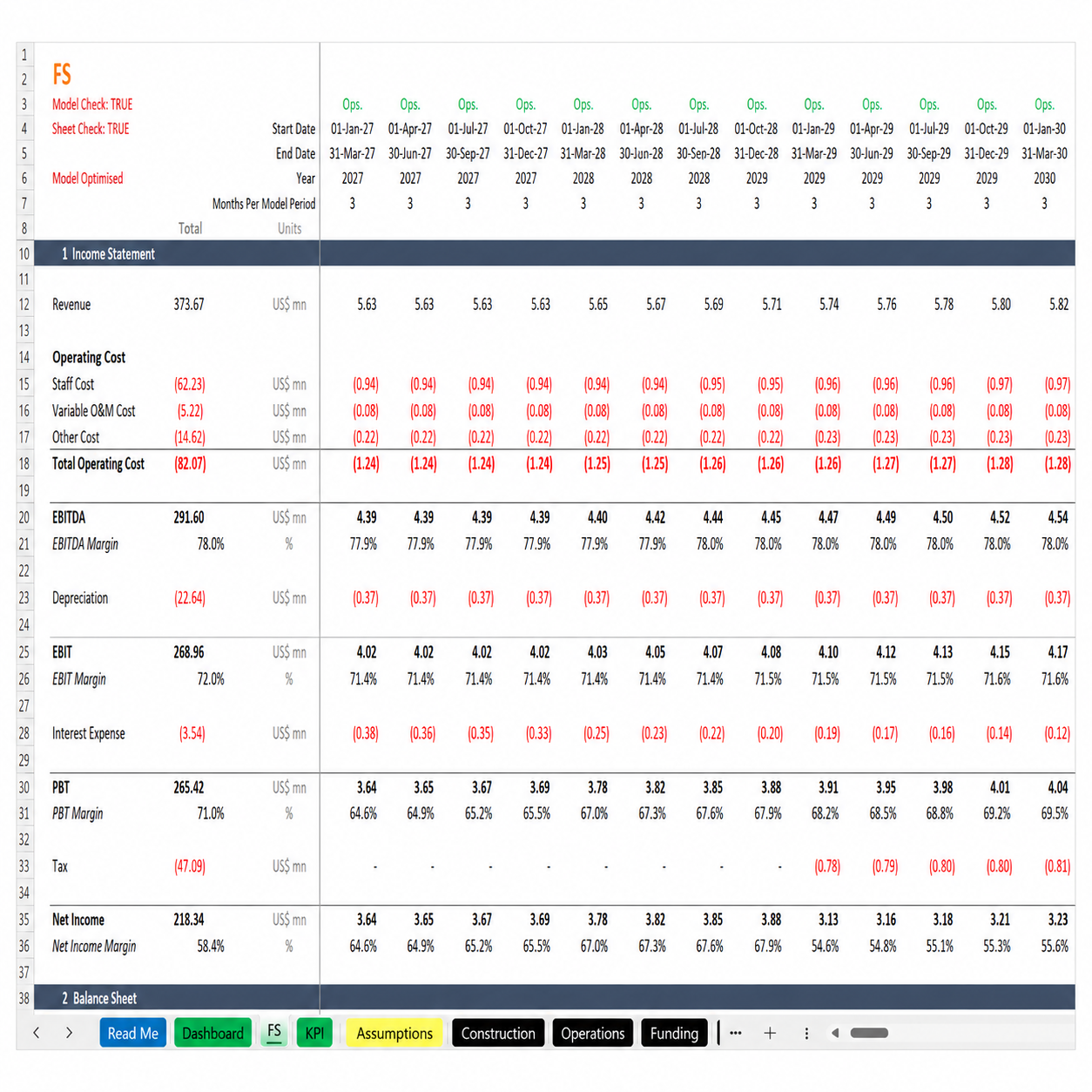
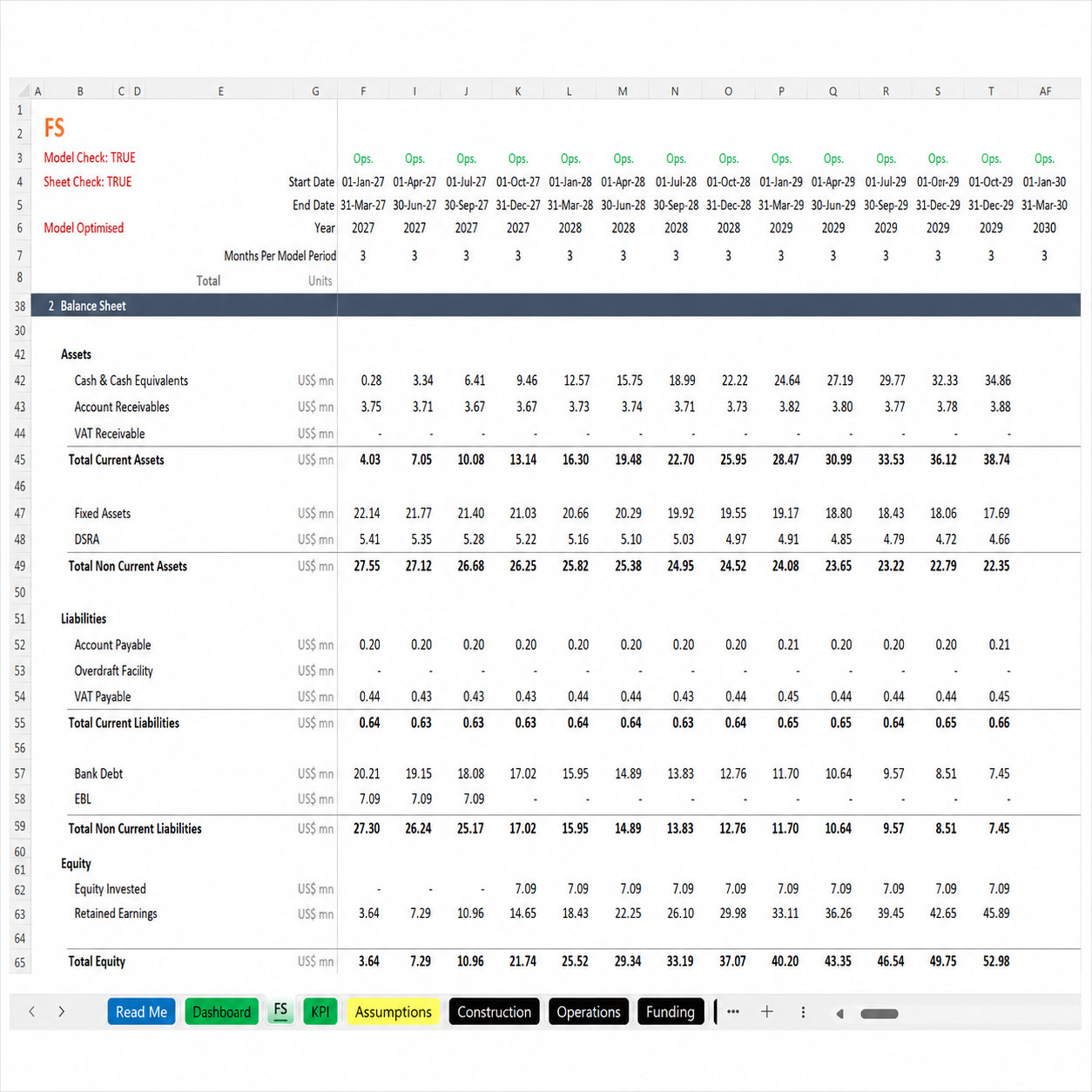
This data center financial model is built to full project finance discipline. It separates construction and operation, models capital cost across every major system, drives revenue from rack capacity and subscription pricing, and resolves the whole into the returns and lender covenants a financing decision turns on.
What sets this package apart is what comes with it. Alongside the model sits a 29-slide Information Memorandum — a complete institutional investor document whose financial sections align with the model behind it.
An Information Memorandum is the document that turns a financial model into a fundable proposition — the structured presentation of the opportunity that investors and lenders actually read. Most template sellers stop at the spreadsheet and leave you to write it. This package includes both.
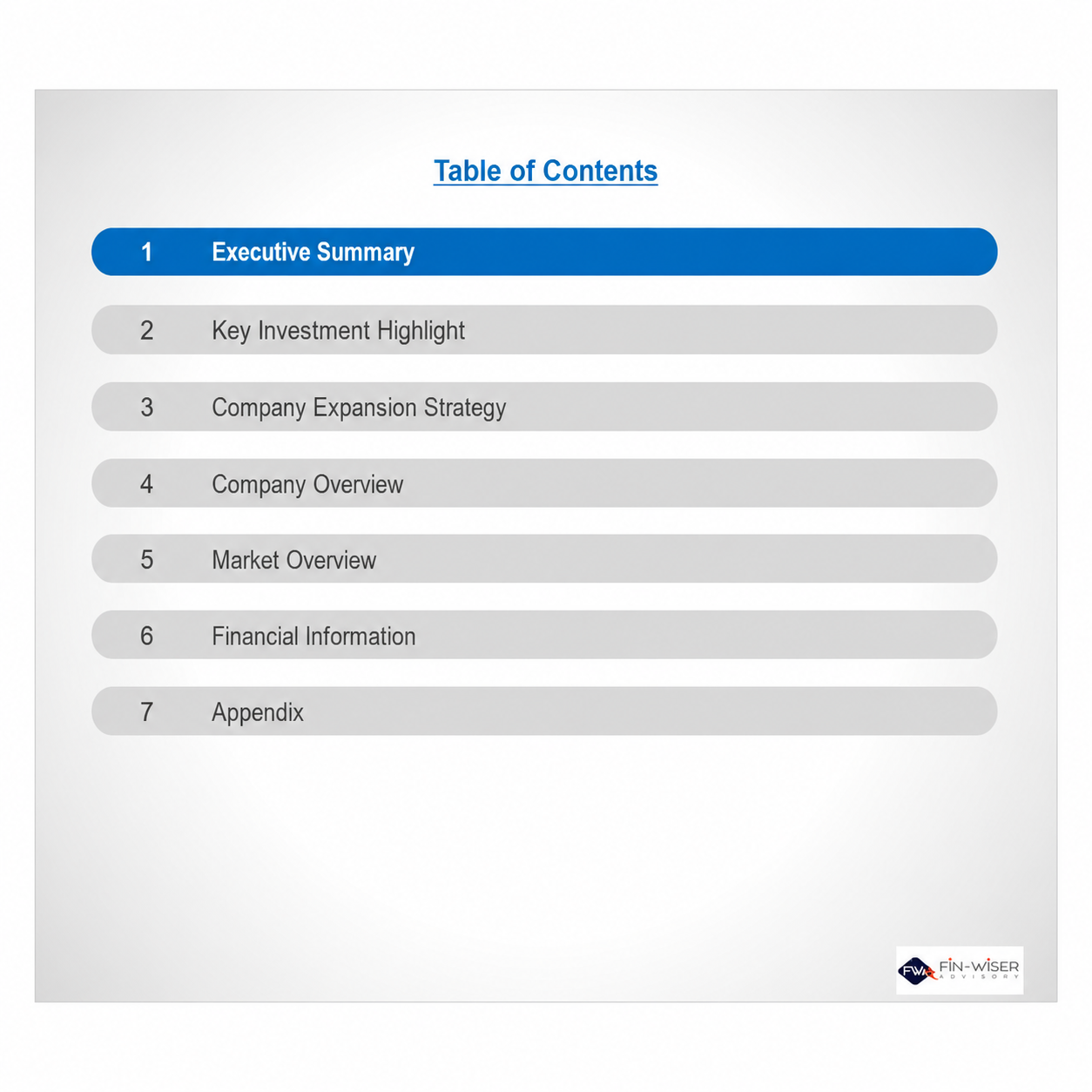
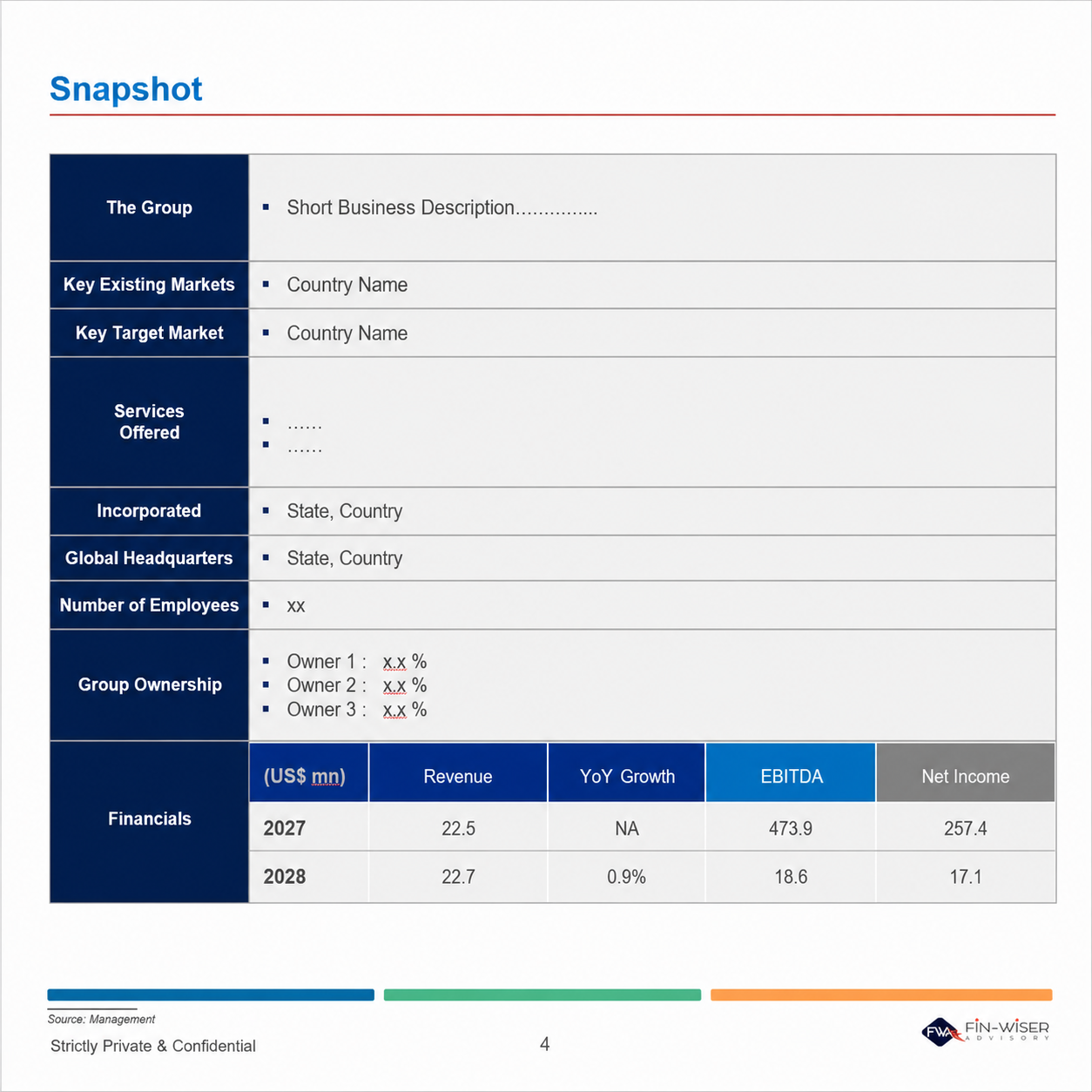
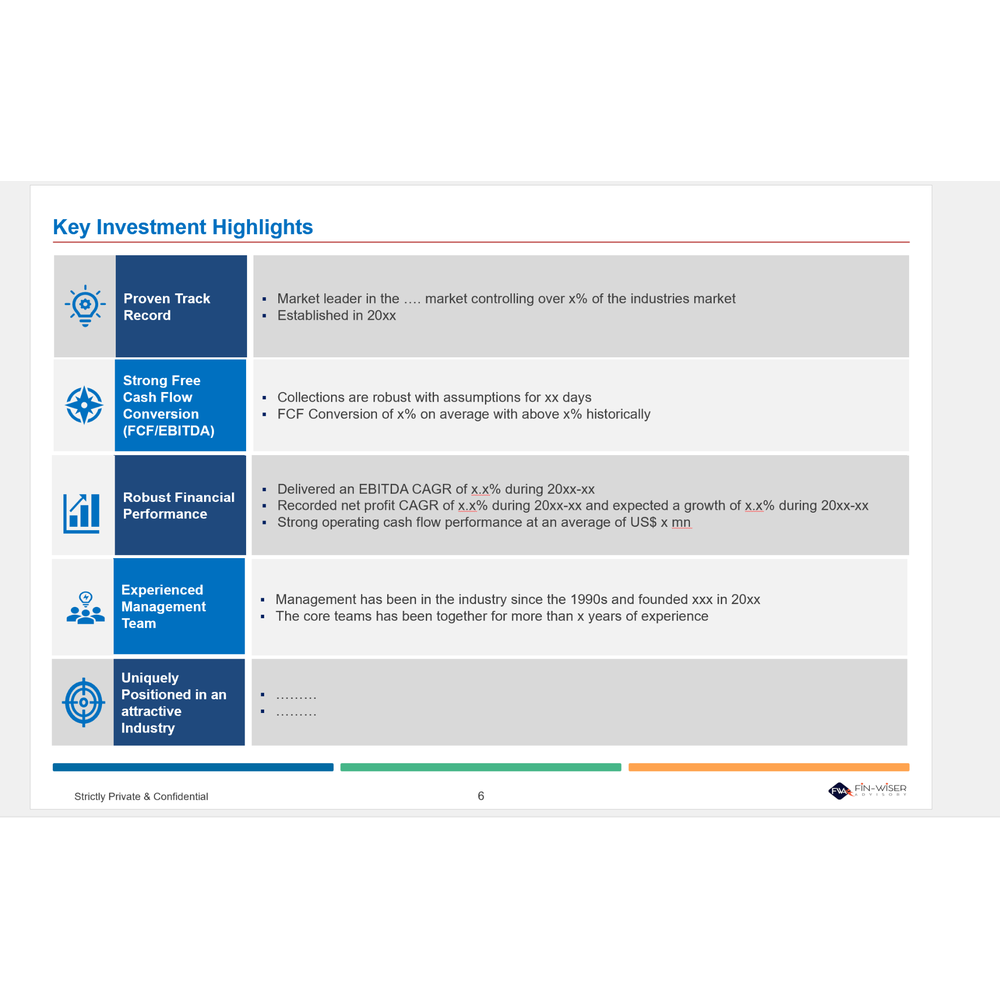
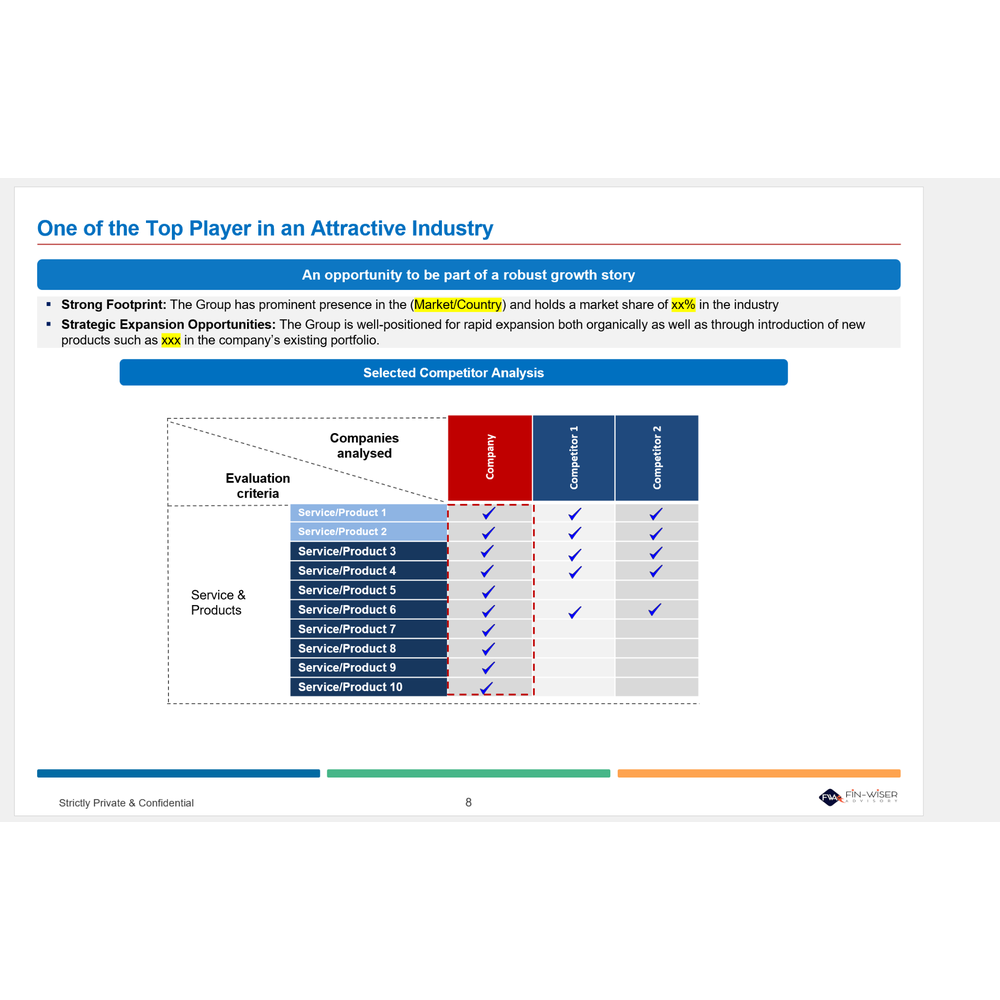
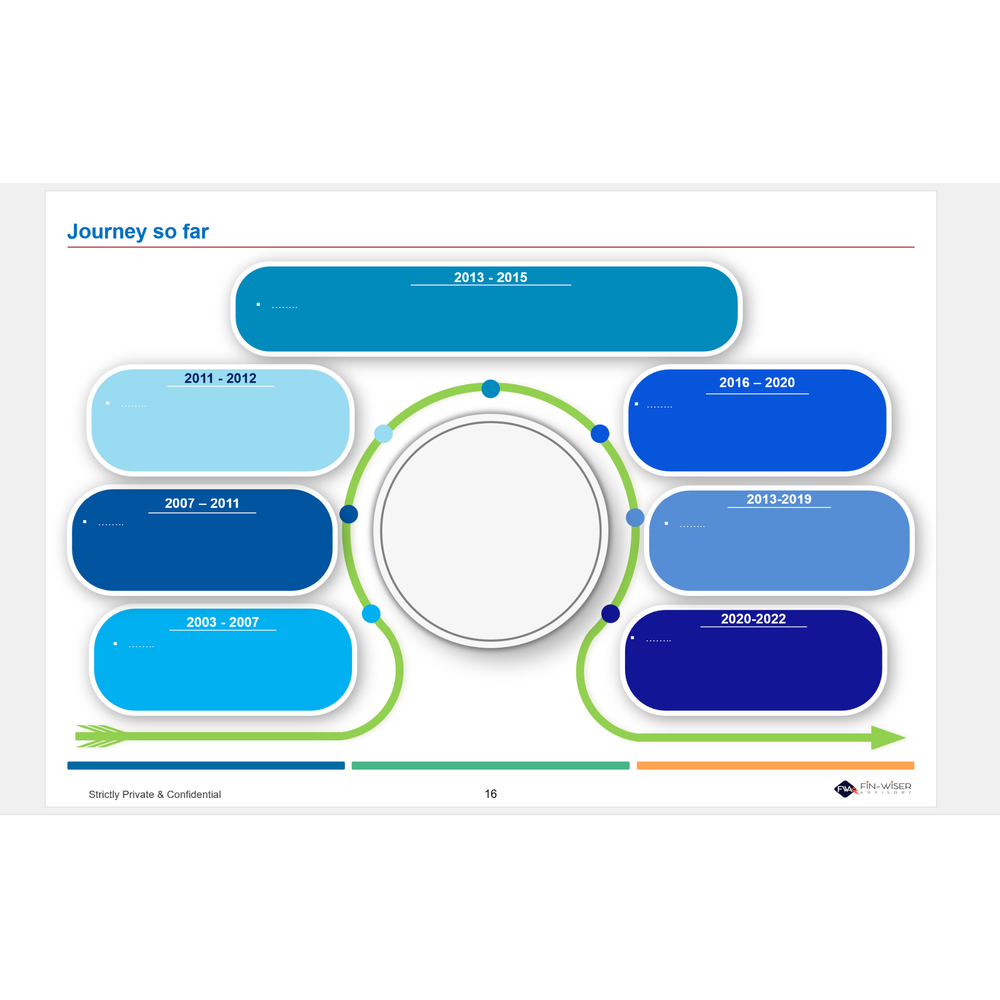
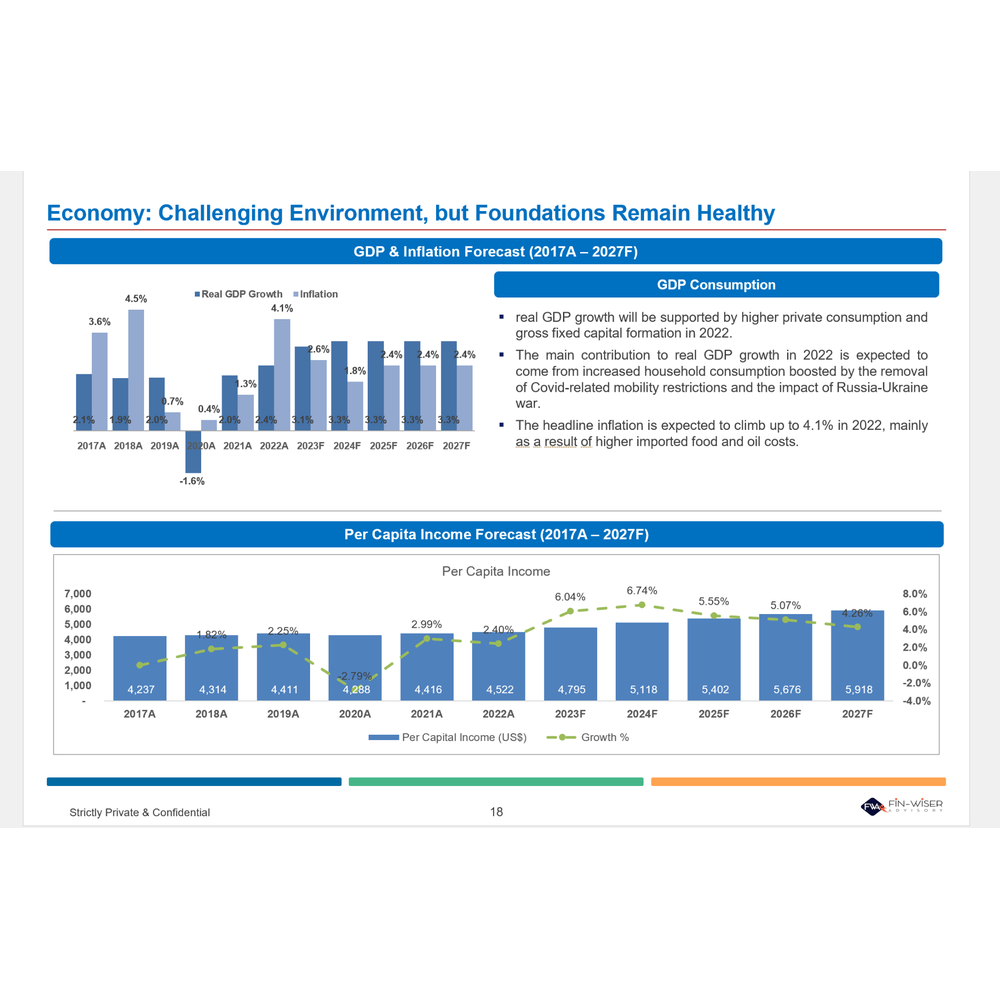
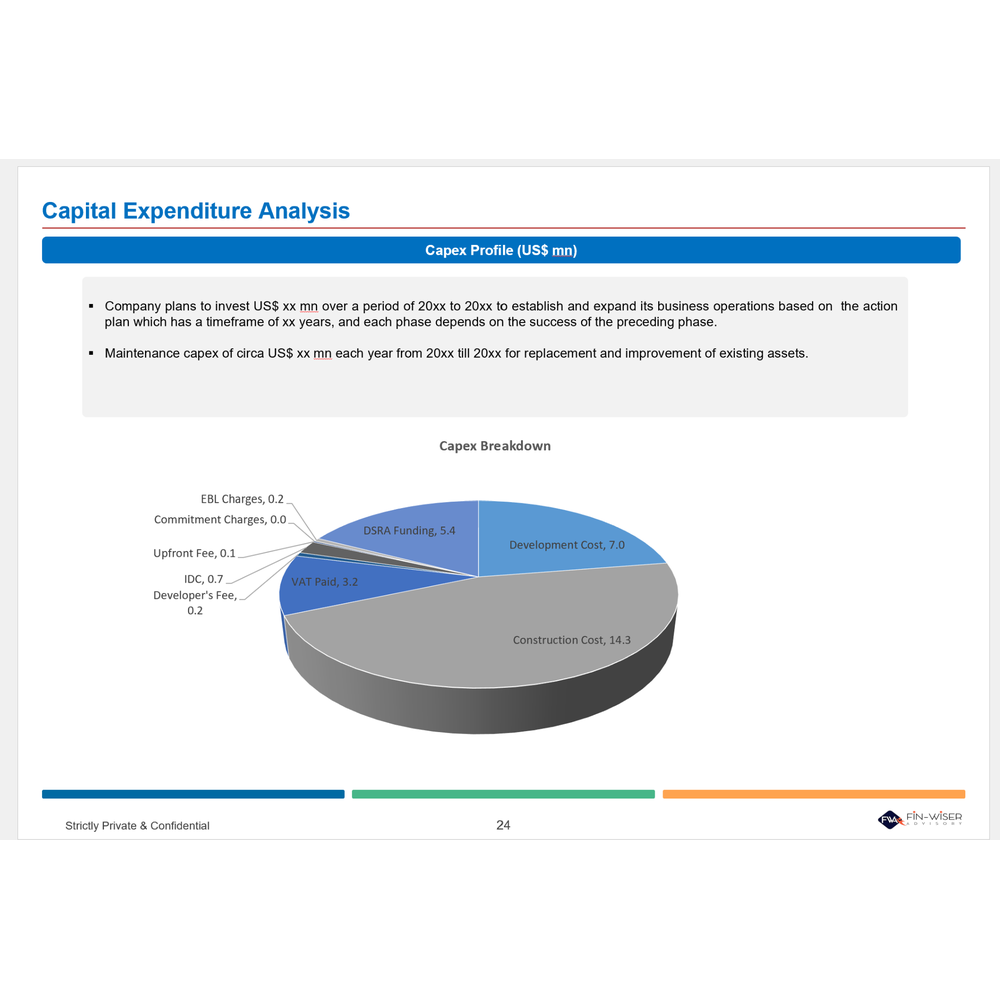
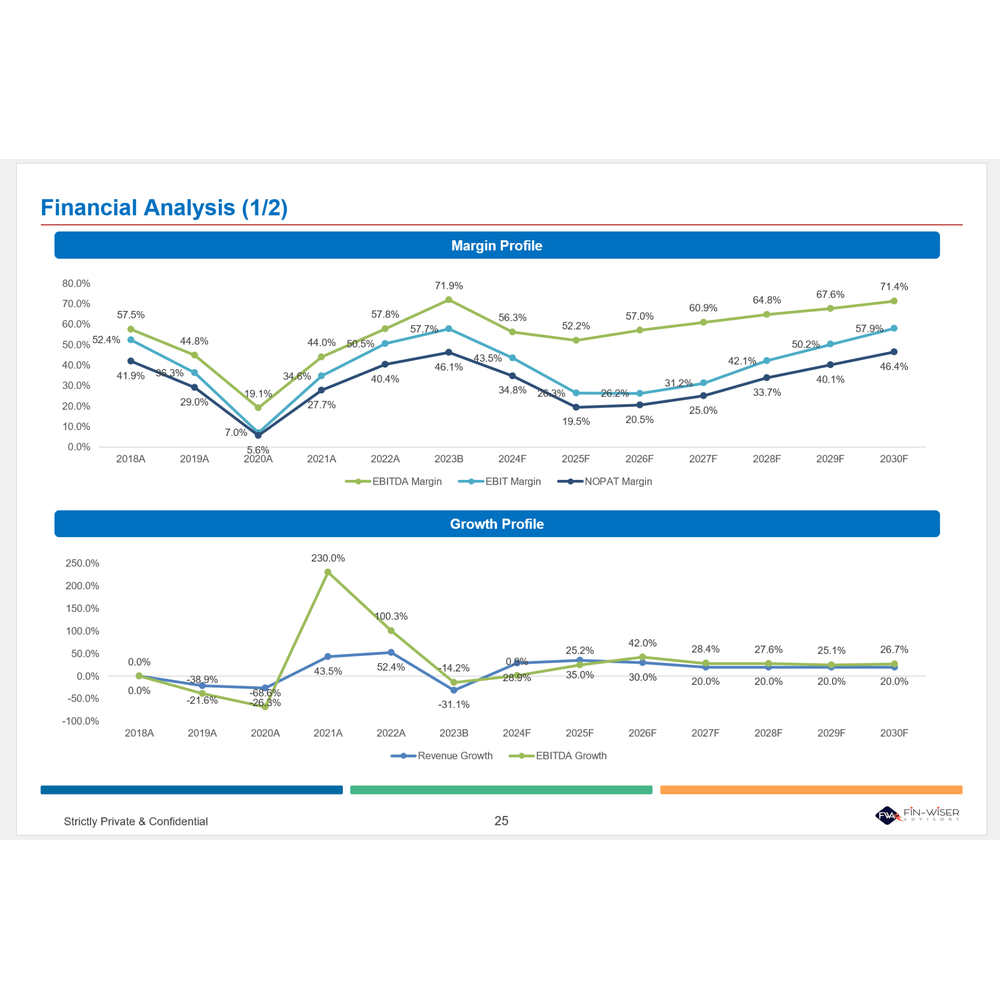
The 29-slide PowerPoint deck is built to institutional standard, covering a project snapshot, key investment highlights, financial performance, the expansion rationale and action plan, company and leadership overview, economic and market analysis, and a full financials section — income statement, balance sheet, cash flow, capital expenditure analysis and a two-part financial analysis. It is a genuine template you populate with your own project, not a thin outline.
Please note: the Information Memorandum is provided for illustrative and educational purposes. All projections and data within it are hypothetical and represent no actual project. It must be reviewed, revised and customised to reflect the specifics of your own project, and independent due diligence should be conducted before relying on it for any commercial or investment decision.
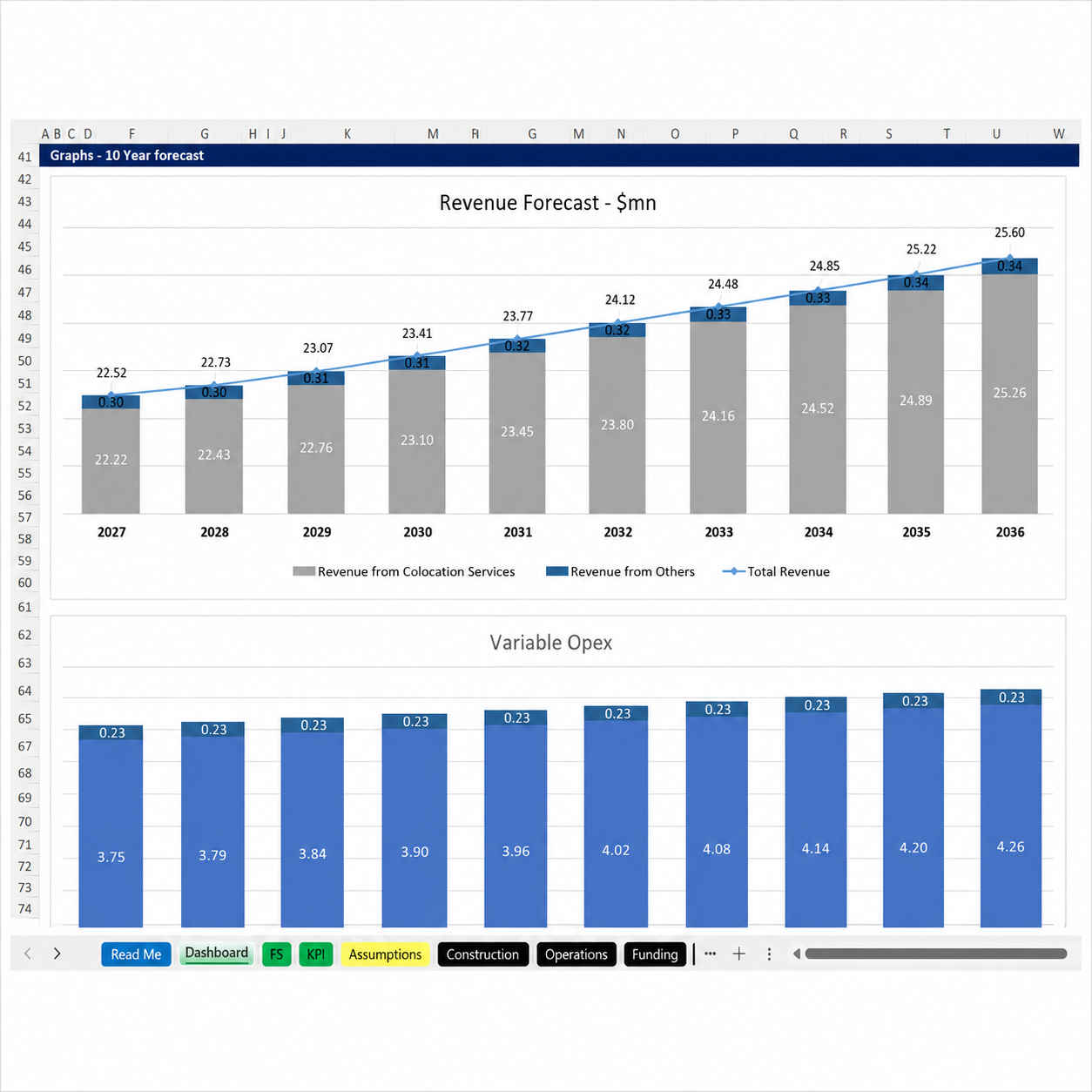
Revenue in this data center financial model is built the way the industry earns it. Gross floor area converts to rackable space, rack capacity is derived from the area required per rack, and an average occupancy rate reflects the ramp from launch to stabilisation. Available racks are then allocated across up to three subscription pricing options — so you can model a mix of standard, premium and enterprise tiers rather than a single blended rate.
That structure lets you answer the questions that decide a data center’s economics: how fast does occupancy need to ramp, what pricing mix delivers the target return, and how much rackable space you can wring from the floor plan. Each is a lever you can pull directly.
Construction cost is broken down the way a data center is actually built — facility cost (development, building construction and renovation), IT infrastructure (server hardware, networking equipment, cabling), power and cooling (power distribution units, backup generator, HVAC), and security and monitoring — plus a developer’s fee as a percentage of project cost. Each system carries its own useful life and depreciation, and a capex refresh switch reinvests in the hardware at end of life. For an asset where the IT plant ages far faster than the building, that separation is essential to an honest forecast.
Every driver of viability is an explicit, editable input. The assumptions cover:
| Facility Capex | Development and consulting, building construction and renovation |
| IT & Power Capex | Server hardware, networking, cabling; power distribution, backup generator and HVAC cooling |
| Revenue Drivers | Gross floor area, area per rack, occupancy rate, and rack allocation across three subscription pricing tiers |
| Variable O&M | Power consumption and price, cooling cost as a percentage of power, staffing, and maintenance as a percentage of capex |
| Fixed Costs | SPV cost, insurance, land lease, security, infrastructure maintenance AMC, and licences and certification |
| Financing | Debt-equity ratio, bank debt, and an equity bridge loan with its own tenor and pricing |
| Adjustments | Depreciation by useful life, capex refresh, indexation, working capital, VAT and an AED/USD exchange rate |
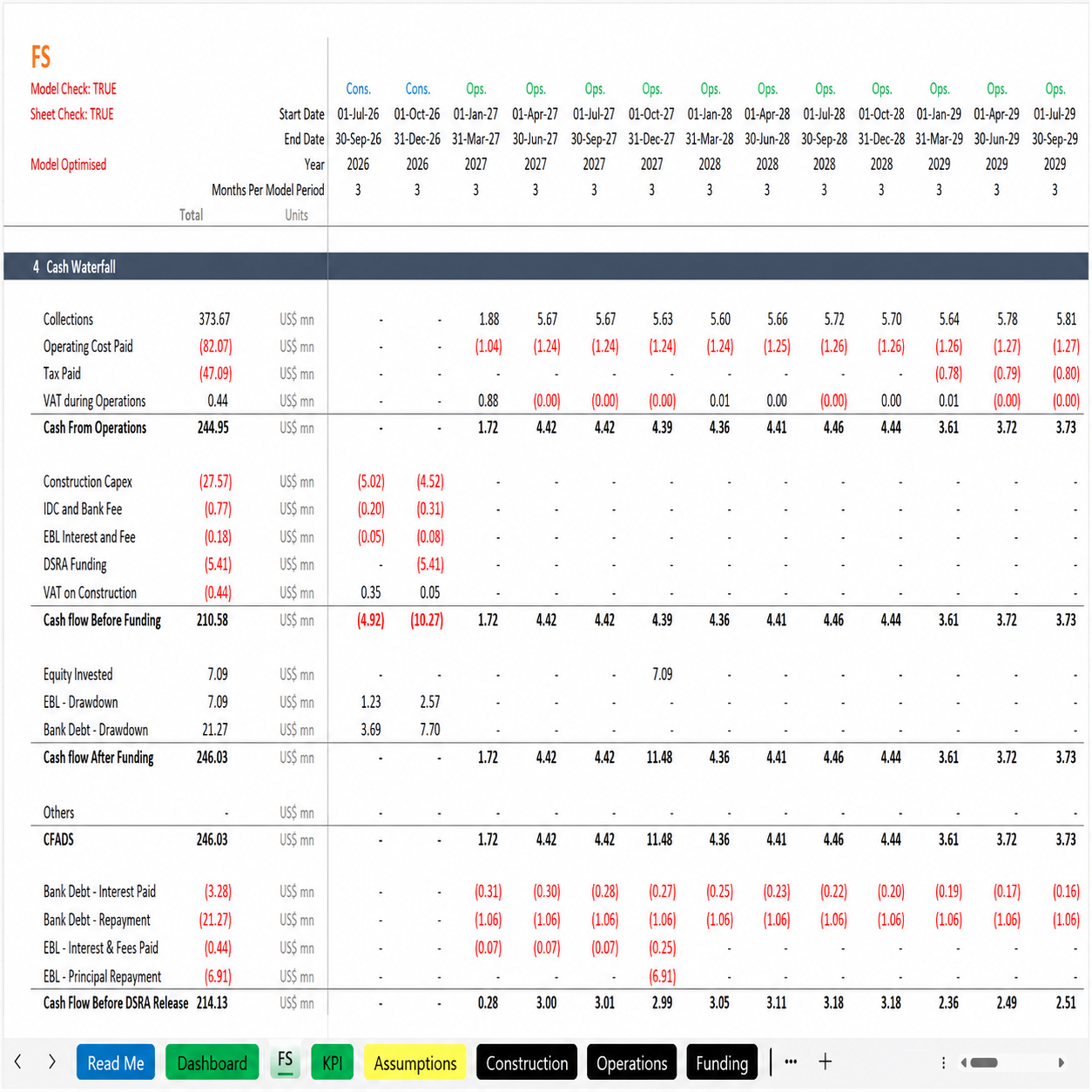
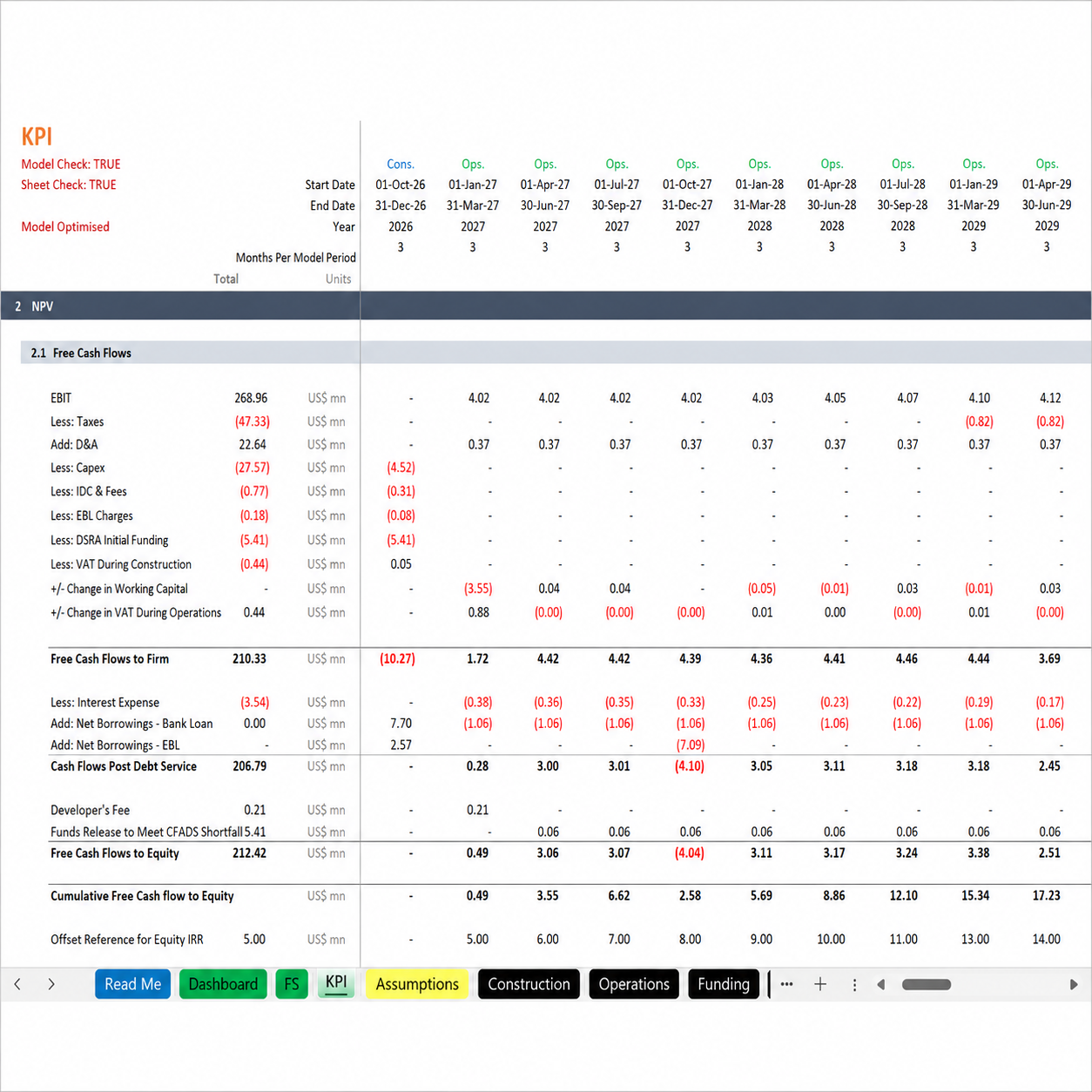
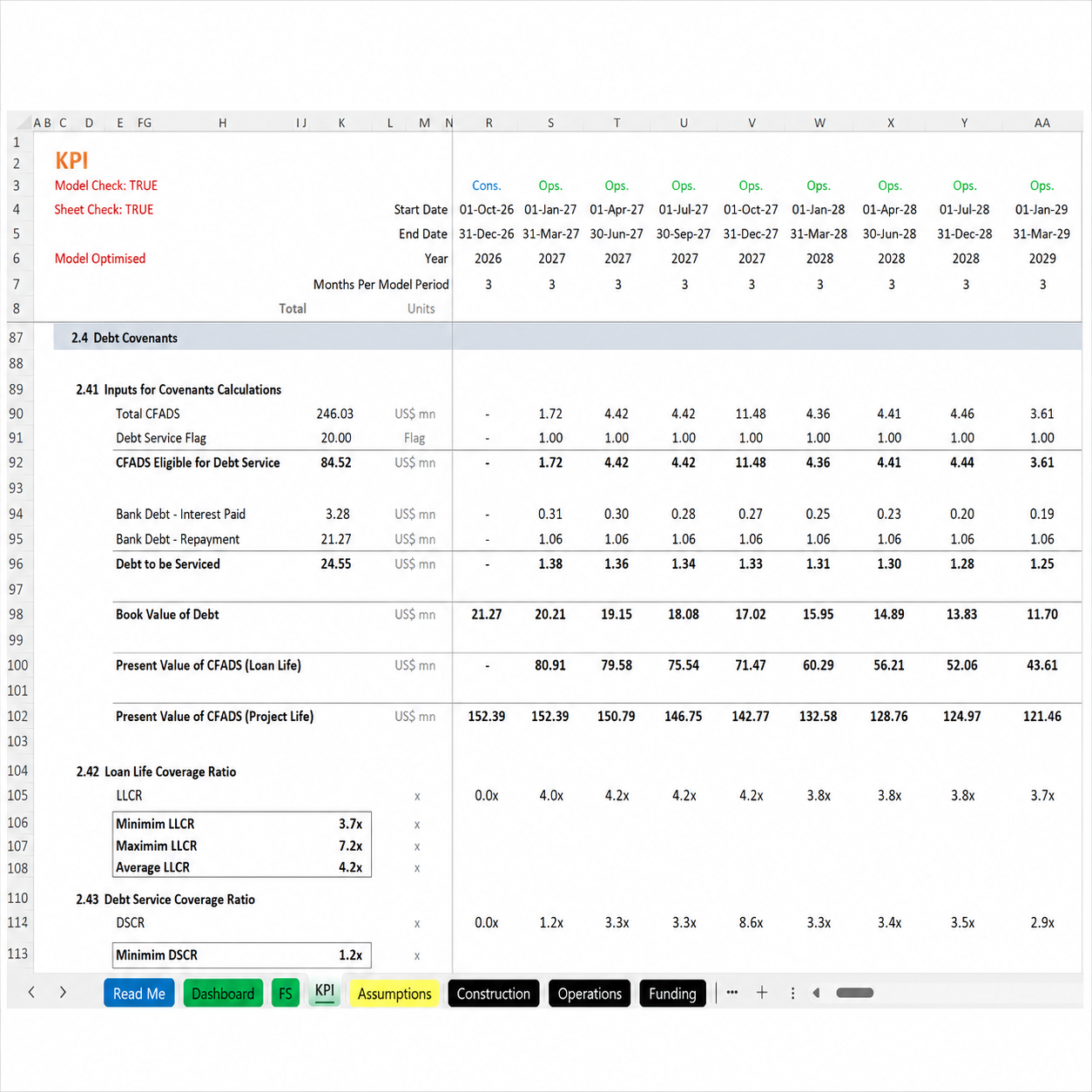
The model resolves your assumptions into the full set of metrics a financing decision turns on:
The funding module goes well beyond a simple debt-equity split. Interest during construction, bank fees and VAT capitalise into the funding requirement. A DSRA is sized and funded ahead of debt service. An equity bridge loan lets you defer equity injection through construction and see the effect on Equity IRR, with its own tenor, interest and repayment. The model is optimised through a dedicated routine that resolves the circularity between funding, interest and project cost at the click of a button.
A 29-slide investor deck alongside the model, so your numbers and your pitch come from one consistent source.
DSCR, LLCR and PLCR with an EBL, DSRA and IDC — project-finance-grade, not a business-plan approximation.
Occupancy ramp and three subscription tiers, so you model a data center the way it actually earns.
New to these metrics? Read an overview of the debt service coverage ratio. For a model built to your own specification, see our project finance advisory services, or browse the full range of business plan Excel models.
A complete data center project finance model with rack-and-subscription revenue, full lender covenants and an equity bridge loan — plus a 29-slide investor Information Memorandum.