$299.00
A flagship, institutional-grade hydropower financial model for run-of-river projects — bundled with a complete Information Memorandum template, so you can build the numbers and tell the story from a single package.
As countries accelerate their transition toward clean and reliable energy, run-of-river hydropower is emerging as a critical backbone for long-term, low-carbon generation — particularly in the hilly, high-head terrains found across emerging markets. Unlike intermittent renewables, hydro delivers predictable baseload output over decades, which is precisely why lenders will finance it and precisely why the modelling has to be right.
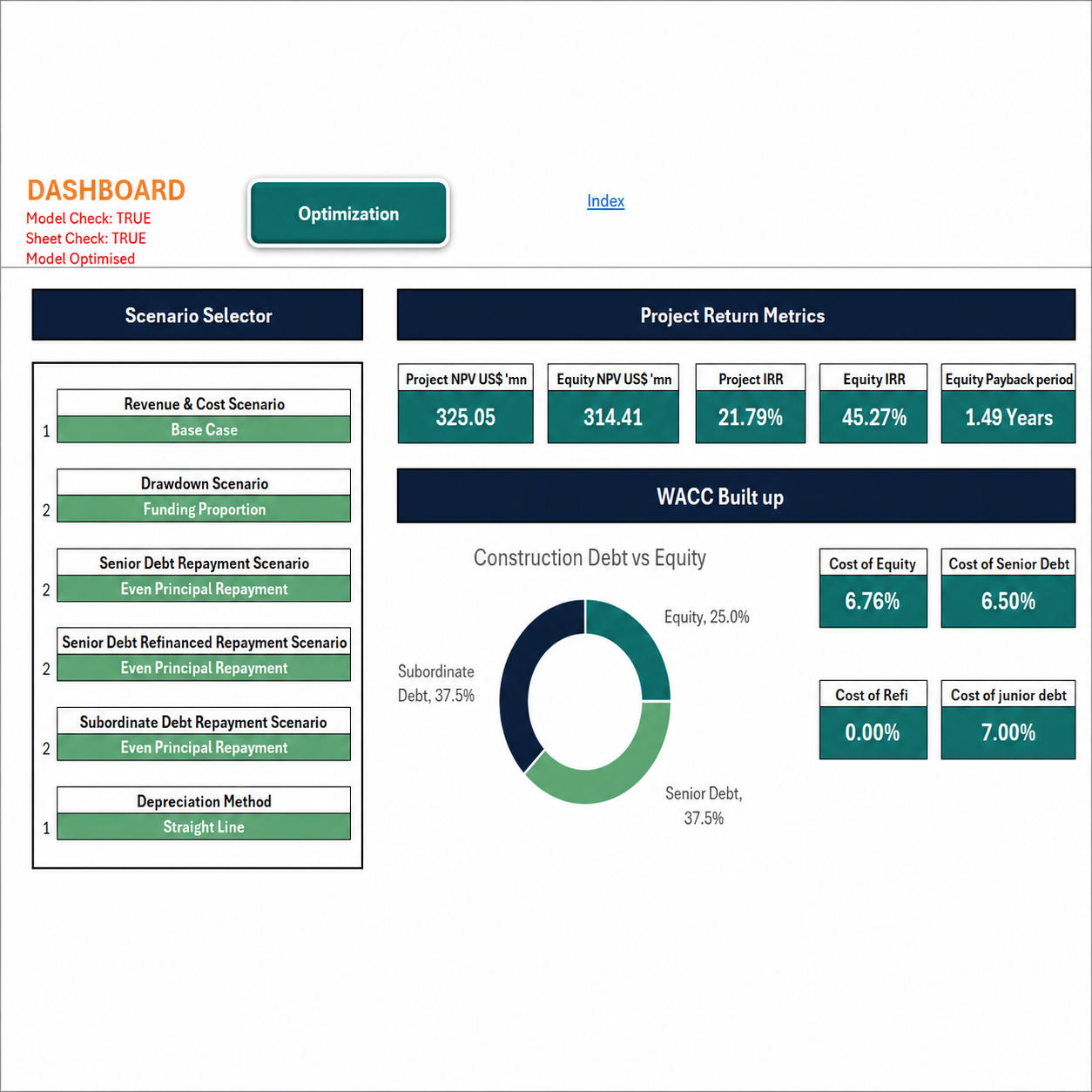
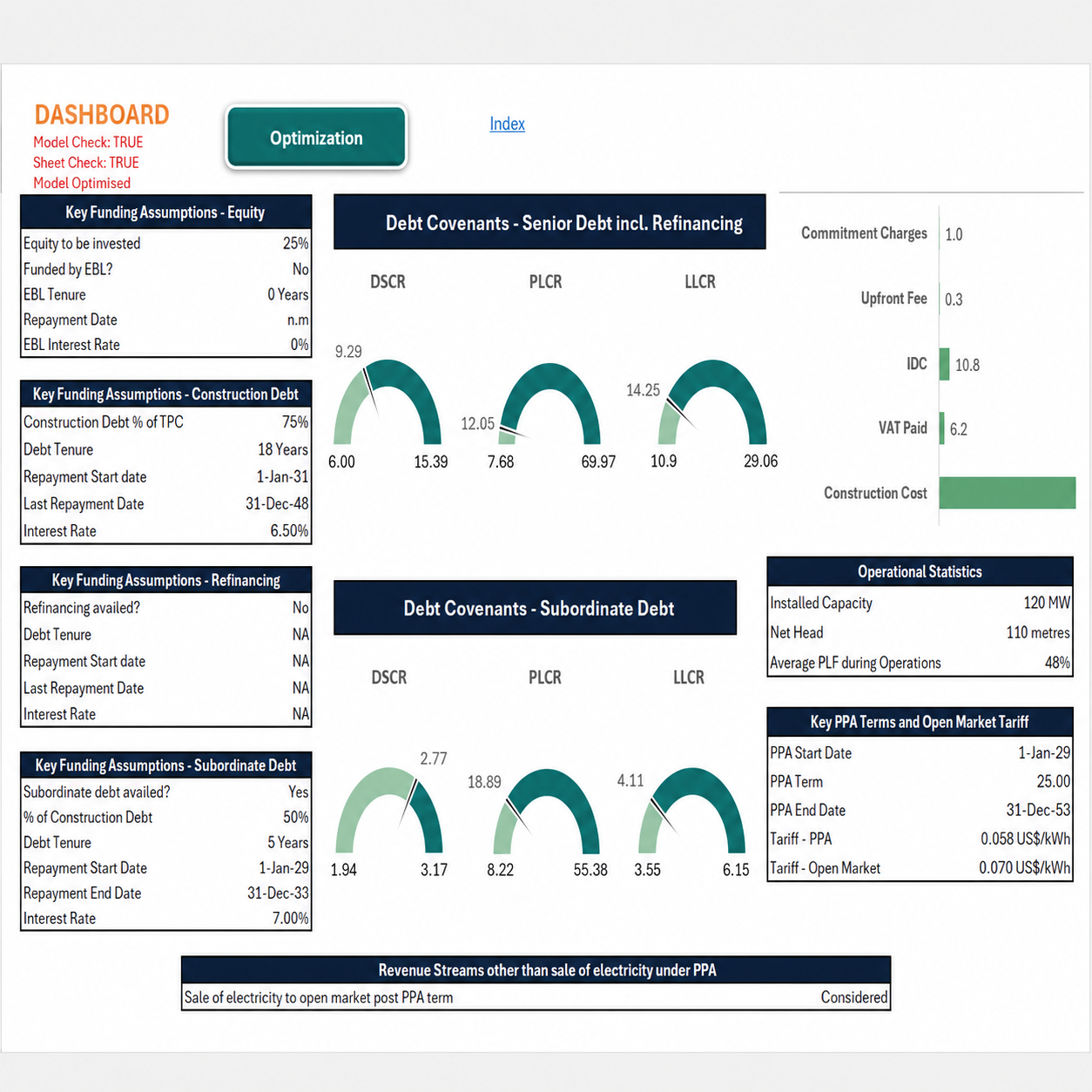
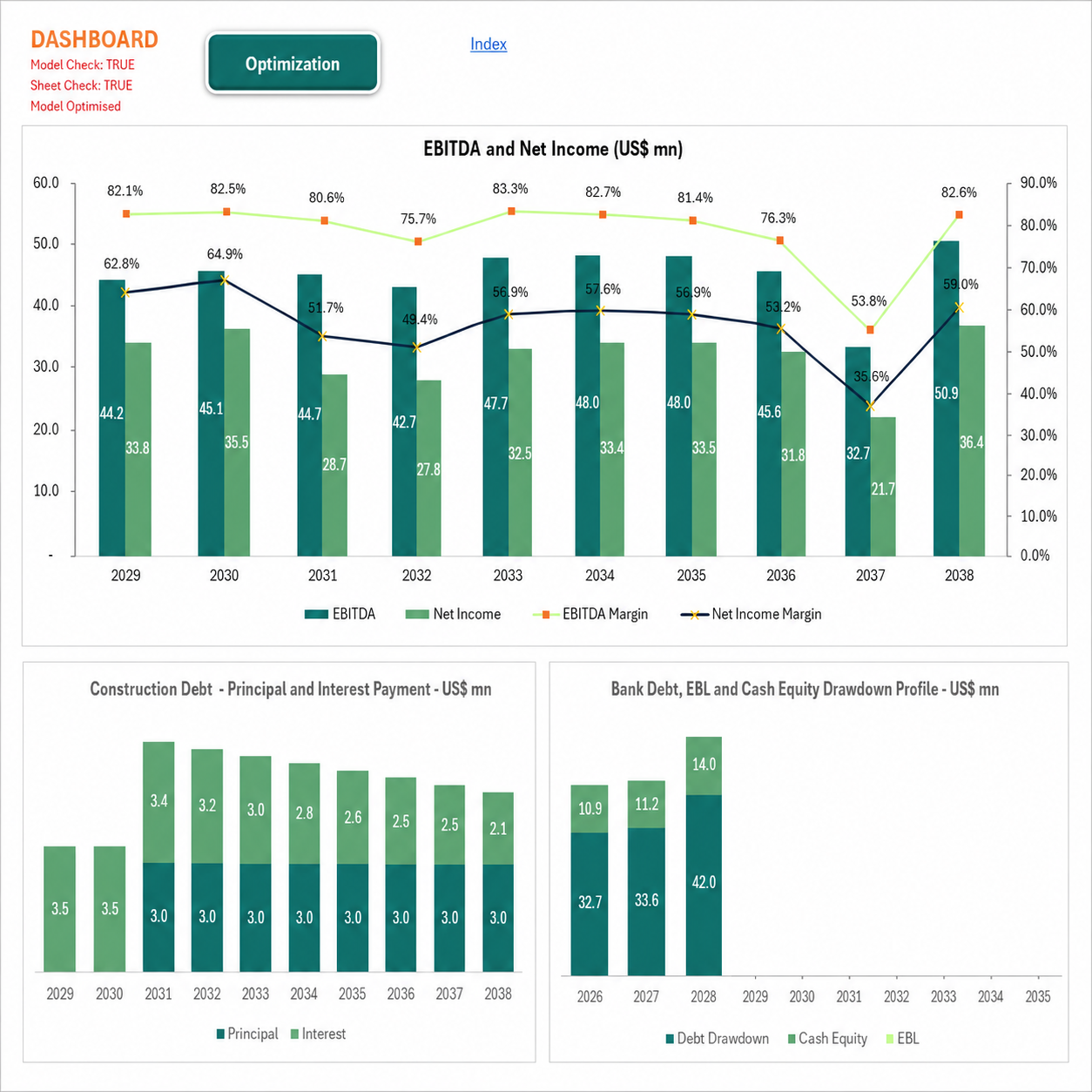
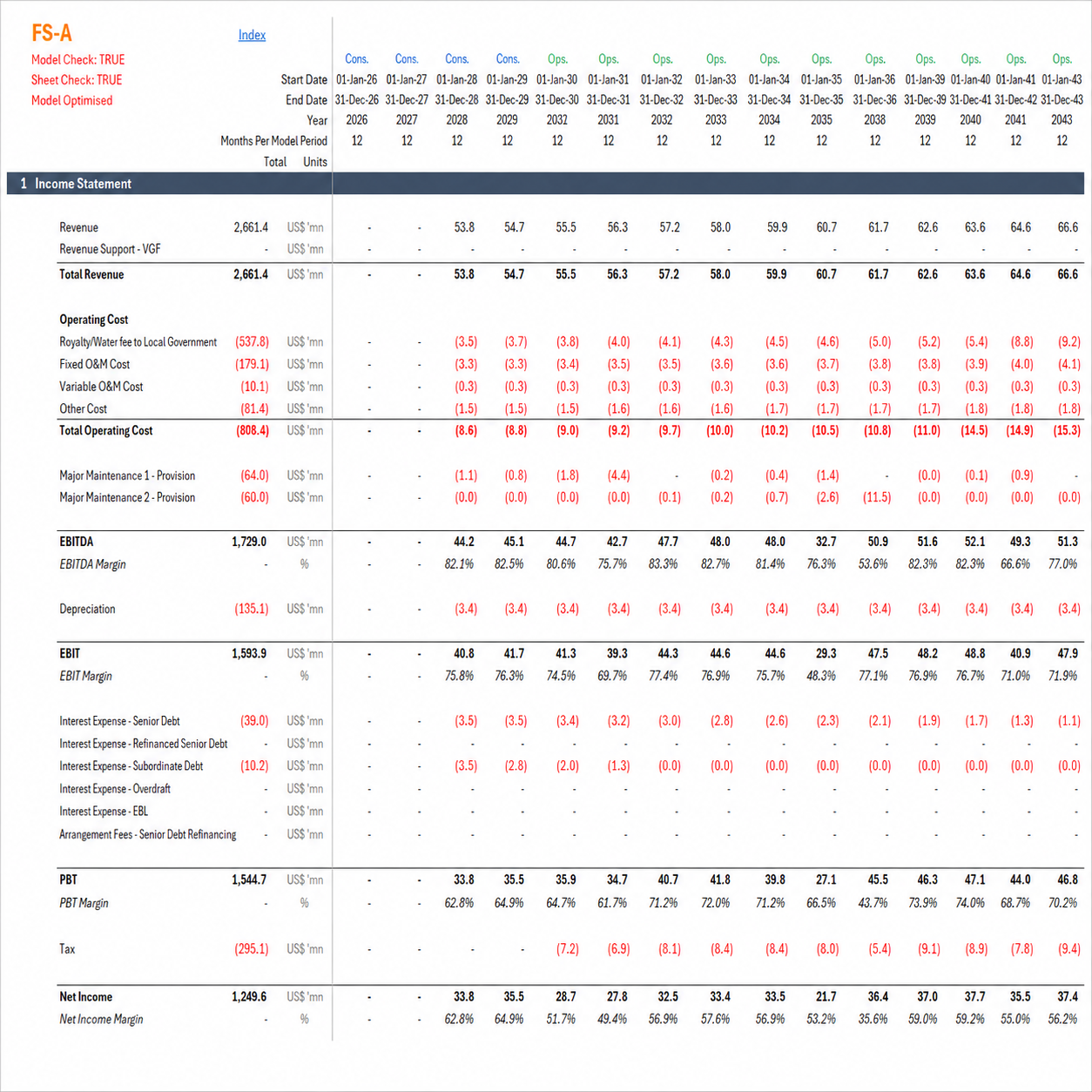
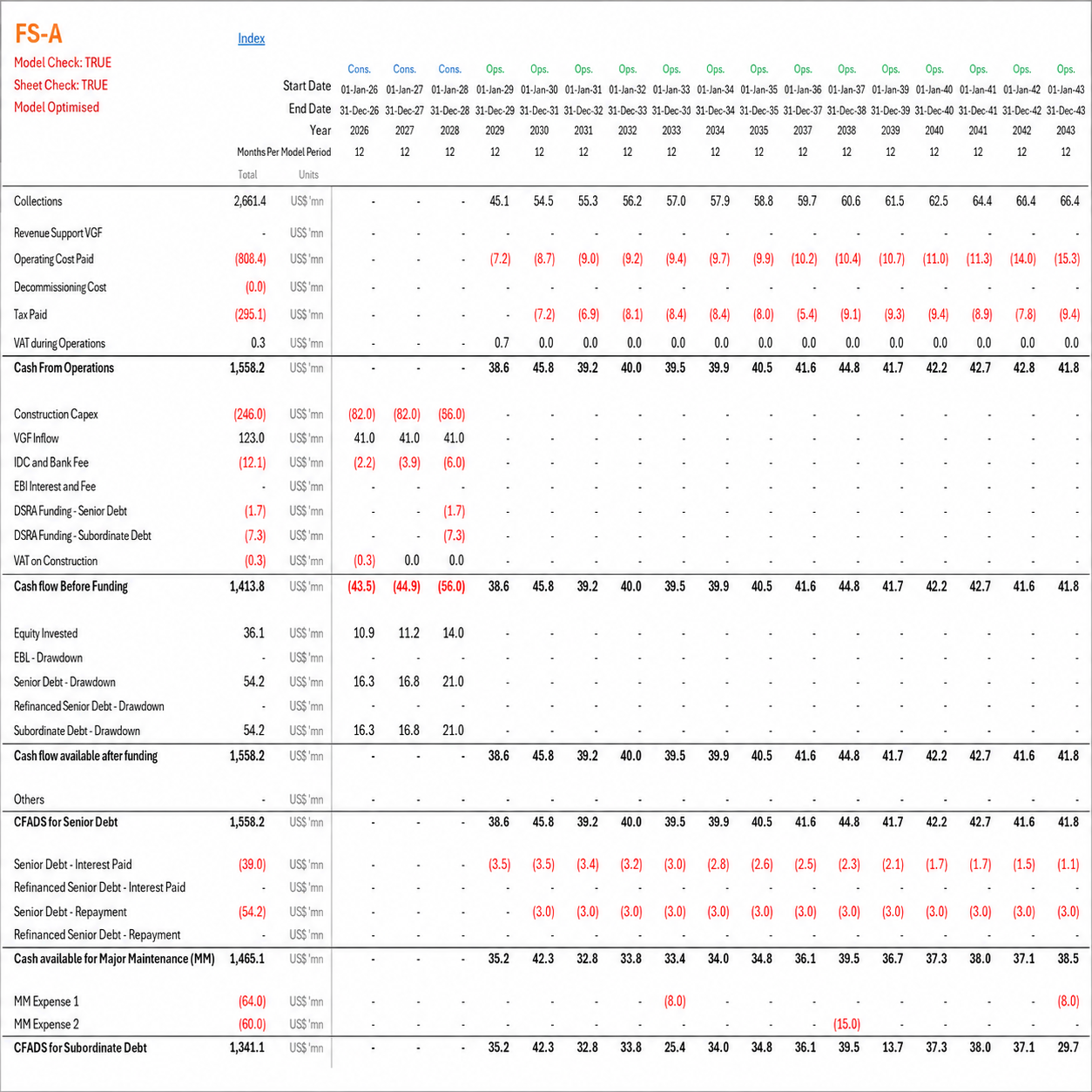
At Finwiserr we specialise in building the financial models and business plans that help investors, operators and developers navigate the complexity of setting up and running a hydropower plant. This hydropower financial model captures every input that decides viability — capex by category, a multi-stream revenue framework, a granular cost structure and a flexible funding stack including viability gap funding — and resolves them into the metrics a financing decision turns on.
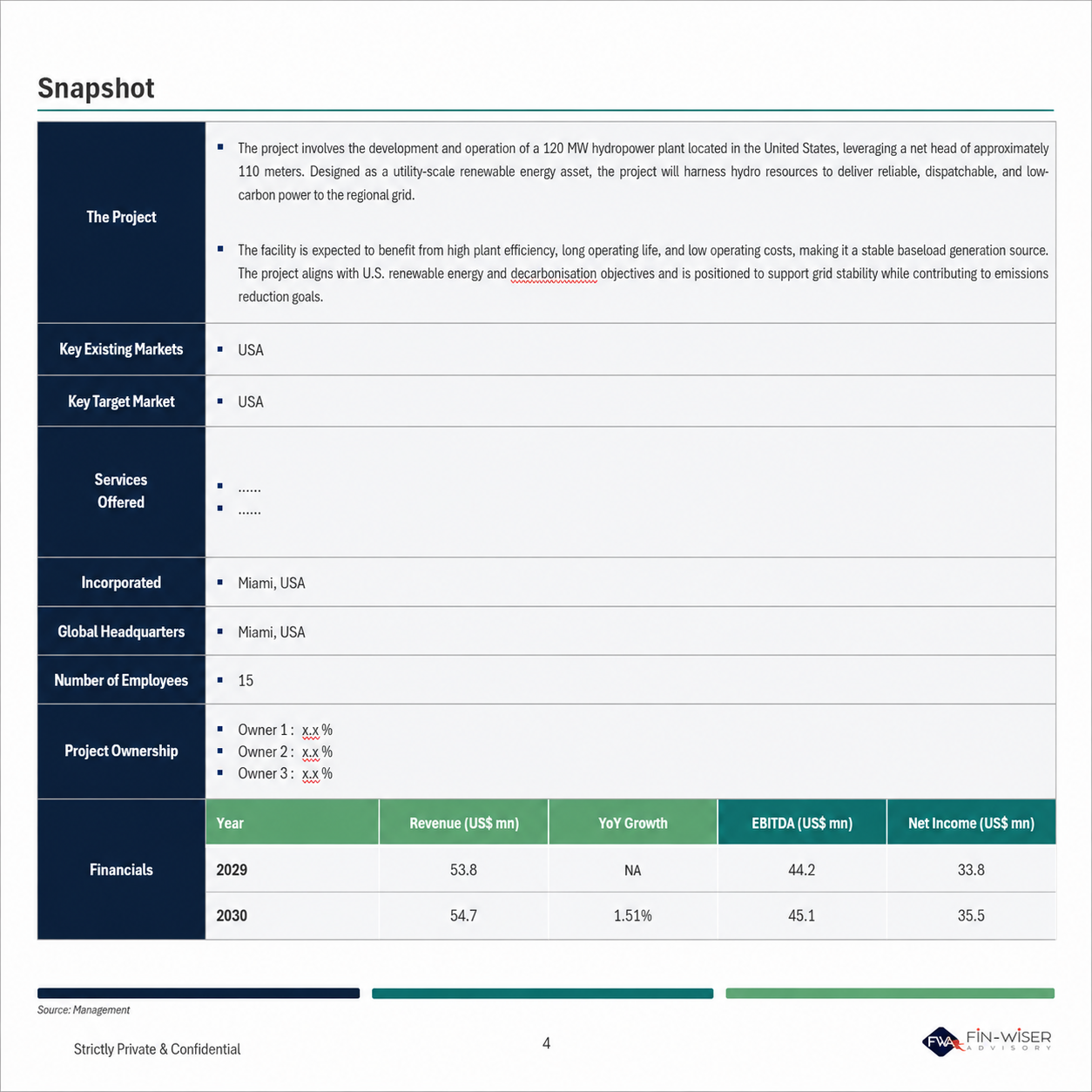
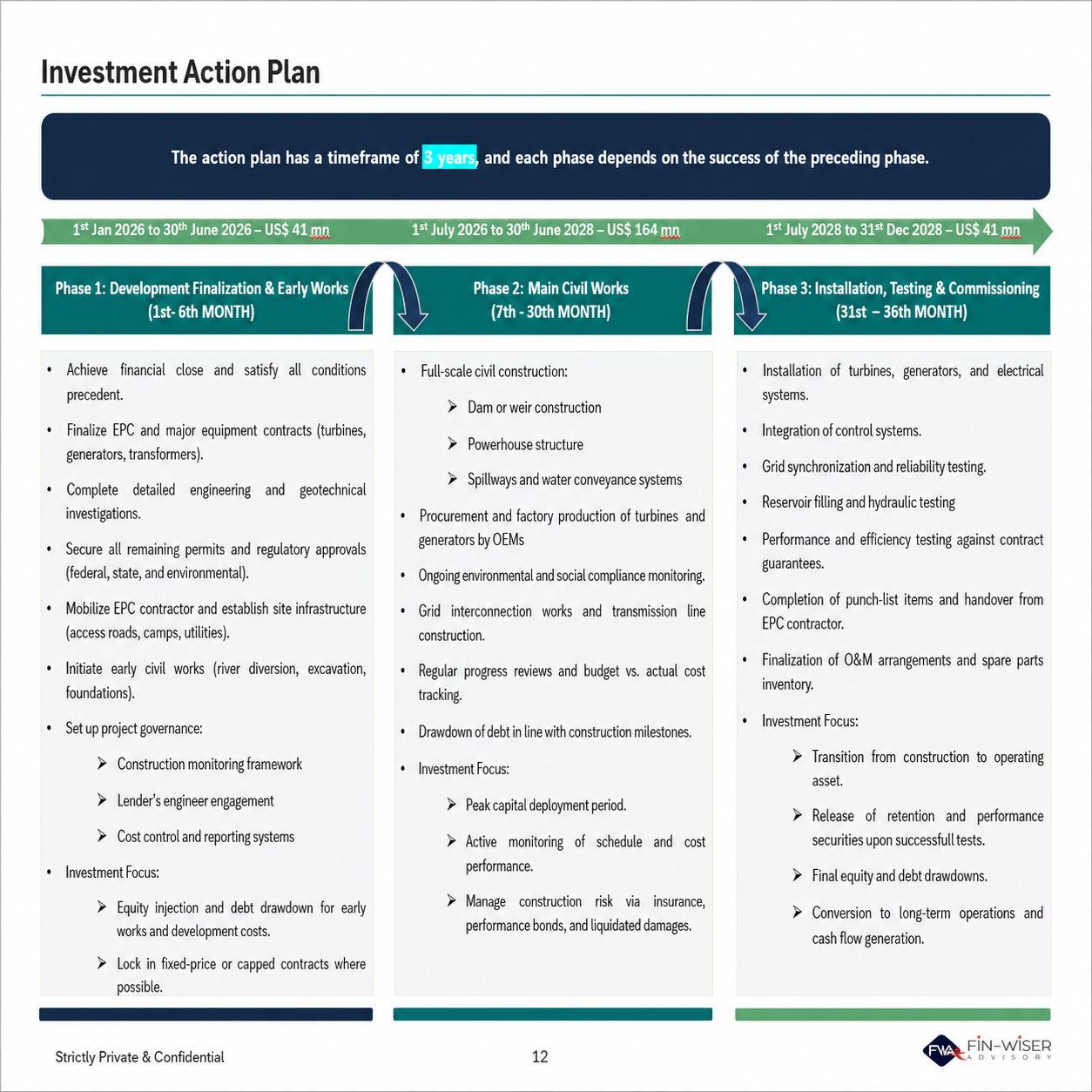
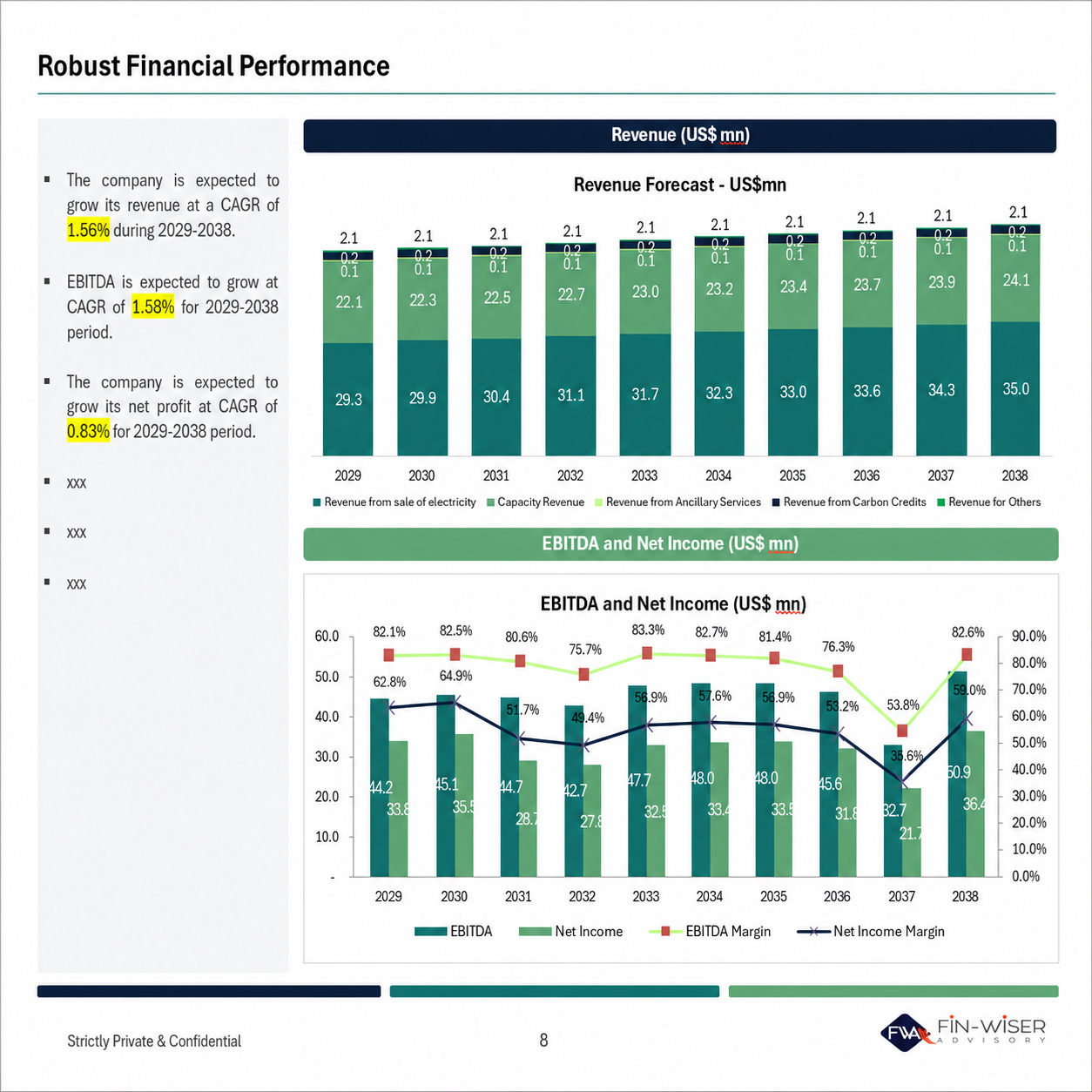
What sets this package apart is what comes with it. Alongside the model sits an Information Memorandum template whose financial sections populate directly from the model — so the document you put in front of investors is consistent with the numbers behind it, by construction rather than by careful copying.
An Information Memorandum presents a clear, structured overview of a project or investment opportunity. It gives potential investors and stakeholders insight into financial performance, the market landscape, growth prospects and the associated risks — the document that turns a spreadsheet into a fundable proposition. IMs are standard in capital raising, mergers, acquisitions and project financing.
Most template sellers stop at the model and leave you to write the memorandum yourself. This package includes both, in PowerPoint format, with the financial sections designed to be populated directly from the accompanying model. That linkage matters more than it might sound: inconsistency between the model and the IM is one of the fastest ways to lose credibility in a fundraise.
Please note: the Information Memorandum is provided for illustrative and educational purposes. All projections, market data and assumptions within it are hypothetical and represent no actual project. It must be reviewed, revised and customised to reflect the specifics of your own project, and independent due diligence should be conducted before relying on it for any commercial or investment decision.
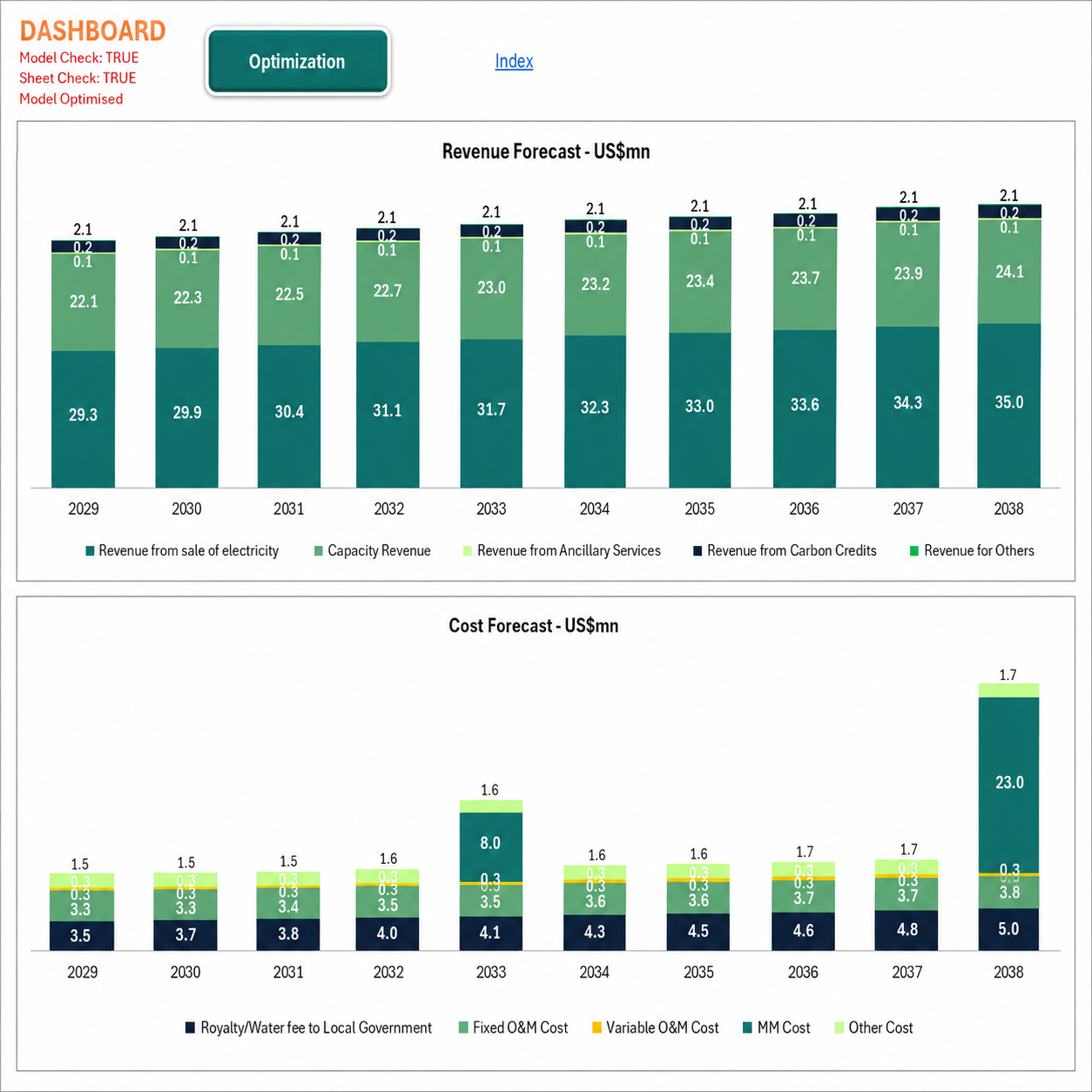
Hydropower no longer earns from a single tariff. This hydropower financial model handles long-term PPA modelling alongside capacity payments, ancillary services and carbon credits priced on a tonne-of-CO₂ basis — four distinct income streams with quite different risk profiles.
The distinction is commercially significant. A PPA is contracted and bankable; ancillary services revenue is variable but often high-margin; carbon credits depend on a policy regime that may or may not persist. Modelling them separately lets you show a lender exactly how much of the return rests on contracted cash flow and how much on upside.
Many hydropower projects in emerging markets only close with government support, and the model treats that support as a first-class input. Three VGF structures are available — grant as a percentage of capex, milestone-based disbursement, and revenue gap funding — so you can test which form of support actually makes the project bankable, and how much of it you need. Very few commercially available models handle VGF at all, let alone in three configurations.
Every driver of viability is an explicit, editable input. The assumptions cover:
| Capital Expenditure | Plant capex, electro-mechanical equipment, transmission infrastructure, environmental and social costs, and developer’s fee |
| Revenue Framework | Long-term PPA, capacity payments, ancillary services, carbon credits (tCO₂-based) and other revenue |
| Fixed Costs | Four subheads — staff, routine maintenance, insurance, and administration and overhead |
| Variable & Other Costs | Variable O&M, royalty and water fee to local government, major maintenance and overhauls, and other SPV-level cost |
| Funding Profile | Cash equity, bridge loan, bank debt, DSRA and bank overdraft |
| VGF Structures | Grant as a percentage of capex, milestone-based VGF, and revenue gap VGF |
| Debt Repayment | Annuity, sculpted and even-principal options |
| Adjustments | Straight-line depreciation, inflation and indexation, VAT during construction and operations, working capital and decommissioning reserve |
Built-in sensitivity analysis lets you assess downside and upside risk across the four variables that most often decide a hydropower project’s fate: tariff variations, capex overruns, hydrology shortfall and interest rate movements.
Hydrology deserves particular attention. A dry sequence of years can compress generation revenue precisely when debt service is at its heaviest, and lenders will want to see that scenario modelled explicitly rather than assumed away. Being able to present that analysis — rather than a single optimistic base case — is often what moves a financing conversation forward.
The IM’s financial sections populate from the model, so your investor document and your numbers cannot drift apart.
Percentage-of-capex, milestone-based and revenue gap funding — support mechanisms most templates ignore entirely.
Built-in sensitivity on hydrology shortfall — the single risk lenders ask about first on a run-of-river scheme.
New to these metrics? Read an overview of the debt service coverage ratio. For a model built to your own specification, see our project finance advisory services, or browse the full range of PPP and project finance templates.
A complete run-of-river hydropower model with PPA and carbon revenue, VGF structures, hydrology sensitivity — and an investor-ready Information Memorandum in the same package.
</d