$149.00
The Financial Modelling Self-Learning Kit teaches you financial modelling by having you build a model — module by module, from raw historicals to a finished DCF valuation.
This is a complete, step-by-step course in Excel. You don’t watch someone else build a model. You build it yourself, one sheet at a time, until you have a fully integrated three-statement model with DCF and comparable company valuation attached.
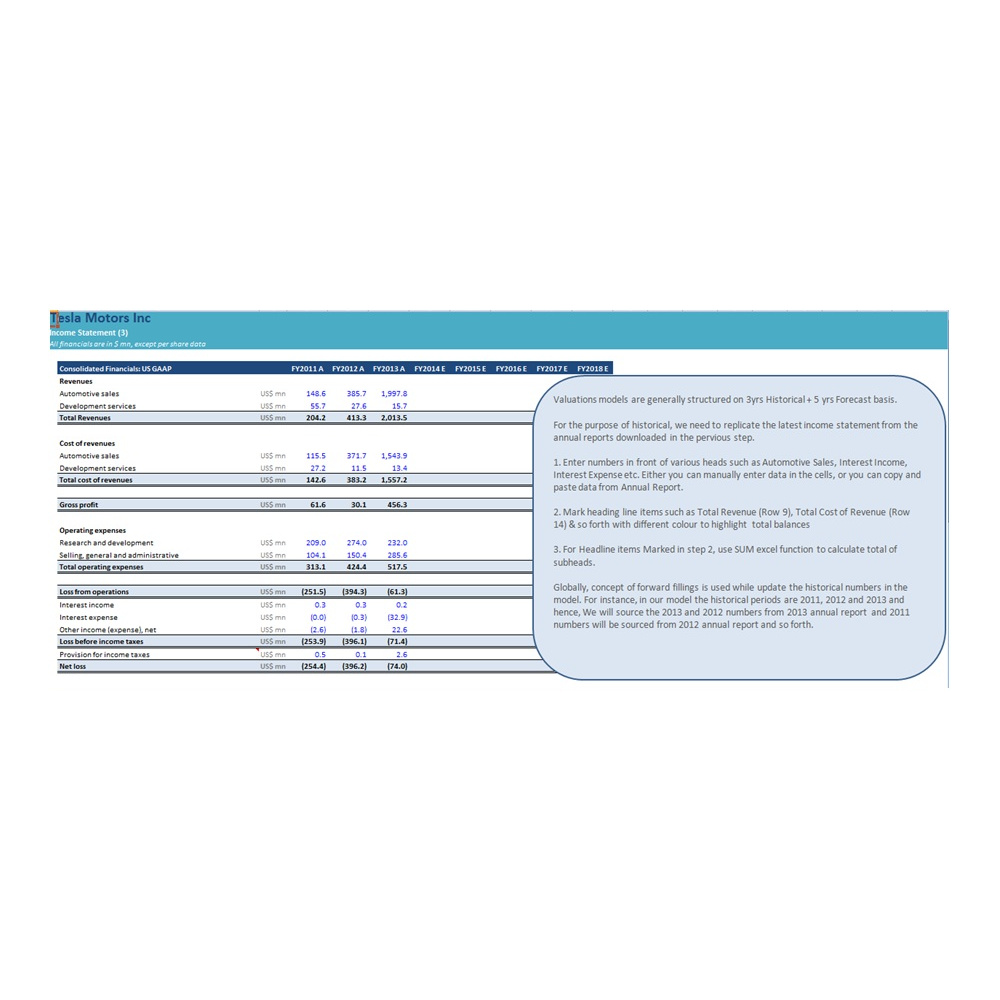
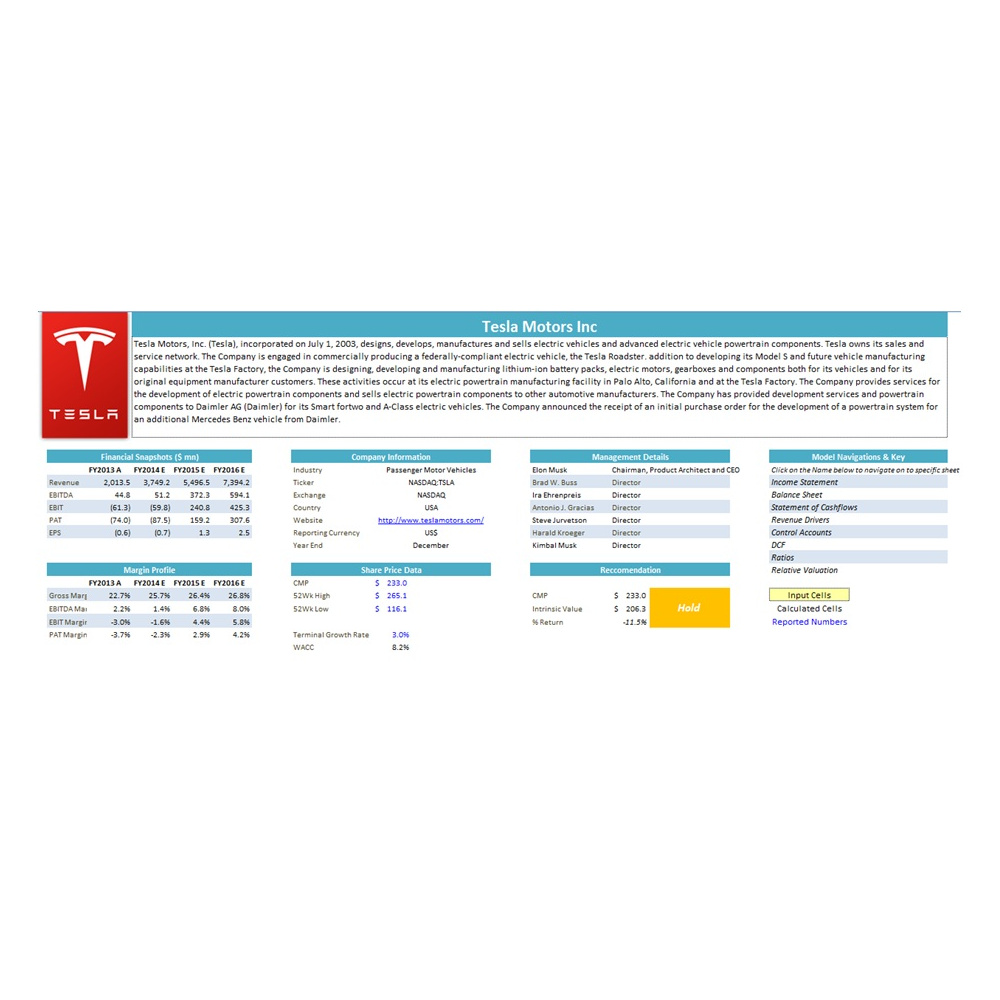
Everything is built around a real company — Tesla Motors — so you work with genuine reported numbers rather than tidy textbook figures.
By the end of the kit you will have constructed, from scratch:
Financial modelling is the language of investment decisions. If your work involves forecasting, valuing or funding a business, this kit is built for you:
No prior modelling experience is assumed. Comfort with Excel basics is enough to start.
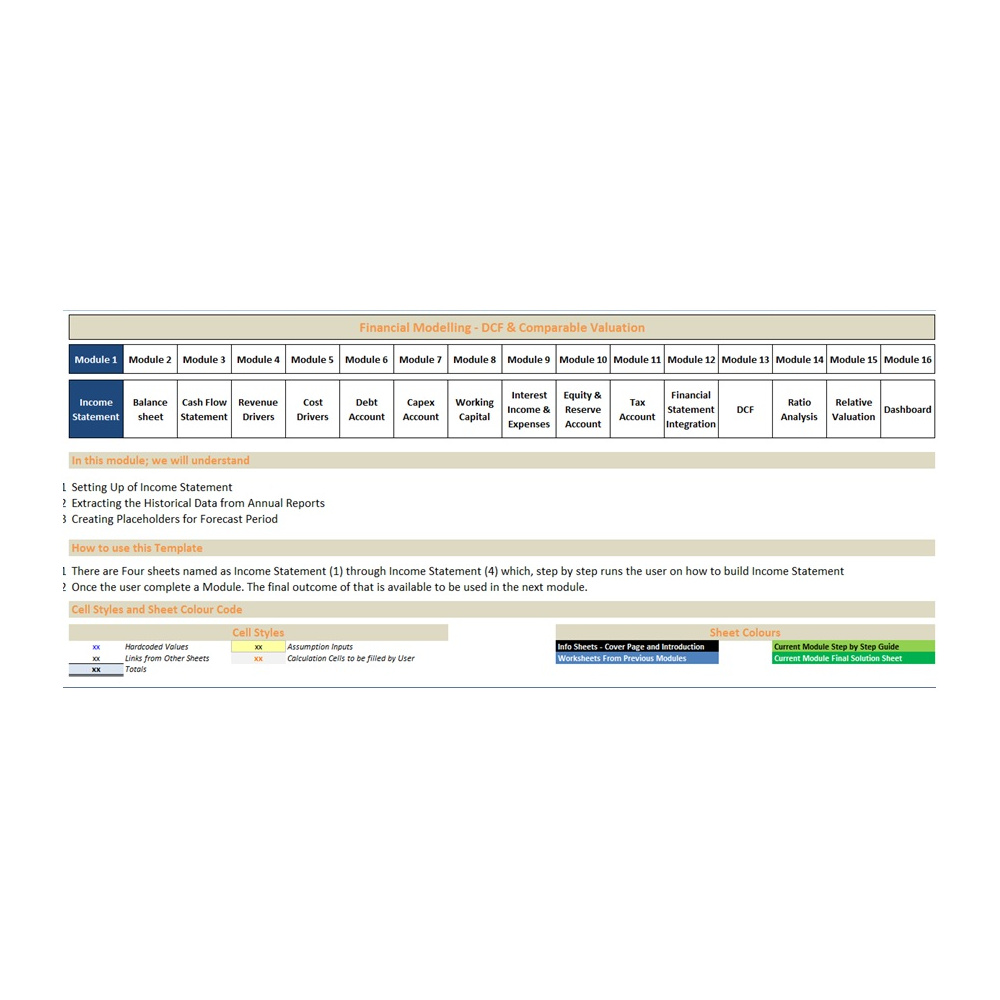
Each module is a separate Excel file that explains the concept, then walks you through structuring that part of the model. They build on one another, so nothing arrives out of order.
| Building the Historicals | |
| 01 | Structuring the historical income statement |
| 02 | Structuring the historical balance sheet |
| 03 | Structuring the historical cash flow statement |
| Forecast Drivers & Supporting Schedules | |
| 04 | Setting up revenue drivers |
| 05 | Building cost drivers |
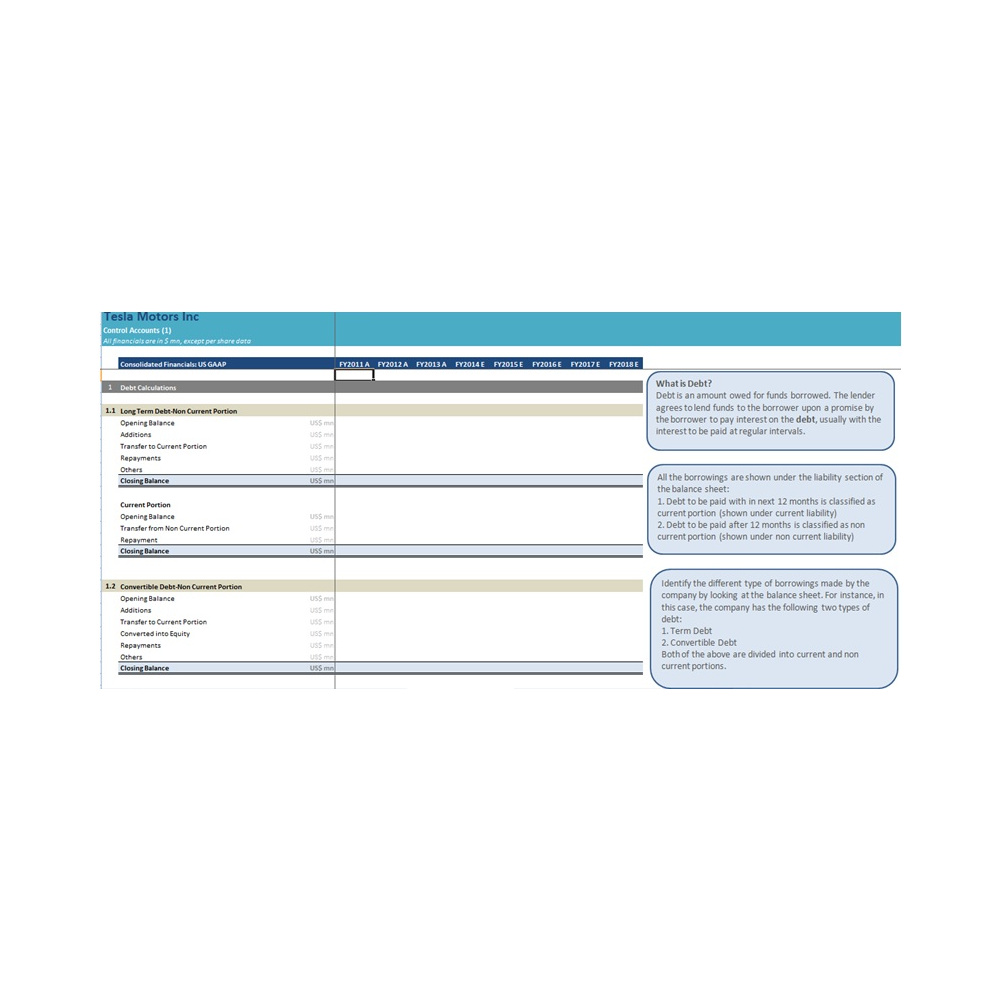
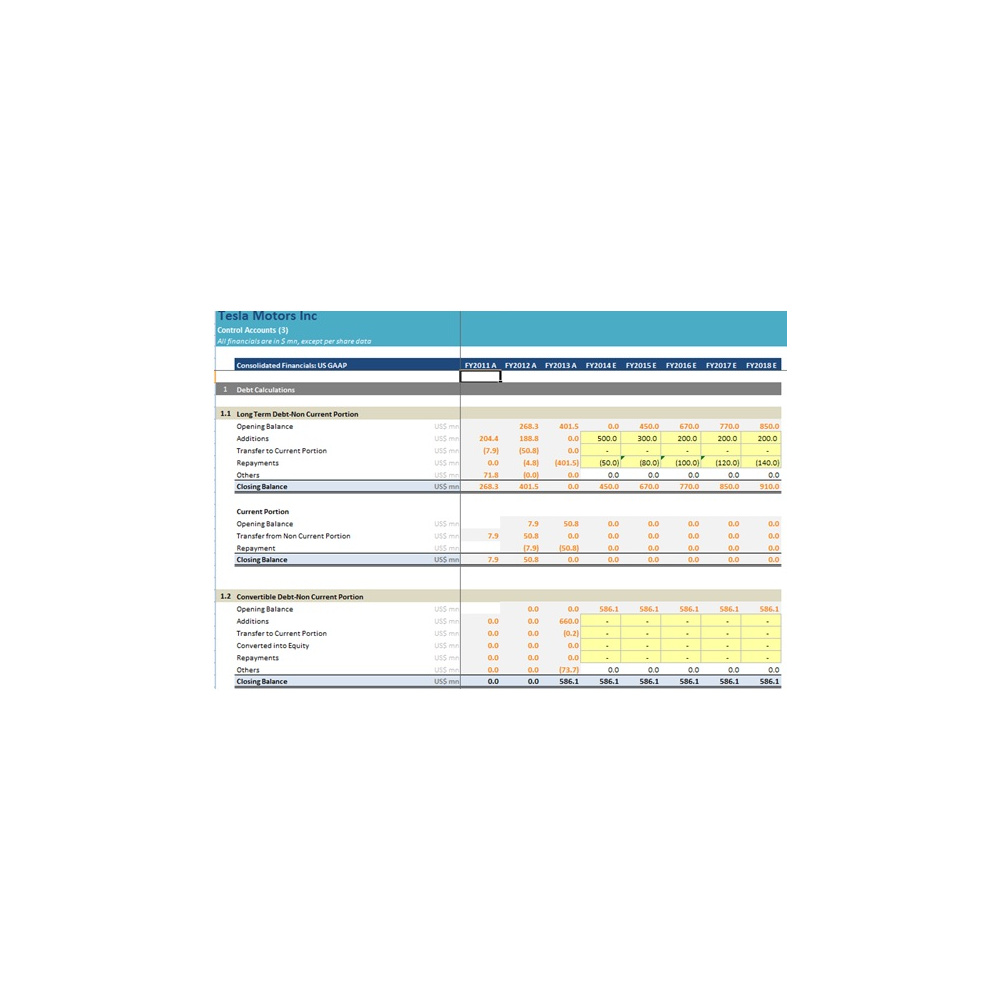
| 06 | Setting up the debt account |
| 07 | Accounting for capital expenditure and depreciation |
| 08 | Working capital calculations |
| 09 | Calculating interest income and interest expense |
| 10 | Setting up equity capital and the reserve account |
| 11 | Calculating income tax and deferred tax |
| Integration, Valuation & Output | |
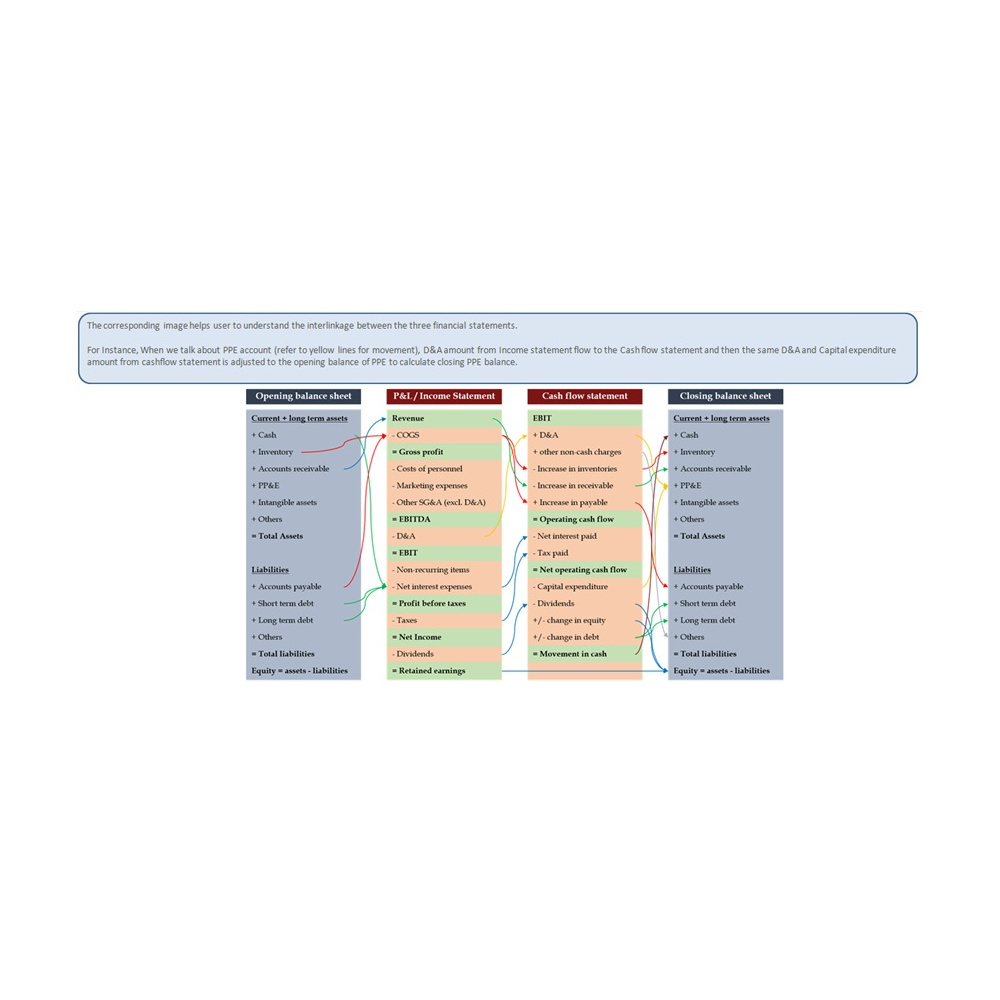
| 12 | Financial statement integration |
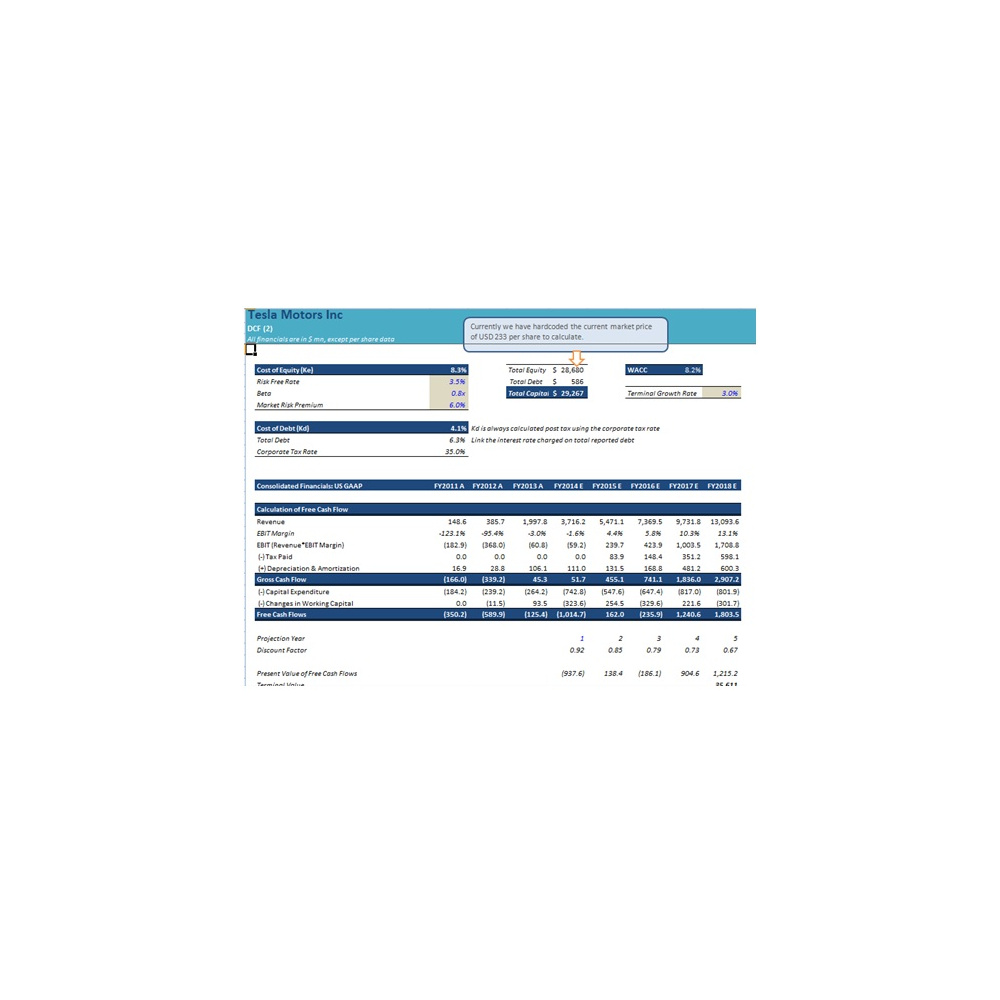
| 13 | DCF valuation |
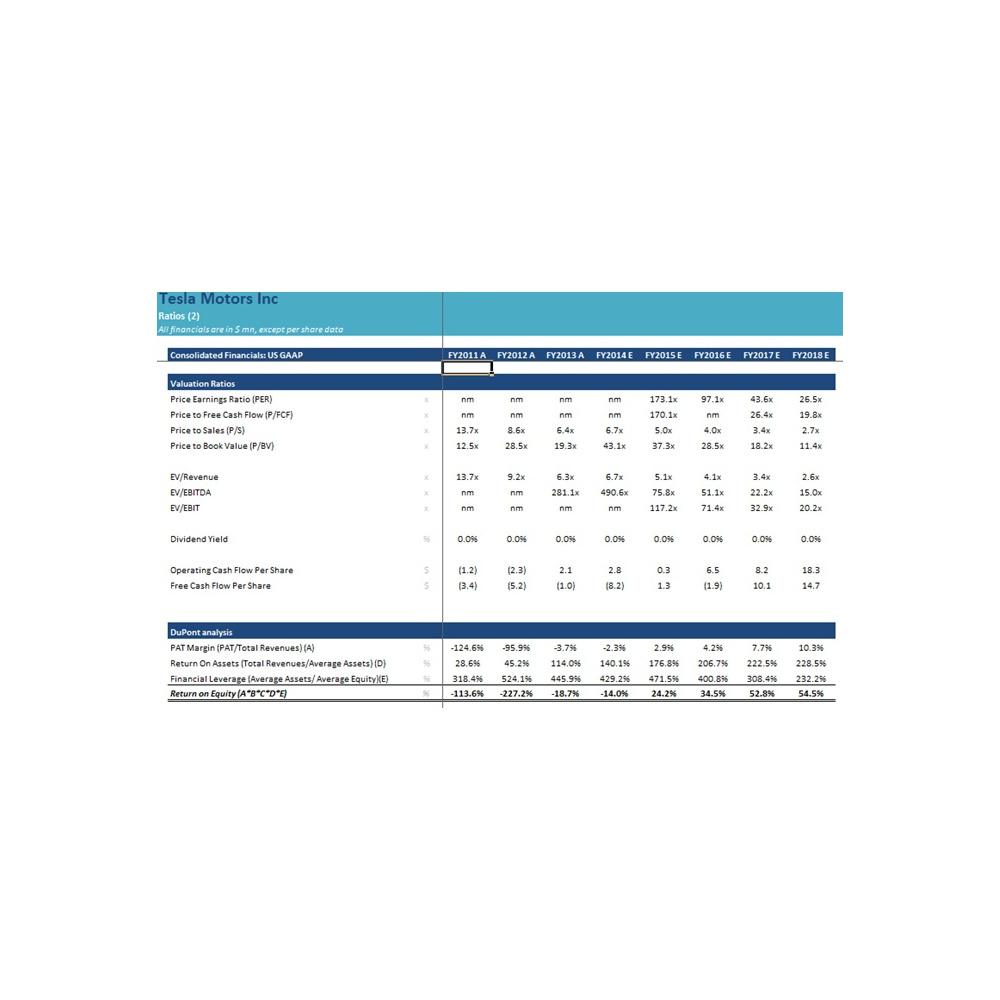
| 14 | Financial ratios |
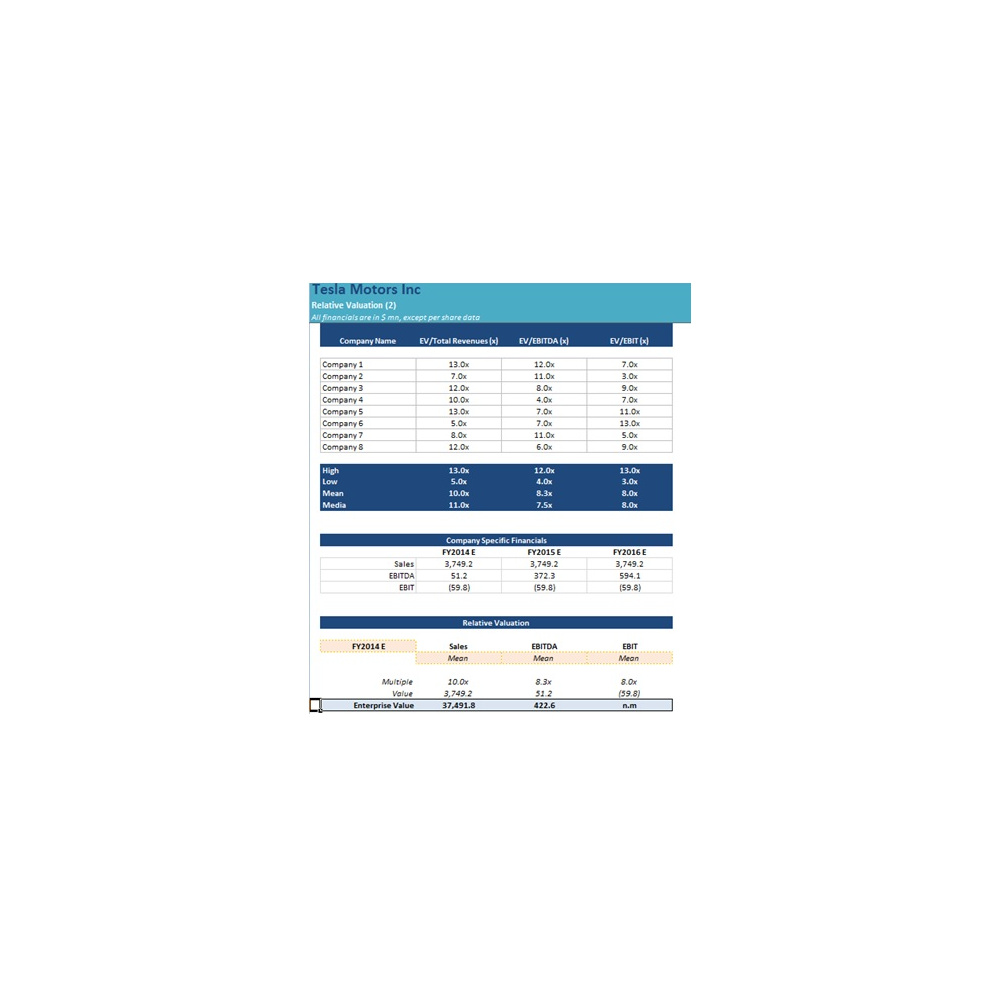
| 15 | Relative valuation / comparable company analysis |
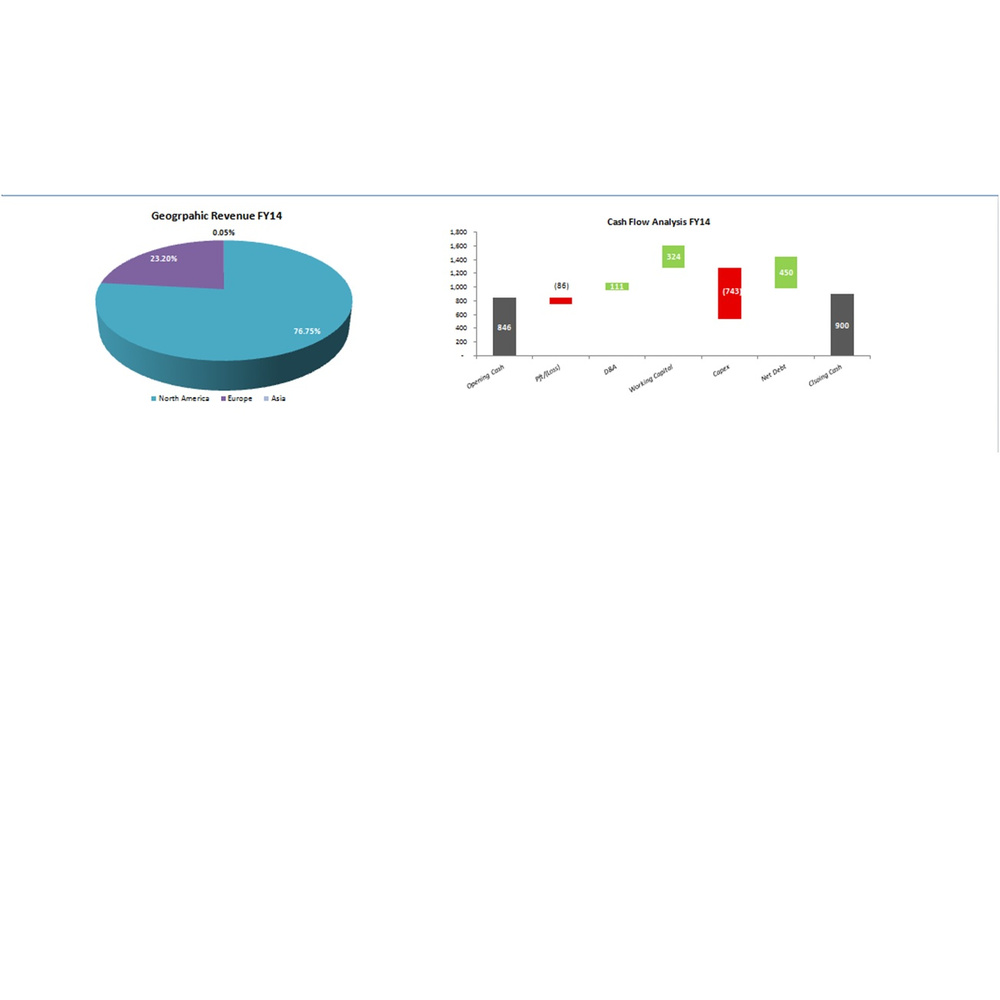
| 16 | Dashboarding |
Mechanics without theory produces models people can’t defend. Two detailed documents cover the reasoning behind the numbers:
The concept of DCF and its components; how to derive Free Cash Flow to Firm (FCFF) and Free Cash Flow to Equity (FCFE); the discount rate in full — WACC, beta, market risk premium and the risk-free rate; and an honest look at where DCF works and where it falls short.
What enterprise value is and what goes into it; how to bridge from enterprise value to equity value; and the multiples that matter — EV/EBITDA, EV/Sales, EV/EBIT, EV/PAT, alongside price-based multiples including P/E, P/Sales and P/FCFF.
The model uses Tesla Motors. Download the annual reports from Tesla’s investor relations site and work from the same filings an analyst would.
You build each schedule yourself. That is the difference between owning a template and being able to build one for any company.
No fixed schedule, no live sessions. Work through a module in an evening or spread it across weeks — the files are yours.
A financial model is a mathematical representation of a company’s finances. It takes historical performance and a set of assumptions and turns them into projections you can act on.
Investors, analysts and businesses use these models for budgeting, valuation, risk assessment and strategic planning. Build one well and you can answer the question that matters most: what is this business actually worth, and what happens if the assumptions change?
If you would prefer guided instruction alongside the files, see our Financial Modelling Training service.
The Financial Modelling Self-Learning Kit gives you 16 modules, two valuation guides and a completed reference model — everything you need to build a full three-statement model with DCF and comps valuation.