Blue Hydrogen Project Finance: A UK Production Plant Model
United Kingdom | Hydrogen & Energy Transition | Project Finance
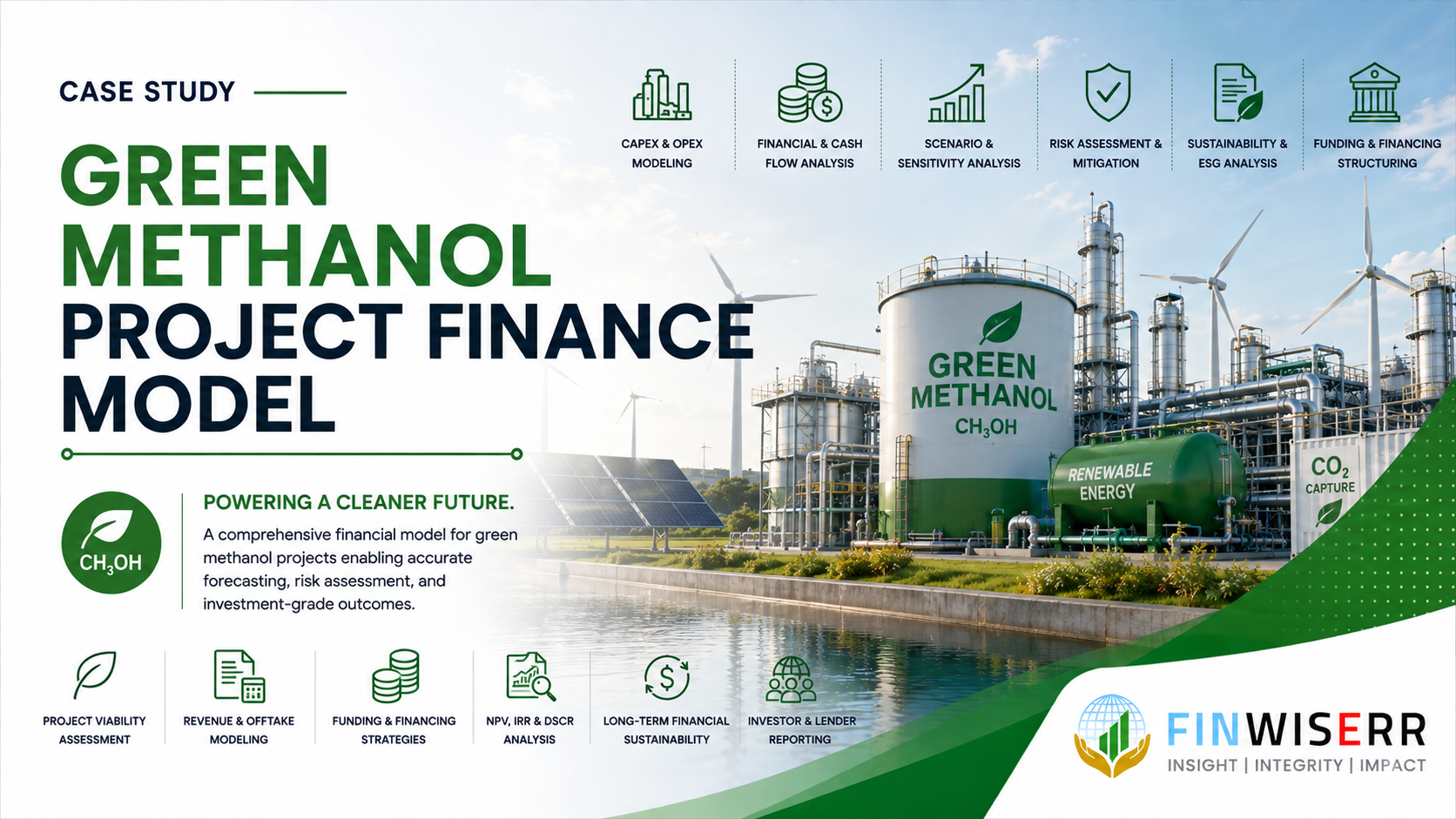
Finwiserr delivered a blue hydrogen project finance model for a production plant located in the United Kingdom. The objective was to calculate the strike price for blue hydrogen under the UK Government’s “Low Carbon Hydrogen Agreement” (LCHA), structured so that shareholders could meet their target return.
A comprehensive project-level / SPV-level financial model for the blue hydrogen plant, covering 3.5 years of construction and 25 years of operations — 15 years under the Subsidy Scheme and 10 years of non-subsidised operations.
Structuring the Blue Hydrogen Project Finance Model
- ✔ Commercial Inclusions — Detailed revenue and subsidy calculations based on the Low Carbon Hydrogen Agreement (LCHA) issued by the UK Government as part of its Net Zero Emissions target by 2050.
- ✔ Sensitivity Analysis — Multiple sensitivity runs on capex overrun, strike price, project timeline and delays, and technical parameters such as gas utilisation and offtake scenarios, as part of risk identification and recognition.
- ✔ LCHA Summary — A management presentation with multiple worked examples of the Contract for Difference (CfD) mechanism under the LCHA, including the impact of changing natural gas prices on offtakers and the subsidy offered.
Why the LCHA Structure Matters for Blue Hydrogen Project Finance
The LCHA is central to how blue hydrogen projects get financed in the UK — it sets the strike price and provides the revenue certainty that lenders and investors need before committing capital to a plant with a multi-decade operating life. Because the agreement mirrors the Contract for Difference structure used for renewable power, understanding how price and volume support interact is essential to building a bankable model. The UK Government’s consultation on the low carbon hydrogen business model sets out the policy rationale behind this support mechanism, which is why a blue hydrogen project finance model needs to reflect both the subsidised and unsubsidised phases of the plant’s operating life, not just the initial contract term.
The Outcome
The finished blue hydrogen project finance model gave the client a clear, government-scheme-aligned basis for evaluating the plant’s economics — a defensible strike price, a structured view of subsidy income across the LCHA term, and a stress-tested picture of returns once the non-subsidised period begins.
Structuring the finance model for a hydrogen or energy transition project?