How forward-looking finance support helps founders manage cash, growth and capital decisions
| Quick answer : Accounting records and explains financial performance. Corporate financial advisory helps management use that information to make forward-looking decisions about cash flow, expansion, funding, profitability and risk. A scaling UAE business may need advisory support when historical reports no longer answer questions about what happens next. |
|---|
A growing business can report higher revenue and still experience tighter cash flow. New locations, longer customer payment terms, inventory growth, hiring and capital expenditure can consume cash before the related revenue is collected. Monthly accounts may show the outcome, but management still needs a forward-looking view of the decisions creating it.
This is where corporate financial advisory adds value. It complements the accountant, auditor and tax adviser by converting historical information and operating assumptions into forecasts, scenarios and decision-ready analysis.
This guide explains when a scaling UAE company may need corporate financial advisory, what the work typically covers, and how to choose an adviser whose scope matches the decision at hand.
What is corporate financial advisory in the UAE?
Corporate financial advisory is forward-looking support for management teams making material financial decisions. It uses financial analysis, forecasting, modelling and scenario planning to evaluate choices before capital is committed.
The work can support questions such as:
- How much cash and external capital will the next stage of growth require?
- What happens to liquidity if collections slow, costs rise or expansion takes longer than planned?
- Which product, location or market offers the strongest risk-adjusted return?
- Can the business support additional debt, and how would repayment affect cash headroom?
- Are forecasts and management information ready for review by a board, bank or investor?
- Which financial capabilities should be built internally as the company scales?
| Important distinction: Corporate financial advisory does not replace bookkeeping, accounting, audit, tax advice or the responsibilities of management. It relies on credible underlying records and works alongside those functions. |
|---|
Accounting and corporate financial advisory: what is the difference?
Accounting and advisory are complementary. Accounting provides the reliable financial foundation; advisory uses that foundation to test future decisions. The boundary can overlap because strong finance teams often perform elements of both.
| Accounting and reporting | Corporate financial advisory |
|---|---|
| Records and explains historical transactions and performance. | Evaluates future cash flows, risks and decision alternatives. |
| Supports financial statements, controls and applicable compliance obligations. | Builds forecasts, financial models, scenarios and decision frameworks. |
| Answers: What happened, and are the records reliable? | Answers: What could happen, what capital is required, and what should management do? |
| Typically recurring and timetable-driven. | Typically linked to a transaction, expansion, funding need or management decision. |
Reliable accounting data remains essential. The UAE Federal Tax Authority continues to emphasise the maintenance of appropriate accounting records and commercial books. Advisory work should therefore start by understanding the quality, consistency and availability of the company’s historical information.
When does a scaling UAE business need advisory support?
- Revenue is growing but cash is tightening. Receivable days, inventory, supplier terms, payroll and capital expenditure may be absorbing cash faster than revenue converts into collections.
- Management is considering expansion. A new emirate, GCC market, location or product line requires a forecast of investment, ramp-up, working capital, break-even and downside exposure.
- A bank, board or investor requests a forecast. External stakeholders usually expect assumptions to be documented and the effect of key risks to be visible.
- The annual budget is no longer enough. Rapidly changing businesses need rolling forecasts, scenario updates and variance analysis rather than a static annual exercise.
- The business is evaluating debt or equity. Management needs to understand funding amount, timing, repayment capacity, dilution and financial flexibility before selecting a structure.
- Reporting has not scaled with operations. Multiple entities, currencies, business lines or systems can make it difficult to obtain a timely view of profitability, cash and performance drivers.
What do corporate finance advisers typically deliver?
Cash-flow forecasting and working-capital analysis
A useful cash-flow forecast links expected receipts and payments to operational drivers. It should identify the timing and size of potential funding gaps and show how collections, inventory, supplier terms and growth affect liquidity.
Driver-based financial modelling
A financial model connects revenue volumes, pricing, margins, headcount, capital expenditure, working capital and funding. Management can then change assumptions and see the effect on profitability, cash, debt capacity and returns.
Growth and expansion assessment
Expansion analysis compares capital required, ramp-up period, break-even, cash burn, return and downside risk. It can also test whether management capacity and funding are sufficient to support the plan.
Capital-structure and funding analysis
Advisory analysis can compare internal cash generation, debt and equity from the company’s perspective. It should consider affordability, repayment, cost, dilution, control, covenant headroom and future flexibility.
Investor and lender readiness
Readiness work focuses on the financial information that management may need for external review: a documented model, use-of-funds schedule, historical-to-forecast bridge, sensitivity analysis and an organised financial data room.
Management reporting and decision dashboards
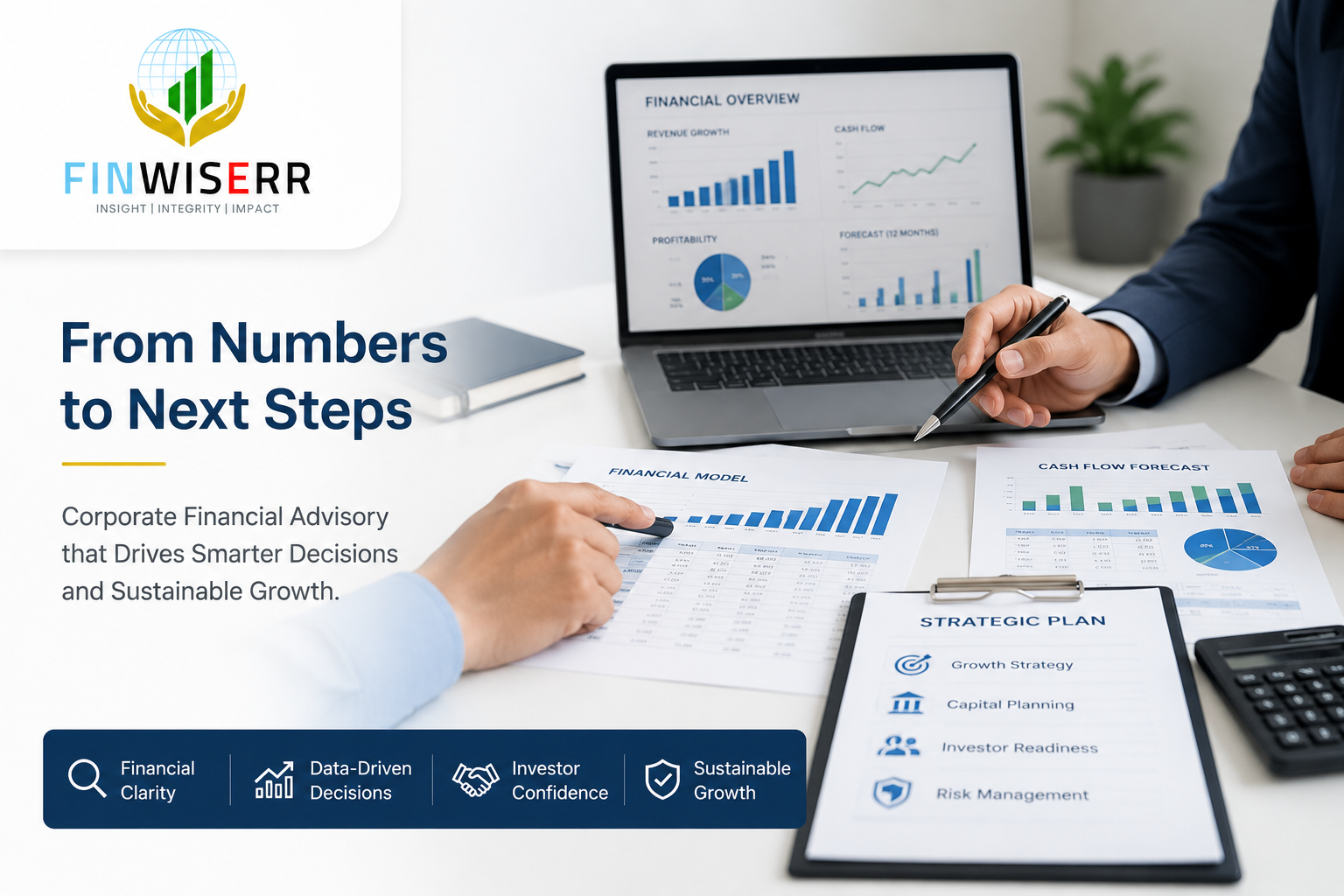
A management pack should focus leadership on a limited set of actionable measures: revenue drivers, gross margin, operating leverage, cash conversion, runway, forecast variance and material risks.
What should a management model include?
- Operating drivers: Volumes, pricing, customer acquisition, utilisation, headcount or other factors that actually create revenue and cost.
- Integrated cash flow: Collections, supplier payments, payroll, capital expenditure, tax assumptions and financing movements.
- Working-capital logic: Receivables, payables, inventory and any seasonality or payment-cycle effects.
- Funding requirements: Amount, timing and source of capital, together with debt-service or dilution implications.
- Scenarios and sensitivities: Base, upside and downside cases linked to the assumptions management can influence or monitor.
- Decision outputs: Liquidity headroom, profitability, break-even, returns, covenant metrics and key management indicators.
- Controls and documentation: Clear assumptions, source notes, error checks, version control and ownership of updates.
How does an advisory engagement typically work?
- Define the decision. Agree the management question, intended users, timetable and required level of detail.
- Review the financial foundation. Assess historical statements, management accounts, cash position, existing forecasts and data quality.
- Build the analytical framework. Link operating drivers, financial statements, working capital, capital expenditure and funding assumptions.
- Test scenarios. Evaluate slower growth, delayed collections, higher costs, funding constraints and other material risks.
- Translate analysis into actions. Set out the financial implications, decision criteria, trigger points and recommended next steps.
- Support implementation. Update forecasts, monitor performance and prepare management for stakeholder discussions within the agreed scope.
What should the business prepare?
- Two to three years of financial statements and recent management accounts, where available.
- Current bank and cash information, existing budgets and forecasts.
- Receivables, payables, inventory and payment-term data.
- Revenue and margin information by product, service, customer group or location.
- Headcount, capital-expenditure and expansion plans.
- Existing debt facilities, repayment terms and covenants.
- Ownership information and details of any planned financing.
- A clear statement of the decision, deadline and stakeholders involved.
Corporate financial adviser or fractional CFO?
A project-based adviser is usually engaged for a defined decision or deliverable, such as an expansion model, financing assessment or management-reporting redesign. A fractional CFO generally provides recurring leadership across planning, reporting, controls, team development and stakeholder management.
The right choice depends on the problem. A company may begin with a focused advisory project, appoint a fractional CFO as needs become recurring, or use both where responsibilities are clearly defined.
How to choose the right corporate financial advisory firm
- Relevant experience: Look for work with businesses of a similar size, sector, stage and complexity.
- Decision-specific scope: The proposal should state the question, deliverables, assumptions, responsibilities and timetable.
- Modelling capability: The team should be able to explain drivers, logic, scenarios and controls—not only produce presentation slides.
- Practical usability: Management should be able to understand, challenge and update the output after delivery.
- Senior involvement: Confirm who will perform the work and who will remain accountable through delivery.
- Regulatory clarity: Any activity involving securities, investor solicitation, capital placement or other regulated services should be separately defined and undertaken only where legally permitted.
How Finwiserr supports scaling UAE businesses
Finwiserr supports founders, boards and management teams with forward-looking financial analysis and decision support. Depending on the engagement, this can include:
- Cash-flow forecasting and working-capital analysis.
- Driver-based financial models for budgeting, funding and expansion.
- Feasibility, break-even and return assessment.
- Capital-structure and debt-affordability analysis.
- Investor- and lender-readiness materials and financial data-room preparation.
- Management reporting, dashboards and rolling forecasts.
Finwiserr brings more than 15 years of advisory experience across 21 countries. Each engagement is scoped to the company’s decision, data readiness, sector and applicable regulatory requirements.
Frequently asked questions
Does corporate financial advisory replace an accountant?
No. It depends on reliable accounting information and complements accounting, tax, audit and compliance work with forward-looking analysis.
When should a business seek advisory support?
Common triggers include cash pressure despite revenue growth, expansion, financing, scenario requests from stakeholders, or management reporting that no longer reflects the complexity of the business.
Is corporate financial advisory only for large companies?
No. Growing SMEs and founder-led companies can benefit when the financial consequence of a decision is material relative to their available cash and management capacity.
How long does a financial modelling engagement take?
Timing depends on purpose, complexity and data quality. A defined question and organised information can shorten the process materially.
Can Finwiserr help prepare for investor or lender discussions?
Finwiserr can support financial models, forecasts, scenario analysis and financial information preparation. Any regulated fundraising or placement activity must be separately agreed and legally permitted.
Plan the next stage, not only the last quarter
Accounting tells management what has already happened. Corporate financial advisory helps management understand what may happen next, what assumptions drive the outcome and what actions can protect cash and value.
Planning an expansion, funding requirement or finance-function upgrade?
Speak with Finwiserr about a corporate financial advisory engagement tailored to your business and decision timetable.