$120.00
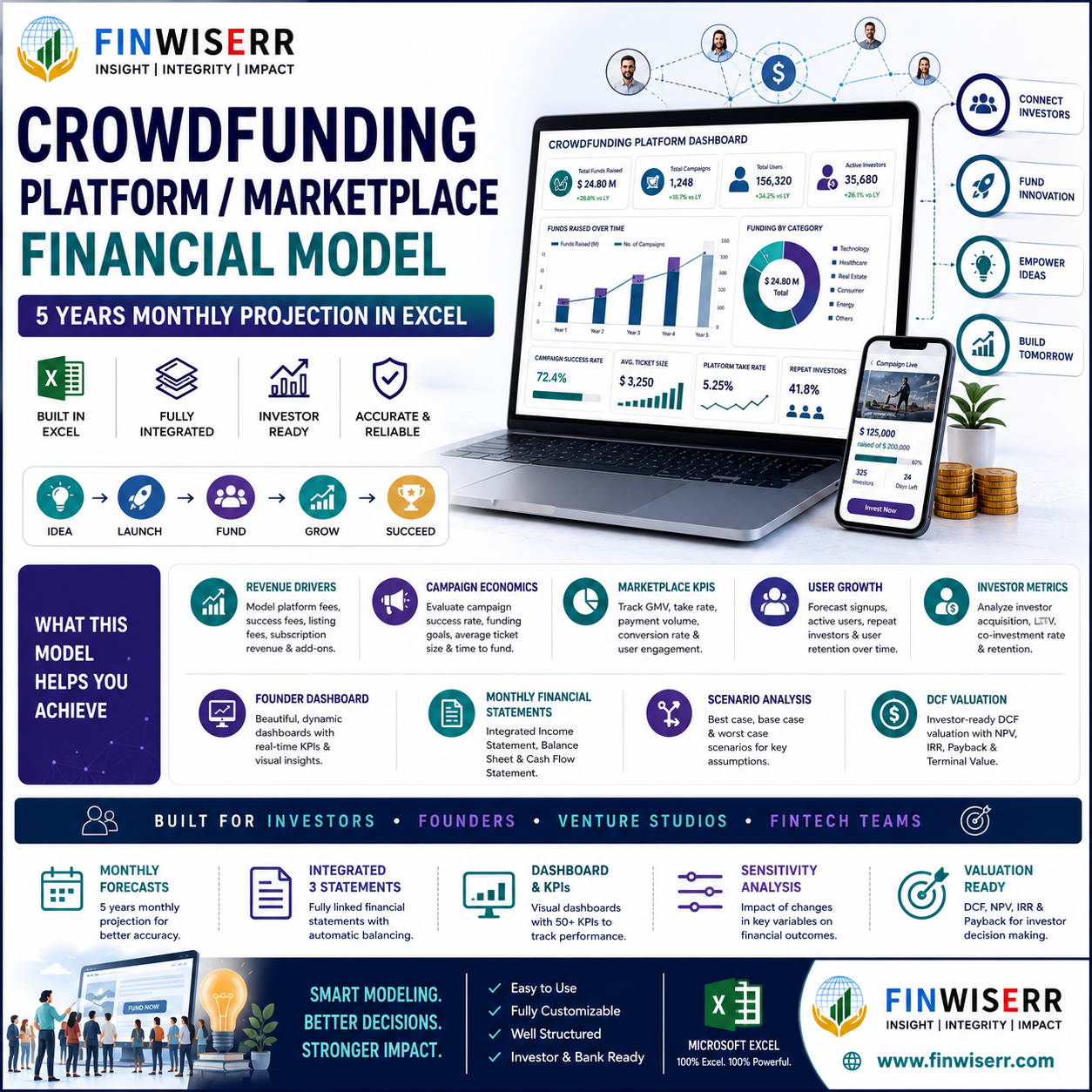
A detailed, investor-ready crowdfunding financial model for a multi-vertical crowdfunding platform — spanning equity, donation, debt and subscription funding models, each with its own fee mechanic, plus advertising revenue — with platform-development and operation phases, an exit strategy and valuation, in one integrated Excel model.
A crowdfunding platform is a marketplace with an unusually complex revenue engine. It doesn’t simply take a cut of one thing — depending on its model, it earns commission on equity raises, a voluntary contribution on donations, a slice of the interest on peer-to-peer loans, subscription fees from campaign creators, and advertising on top. Each vertical monetises differently, and a platform that runs several at once needs a model that keeps them distinct. Treat it as a single “take rate” and you learn nothing about where the business actually earns.
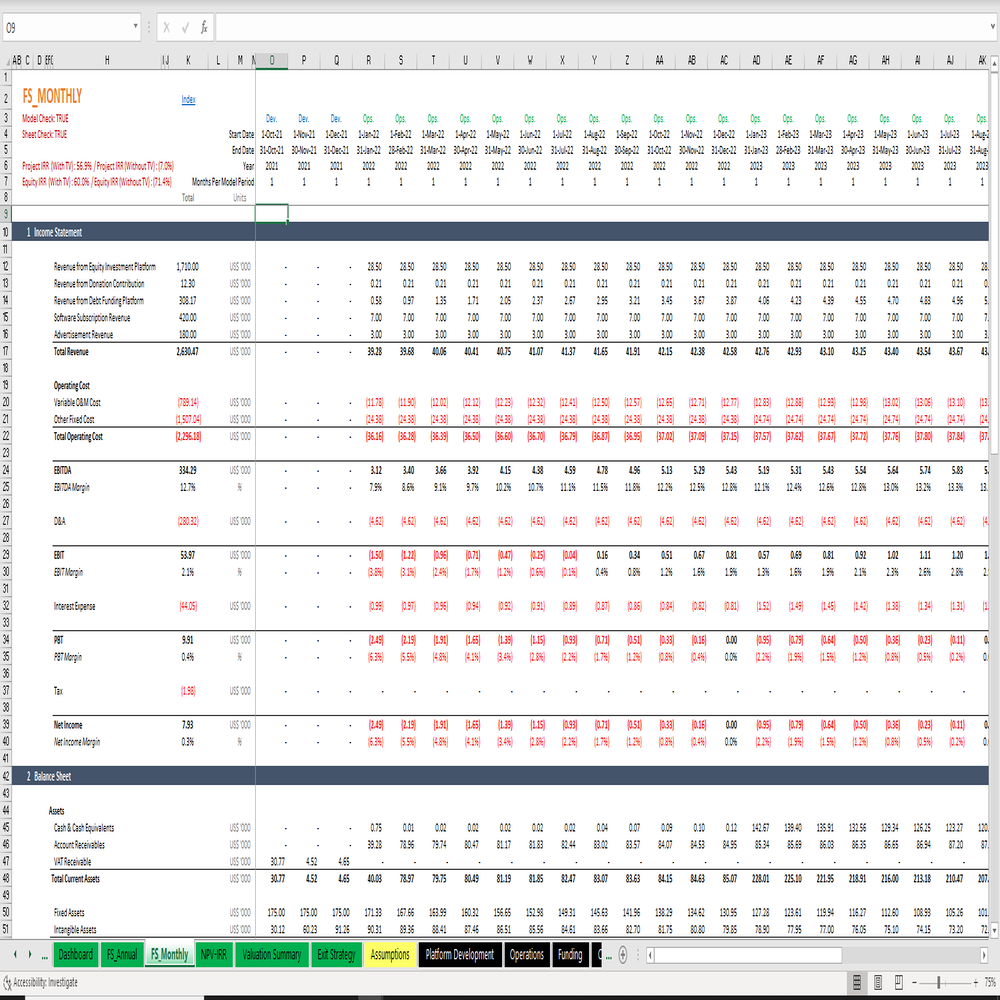
This crowdfunding financial model is built for that complexity. It captures campaign volume and success rates, four separate funding-model revenue streams each with its own fee logic, and advertising — then treats the platform’s software build as the capitalised, amortised intangible it truly is. The whole thing flows through to a complete, investor-ready output set.
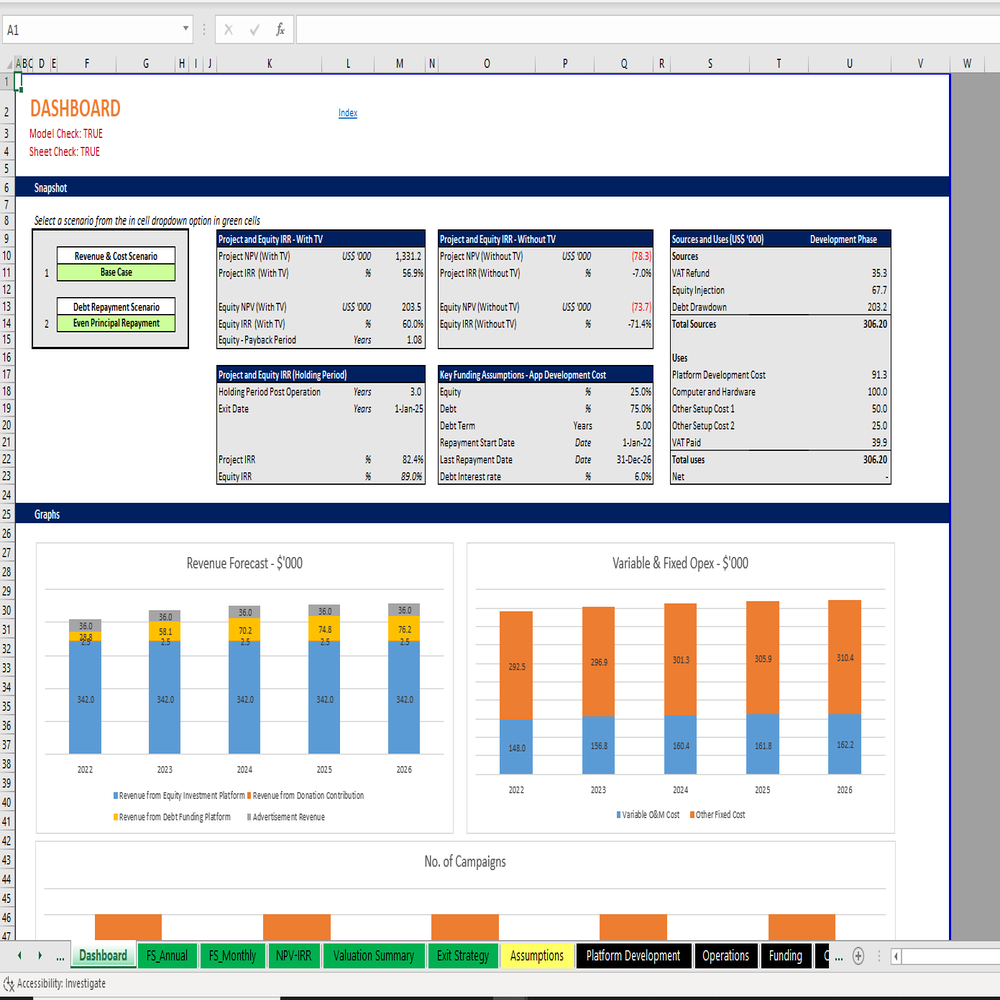
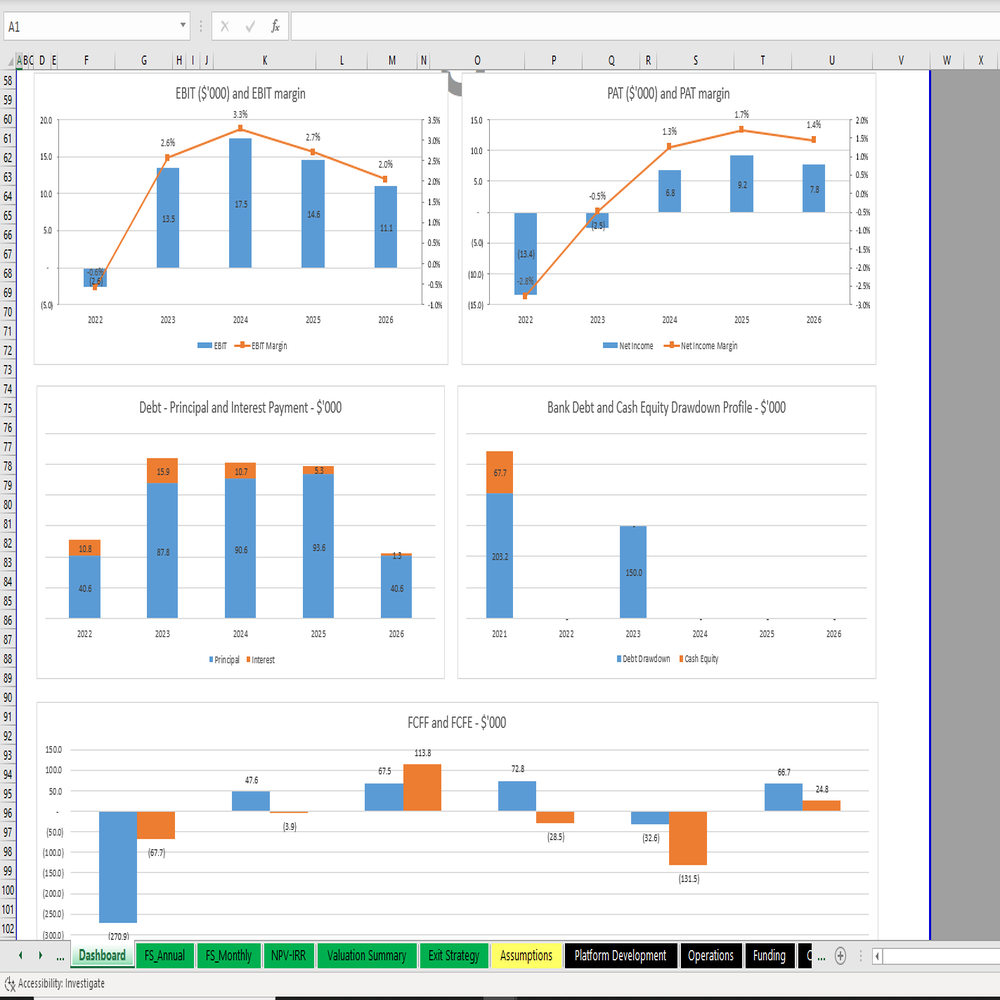
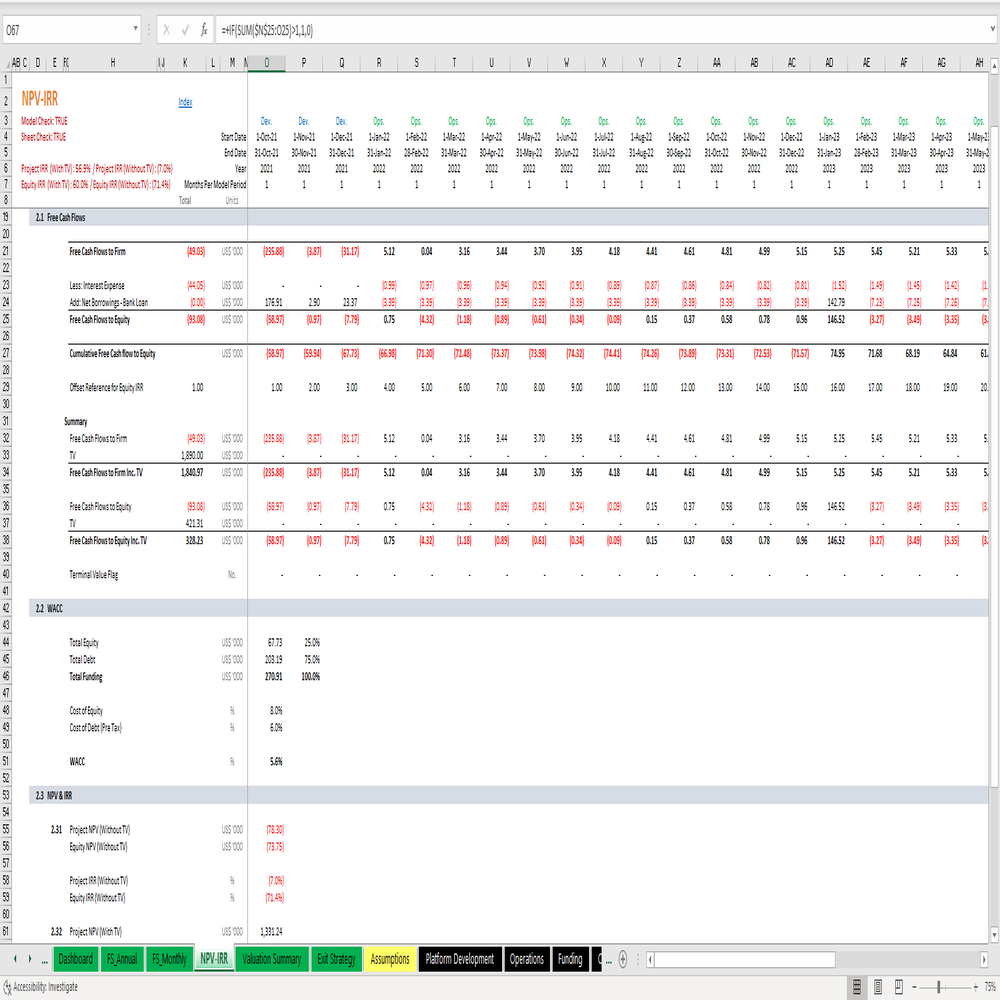
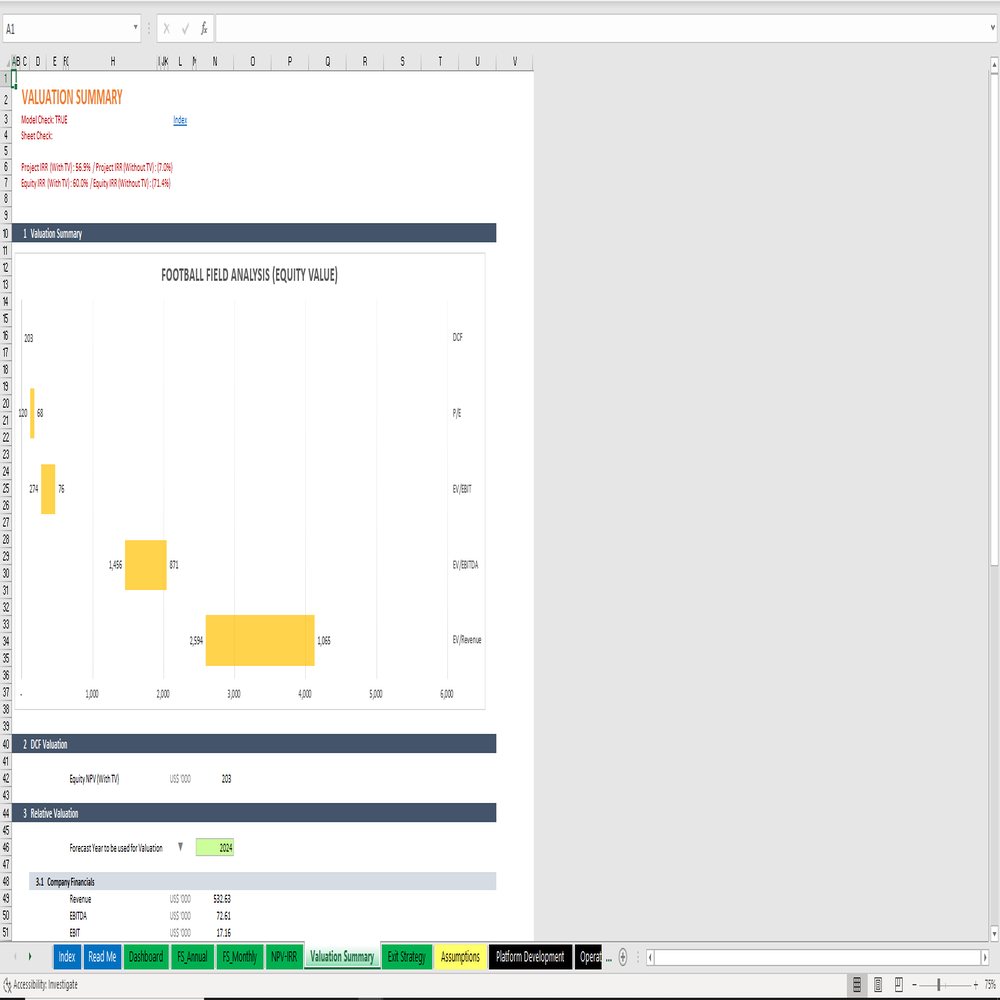
The output set is comprehensive: Project and Equity IRR and NPV (with and without terminal value), equity payback, a DCF valuation, an exit strategy and a fully linked dashboard.
The core of this crowdfunding financial model is that each funding vertical earns its money differently, and the model reflects every one:
Keeping these apart is what makes the model genuinely useful. You can test a platform that leads with equity crowdfunding against one built on P2P lending, or model the shift toward high-margin subscription and advertising revenue as the user base matures — the exact strategic questions a crowdfunding founder faces.
Revenue begins with the fundamentals of any crowdfunding business: the number of campaigns launched per month, the percentage that succeed, and the average funds raised per successful campaign. Because success rate is an explicit input, you can model the reality that not every campaign hits its target — and see how sensitive the platform’s economics are to that single number. For a business whose revenue depends entirely on other people’s fundraising working, that is the assumption that matters most.
Every driver of the platform is an explicit, editable input. The assumptions cover:
| Campaigns | Campaigns per month, percentage of successful campaigns and average funds raised per campaign |
| Equity Fees | Campaign setup fee per campaign and commission percentage on funds raised |
| Donations | Average donation per month, donors per month, and the share and size of contribution toward the platform |
| Debt / P2P | Funds raised by tenure, average interest cost per annum, and percentage of interest withheld as platform fee |
| Subscription & Ads | Subscribers and monthly price; sessions, minutes, ad impressions and CPM |
| Operating Cost | Variable O&M as a percentage of revenue per stream; management, technical and other staff, rental, office, SPV, insurance and security |
| Platform Development Capex | UI/UX, native platform and app, backend, admin panel, DevOps and project management, amortised as an intangible |
| Financing | Debt-equity ratio, development and operations debt, term and repayment schedule |
The primary capital outlay for a crowdfunding platform is software, and the model treats it correctly. Platform development cost — across UI/UX, native platform and app, backend, admin panel and DevOps — is capitalised as an intangible and amortised over its useful life, with refresh capex to fund the periodic rebuild. That treatment is what makes the early-year statements realistic and the valuation credible to an investor who understands how technology businesses are reported.
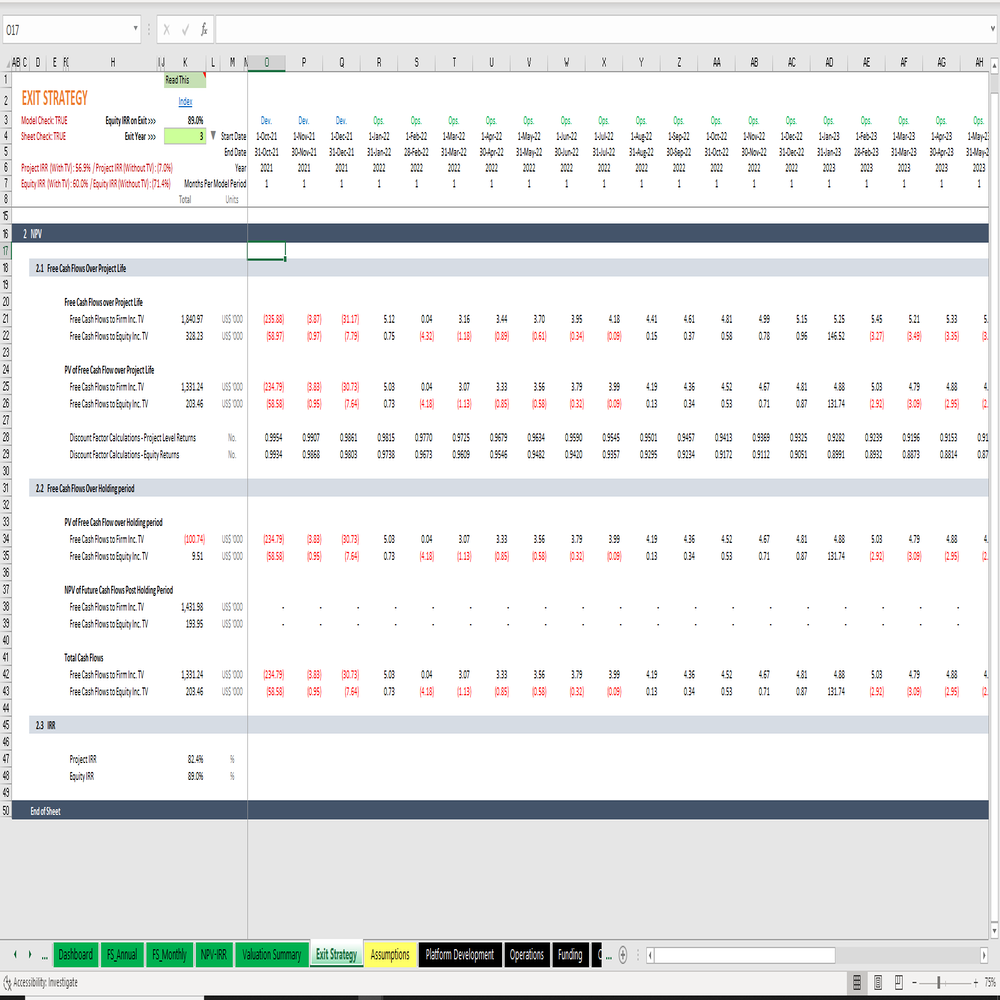
The model derives a full DCF valuation — Project and Equity NPV and IRR, both with and without terminal value — and a dedicated exit strategy lets you set a holding period and model a sale of the platform. For a crowdfunding venture built to scale and exit to a larger financial-services or fintech acquirer, that exit view is the analysis that frames the whole investment case.
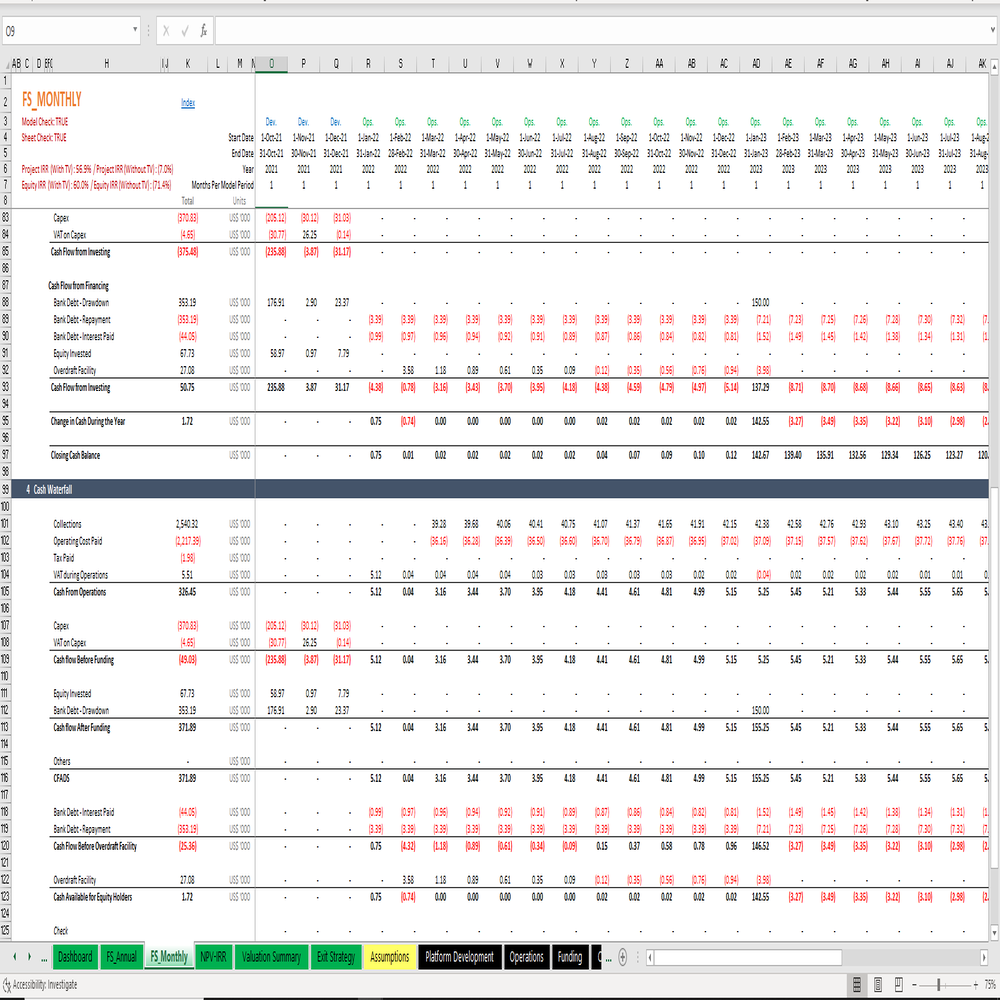
The model forecasts across development and operation on a monthly basis, with financial statements on both monthly and annual views. Every revenue and cost assumption can be entered across three scenarios and switched at the click of a button, so a conservative campaign-success case sits beside an optimistic one — and because the model uses no macros, every change flows through instantly.
Equity, donation, debt and subscription each with its own fee logic, so multi-vertical platforms model accurately.
Campaign success percentage is an explicit input — the assumption a crowdfunding platform’s economics hinge on.
A holding-period exit plus a full DCF valuation with and without terminal value.
New to these metrics? Read an overview of internal rate of return. For a model built to your own specification, see our financial advisory services, or browse the full range of business plan Excel models.
Four funding verticals, subscription and ad revenue, software amortised and a full exit — five years of monthly projections, ready in Excel.