$149.00
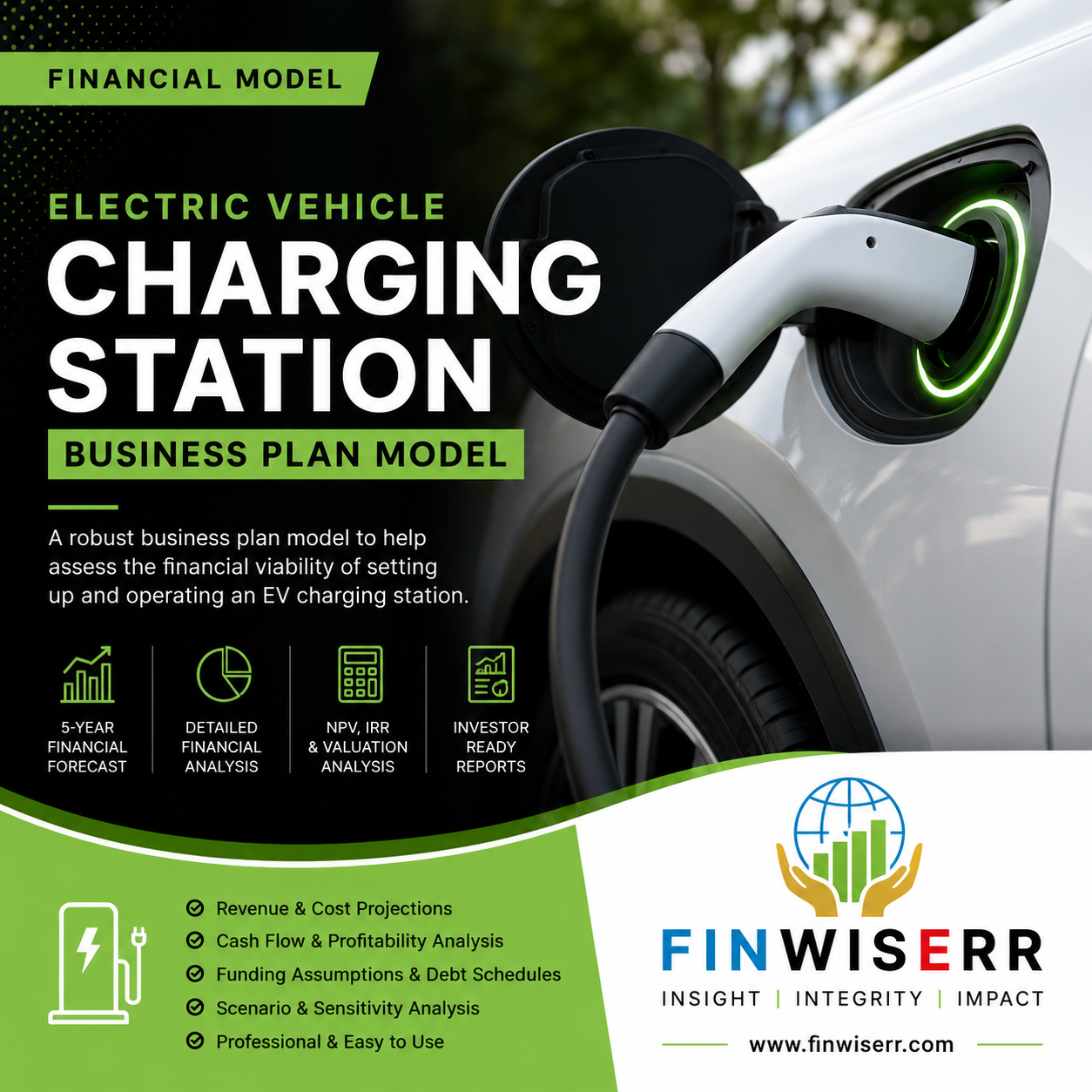
A detailed, investor-ready EV charging financial model for an electric-vehicle charging station — with revenue from charging across multiple connector types, a battery swap station and site rental, plus construction and operation phases, an exit strategy and both DCF and comparable-company valuation, in one integrated Excel model.
EV charging is one of the defining infrastructure opportunities of the energy transition, and one of the trickier ones to model well. Revenue does not come from a single meter — a well-designed station earns from charging, from a battery swap facility, and from renting out the space around it. Utilisation is uncertain in the early years and climbs as adoption grows. Subsidies offset part of the capital cost, and the chargers themselves have to be replaced before the project life is out. A generic template captures none of this.
This EV charging financial model is built for the whole proposition. It covers the construction and operation phases separately, models three distinct revenue streams, accounts for charger subsidy and end-of-life refresh capex, and resolves everything into the returns and valuation an investor needs — including a dedicated exit analysis for those building a station to sell.
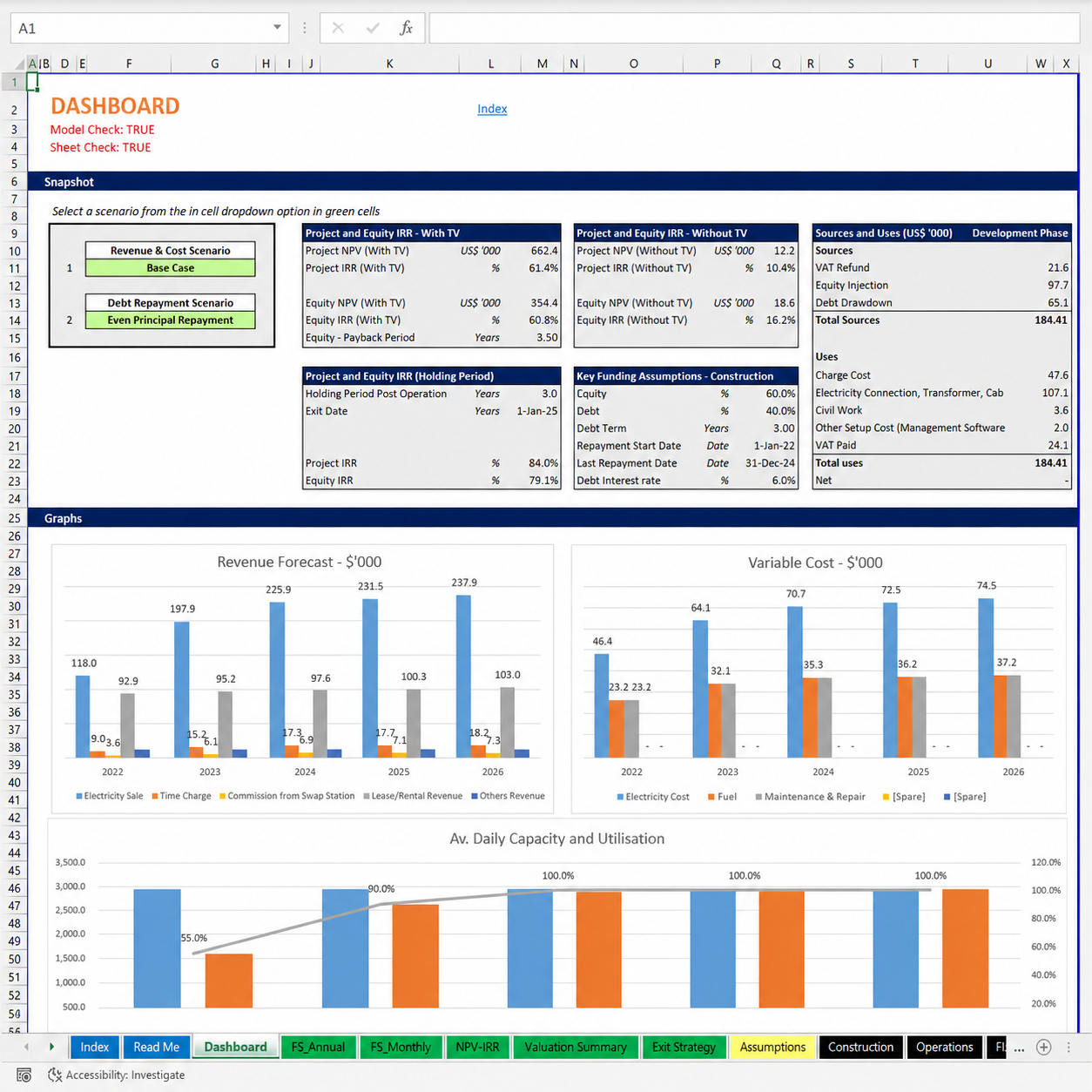
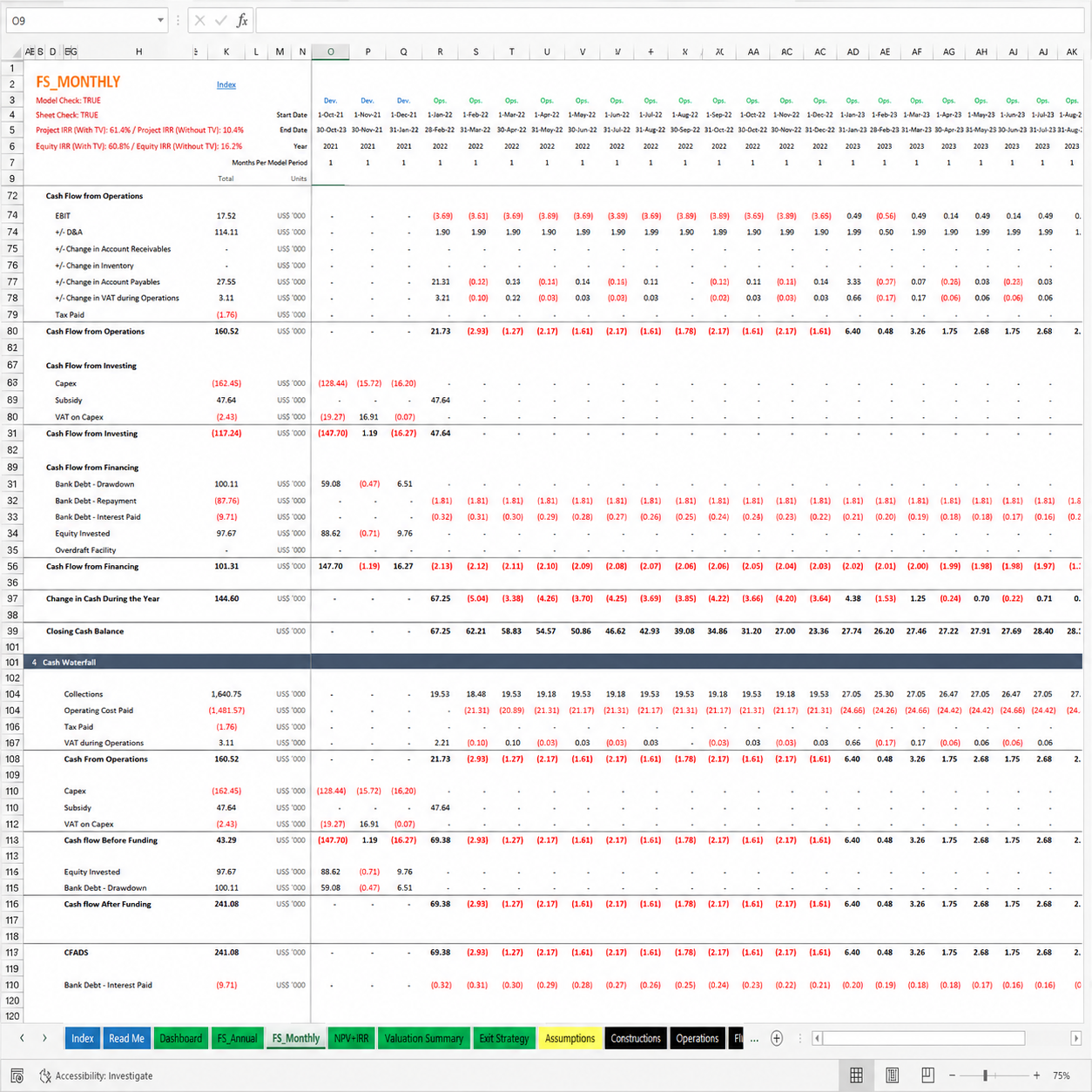
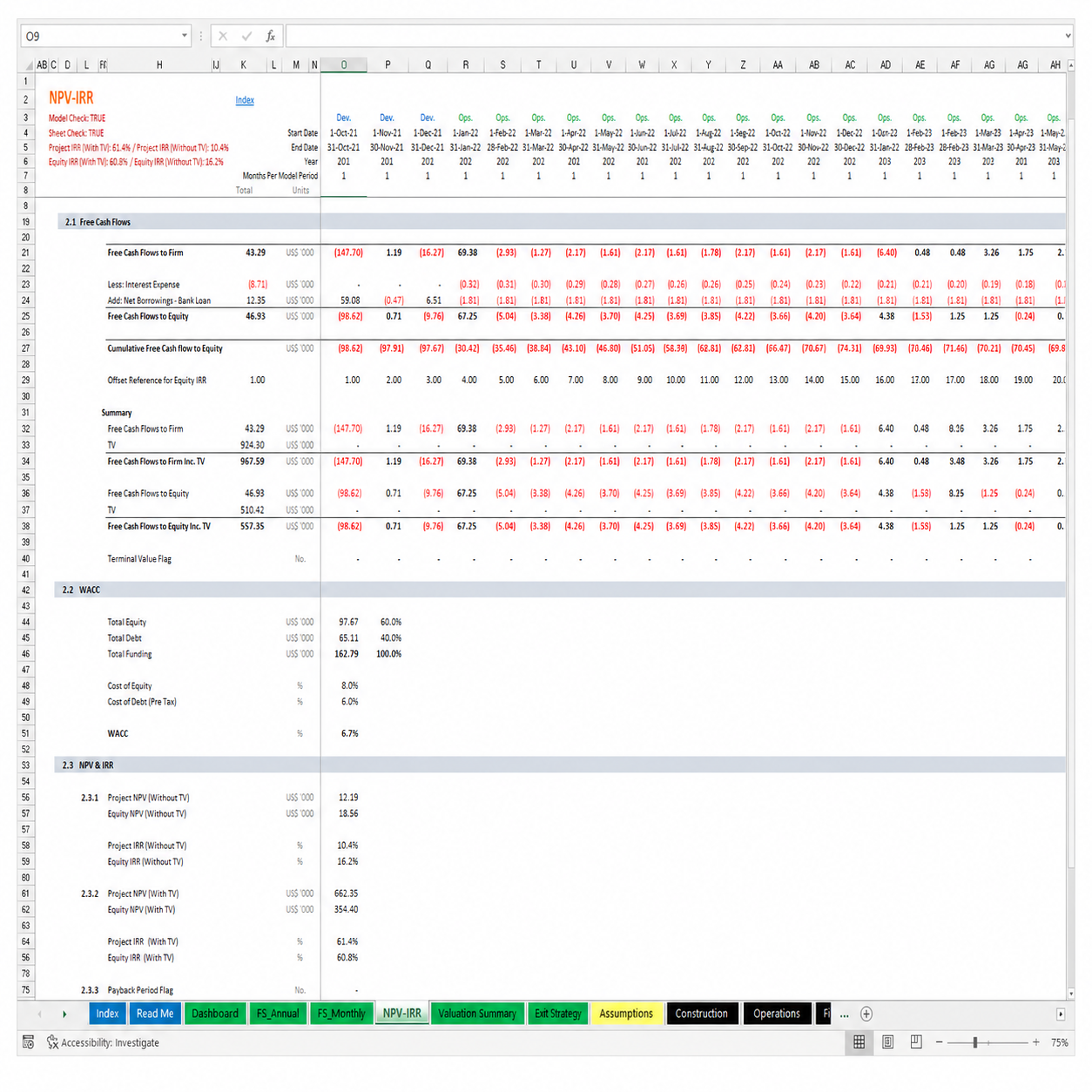
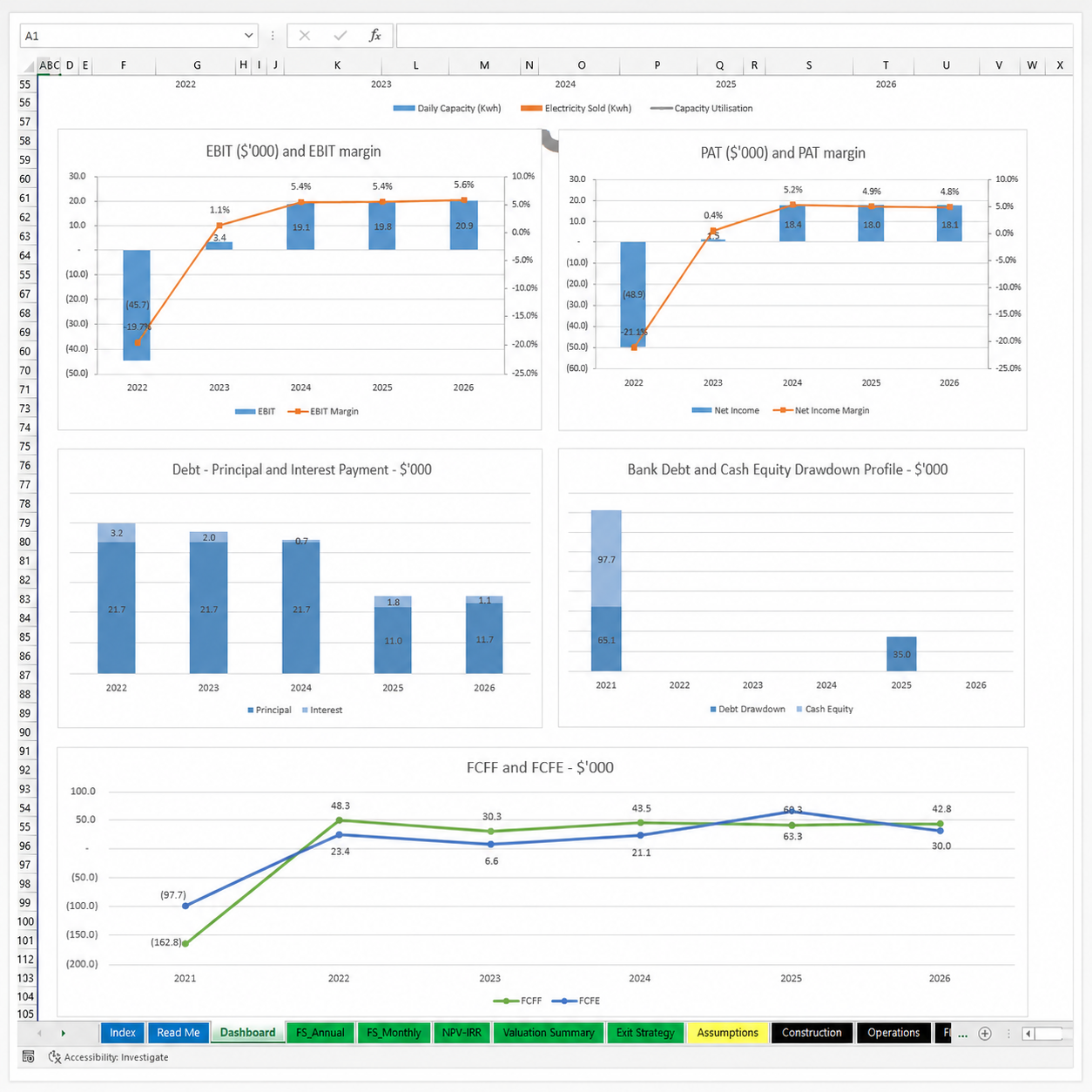
The output set is comprehensive: Project and Equity IRR and NPV (with and without terminal value), equity payback, a DCF valuation, a comparable-company valuation, an exit strategy and a fully linked dashboard.
The strength of this EV charging financial model is that it treats a charging station as the multi-revenue business it actually is:
Modelling these apart lets you see which part of the station carries the return — and test the balance between them. A site heavy on rental income has a very different risk profile from one dependent on charging throughput, and this model makes that visible.
Three features set this model apart from a standard business plan. Charger subsidy is modelled as a percentage of charger cost, received at operations start — reflecting the grant support many EV charging projects rely on. Refresh capex reinvests in the chargers at the end of their useful life, inflation-adjusted, so the model doesn’t pretend the hardware lasts forever.
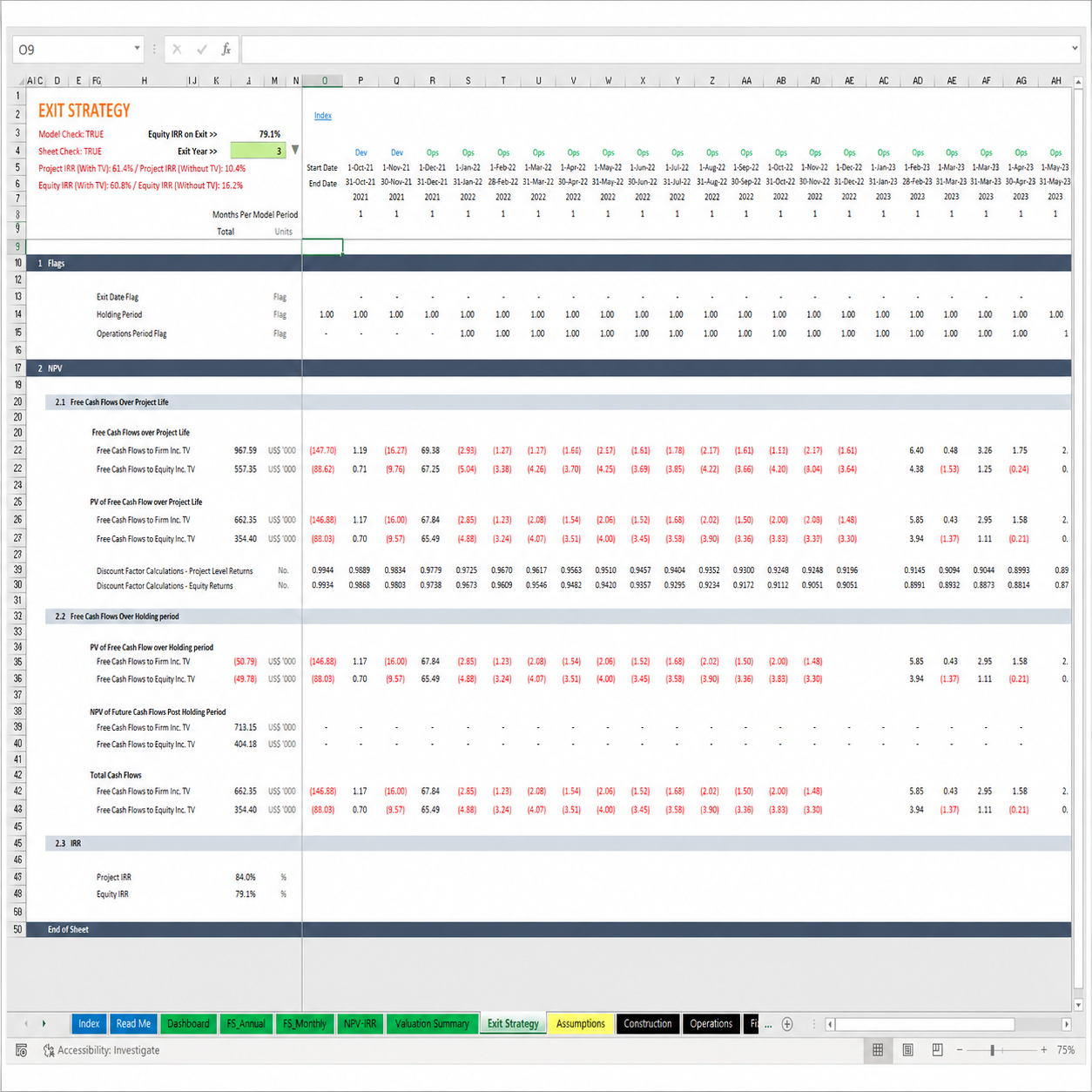
And a dedicated exit strategy lets you set a holding period and model a sale — computing returns over the hold plus the present value of cash flows beyond it. For the many EV charging ventures built to be sold to an infrastructure fund rather than held for life, that exit view is exactly the analysis that matters.
Every driver of the business is an explicit, editable input. The assumptions cover:
| Chargers & Capacity | Charger types (CHAdeMO, Type 2 AC, Bharat DC and AC), power output and capacity utilisation factor over five years |
| Charging Revenue | Electricity tariff, time-based charge, cost per hour and time taken per charge |
| Swap & Rental | Swap station power, operating hours and commission; rentable area and rent per square foot; other revenue |
| Operating Cost | Variable O&M as a percentage of revenue, electricity cost, fuel, maintenance and repair |
| Fixed Costs | Management salary, rent, staff, SPV cost, insurance, security and licence |
| Capex & Subsidy | Charger cost, electrical connection and civil work, setup software; charger subsidy and end-of-life refresh capex |
| Financing | Debt-equity ratio, debt term, repayment schedule and interest rate |
| Exit & Valuation | Holding period, terminal value, and EV/Revenue comparable-company inputs |
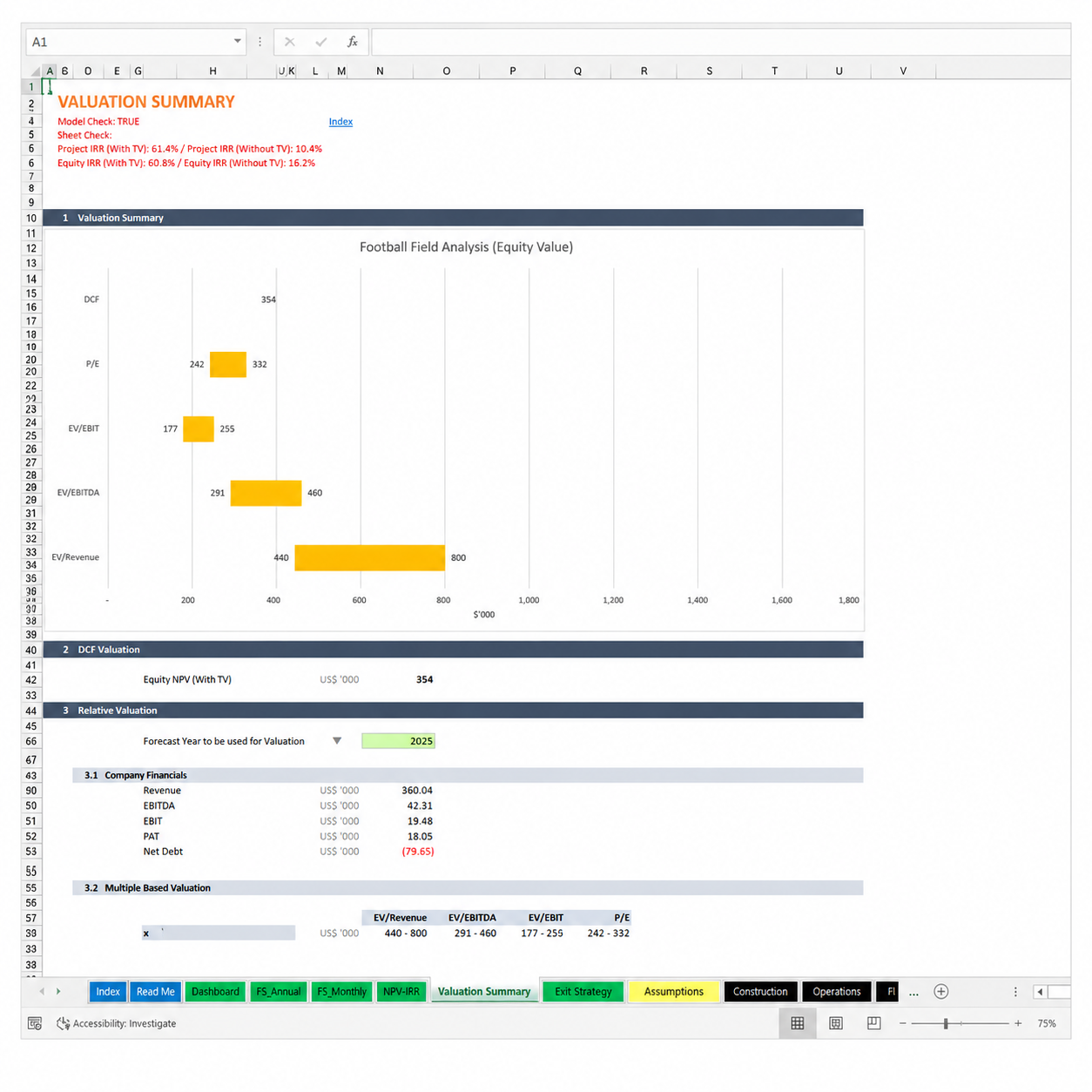
The model values the station two ways. A DCF valuation captures intrinsic value from the forecast cash flows, with and without terminal value — a distinction that matters enormously for an early-stage infrastructure asset. Alongside it, a relative valuation benchmarks the business against listed peers on an EV/Revenue multiple. Seeing both gives you a defensible range rather than a single number, and lets you frame the story either way depending on who is reading it.
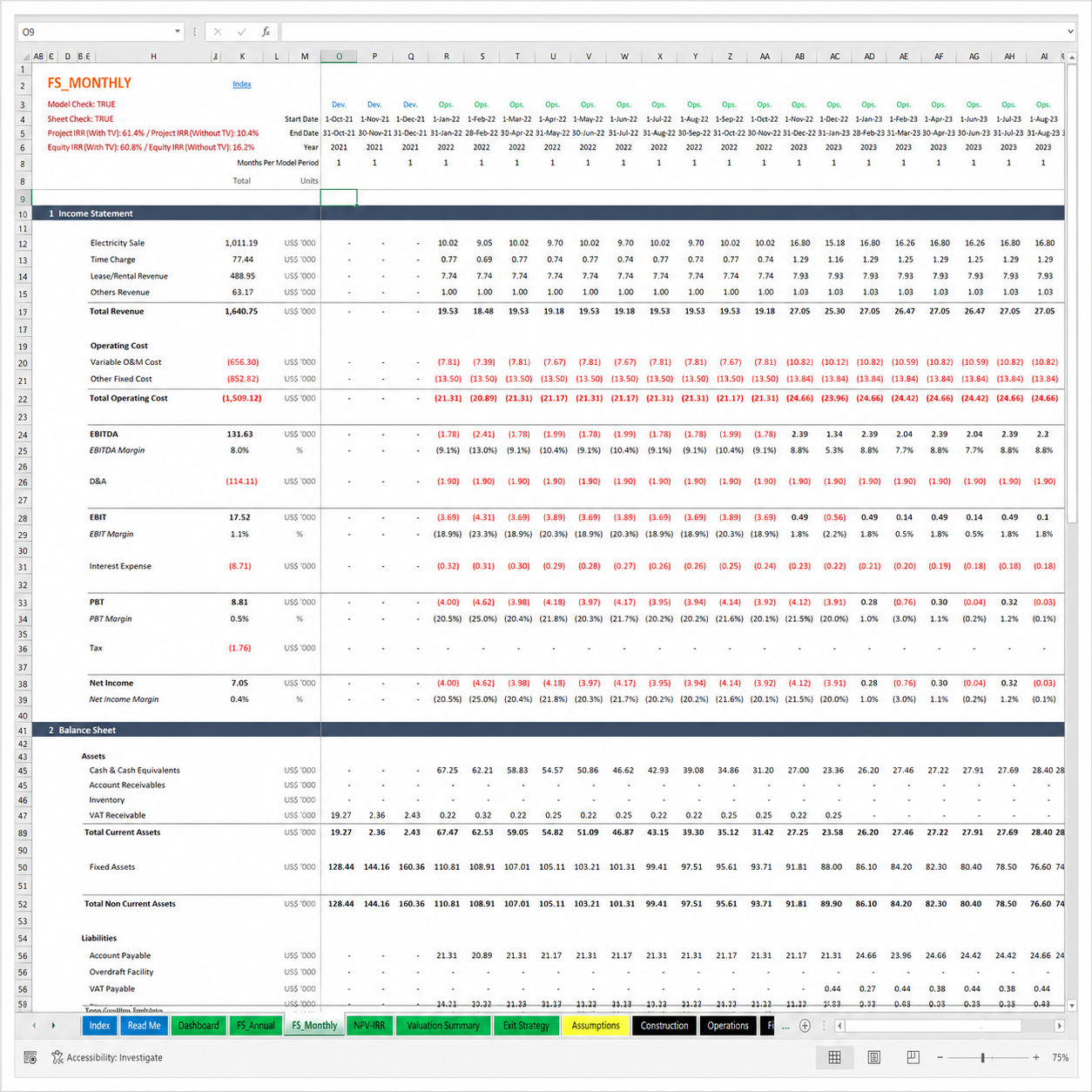
The model forecasts across construction and operation on a monthly basis, with financial statements on both monthly and annual views. Every revenue and cost assumption can be entered across three scenarios and switched at the click of a button, so a cautious utilisation ramp sits beside an optimistic one — the single most important uncertainty in any EV charging plan.
Charging by connector type, a swap station on commission, and site rental — each modelled on its own drivers.
Grant support and end-of-life charger replacement are both modelled — the reality of charging economics.
A holding-period exit plus DCF and comparable valuation, for founders building to sell.
New to these metrics? Read an overview of internal rate of return. For a model built to your own specification, see our financial advisory services, or browse the full range of business plan Excel models.
Charging, swap and rental revenue, subsidy and refresh capex, an exit strategy and dual valuation — five years of monthly projections, ready in Excel.