$149.00
A solar tariff calculator with integrated financial statements and a cash waterfall — an institutional-grade tool for assessing a proposal to build and operate a solar PV farm or rooftop project, built in Excel.
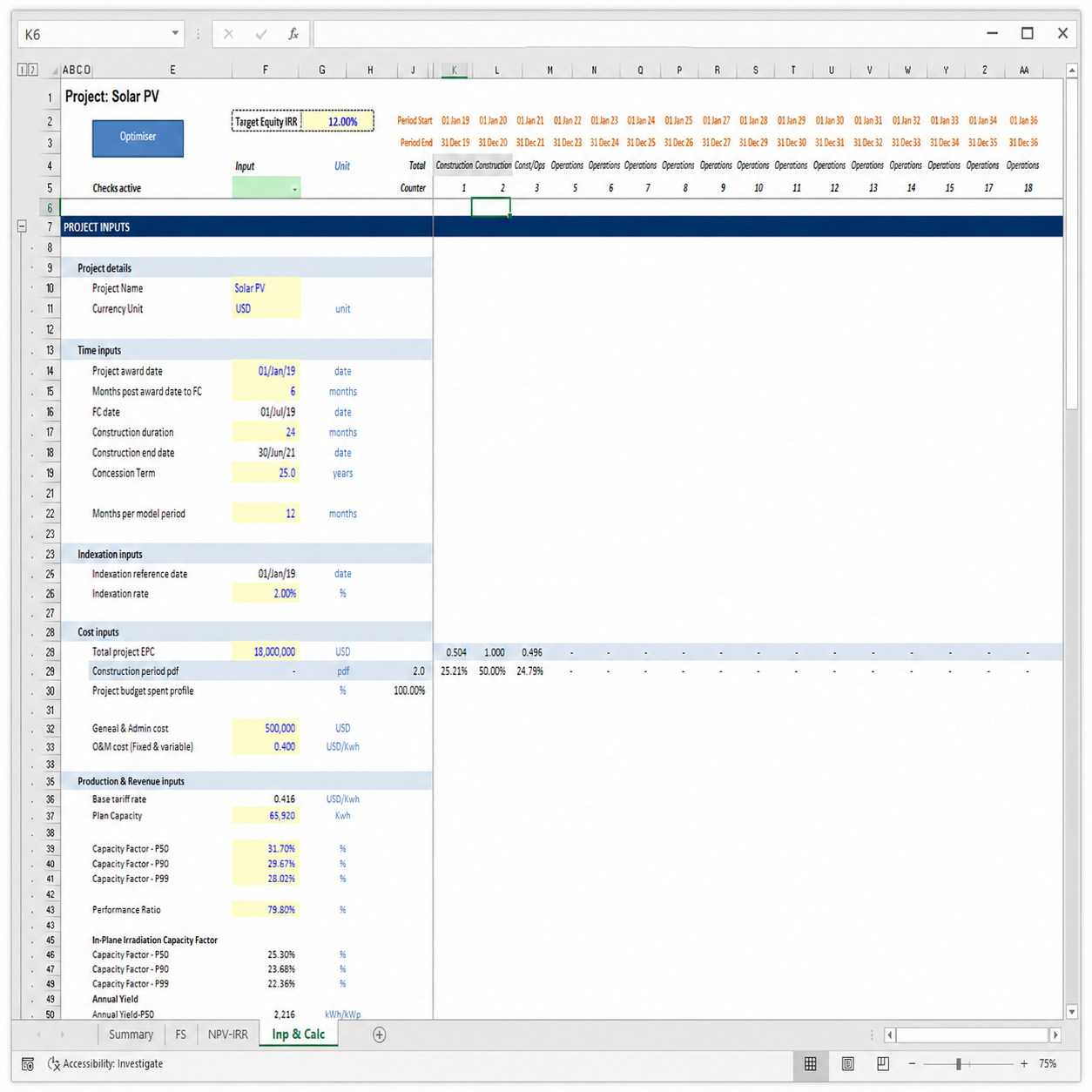
Most financial models start with a price and tell you what return it produces. This one runs the other way. You specify the Equity IRR your investors require, and an automated mechanism back-calculates the tariff needed to deliver it. That inversion changes the conversation entirely — instead of guessing at a price and hoping the returns work, you start from the return you must achieve and find out exactly what you need to charge.
For anyone bidding into a solar auction, negotiating a PPA or setting a price for a concession, that is the question that actually matters. This solar tariff calculator answers it directly, deriving the required price from your desired Equity IRR, operational capacity and expected cost inputs.
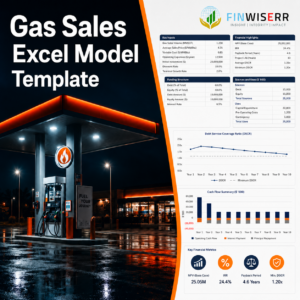
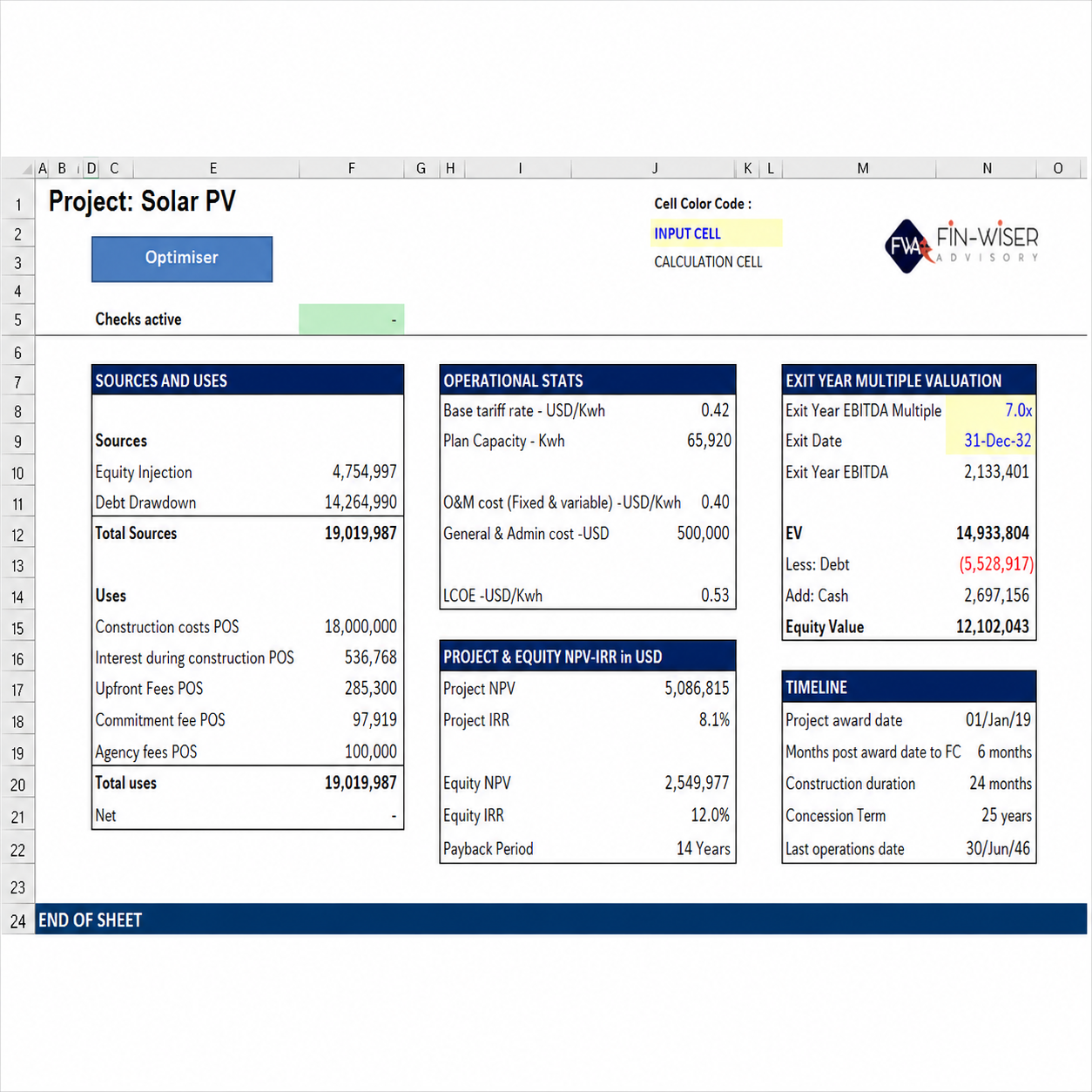
Around that engine sits a complete project finance structure — Project and Equity IRR and NPV, DSCR, LCOE, equity payback, a full cash waterfall and integrated three-statement financials — so the tariff it produces is grounded in a properly built model rather than a standalone calculation.
Revenue is derived, not assumed. The solar tariff calculator takes your target Equity IRR and operational capacity and works backwards through the cash flows — after debt service, after tax, after operating cost — to establish the price per unit that leaves shareholders with exactly the return they asked for. A VBA routine handles the iteration.
Cost is split into two parts, as project finance requires. Construction cost is spread proportionately across the construction period, feeding the funding requirement along with interest and fees incurred during the build. Operating cost then takes over once the plant is live, split between fixed cost, variable cost and general and administrative expense as a fixed annual charge.
The model produces both the required tariff and the Levelised Cost of Energy, and the relationship between them is the entire commercial picture. LCOE tells you what the electricity costs you to produce across the asset’s life. The tariff tells you what you need to charge to earn your target return on top of that.
Seeing both side by side shows you the margin you are asking for, and whether it will survive contact with a competitive auction. If your calculated tariff sits well above prevailing market clearing prices, the model tells you so before you submit a bid rather than after.
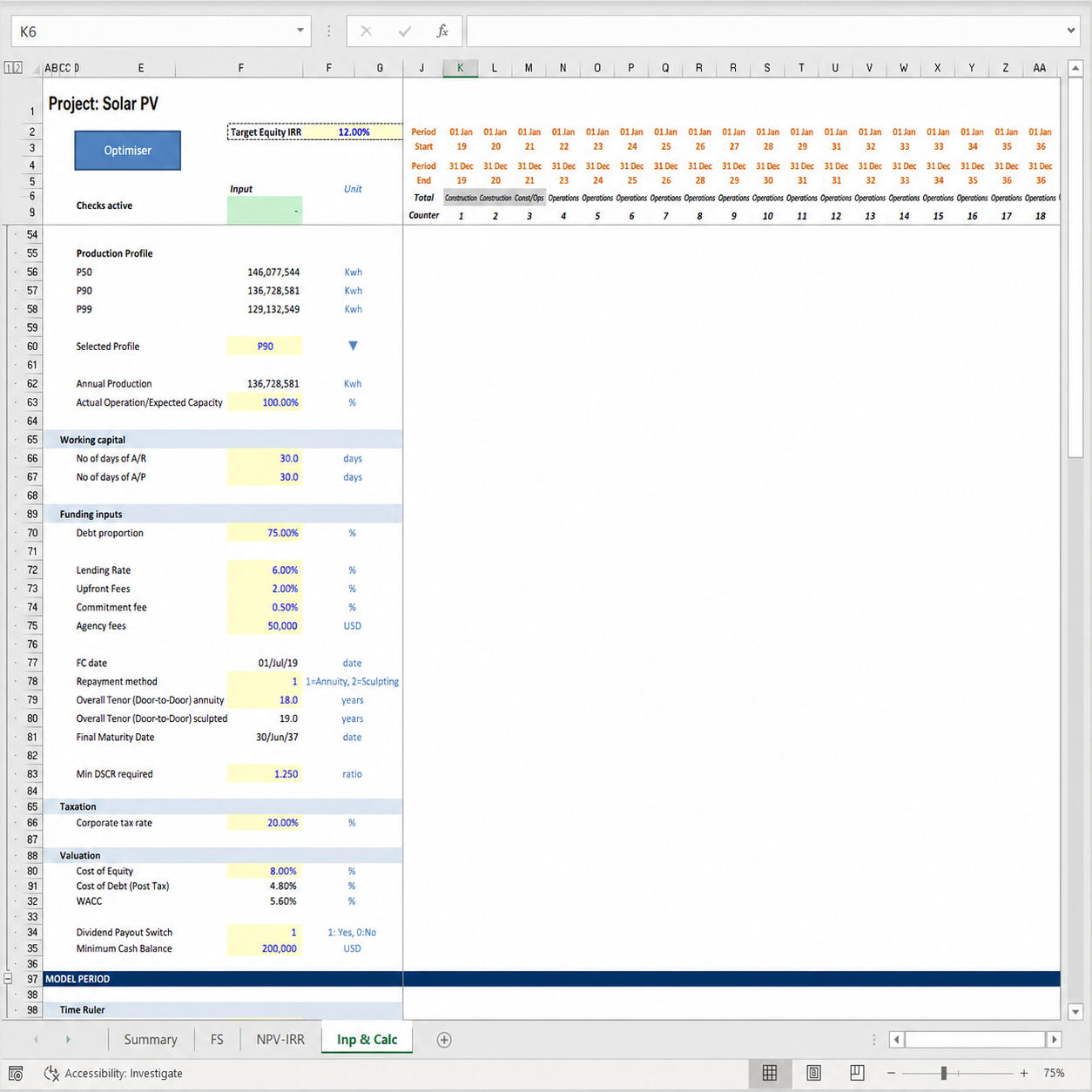
Funding requirement is calculated from total construction cost plus interest and fees during construction, then funded in a debt-equity ratio you define. Repayment runs on either an annuity profile — equated payments across the life of the loan — or a sculpted profile, where repayment follows the cash flow available at a defined Debt Service Coverage Ratio. Sculpting is what most project finance lenders actually use, and switching between the two shows immediately how much the repayment structure alone affects the tariff you must charge.
The model runs on a flexible annual timeline and can forecast up to seventy years across both construction and operations. That is far beyond what most templates offer, and it matters for solar assets whose economic life routinely runs well past the standard twenty-five year modelling convention.
A short horizon forces the tariff up, because capital has less time to be recovered. Being able to model the genuine asset life often makes the difference between a bid that wins and one that prices itself out.
Set the Equity IRR you need and the model finds the tariff — the direction that matters when you are bidding or negotiating.
See your required price alongside your production cost, and know the margin you are asking the market to accept.
Integrated statements, a cash waterfall and sculpted debt sit behind the tariff, so the number is defensible under scrutiny.
New to these metrics? Read an overview of the internal rate of return. For a model built to your own specification, see our project finance advisory services, or browse the full range of PPP and project finance templates.
Set your target Equity IRR and let the model solve for price — with a 70-year horizon, LCOE, sculpted debt, integrated statements and a full cash waterfall.