$120.00
A detailed, investor-ready food delivery financial model for a restaurant aggregator platform — with a user acquisition and retention funnel, a growing partner-restaurant base, and four distinct revenue streams, plus app-development and operation phases, break-even analysis and valuation, in one integrated Excel model.
A food delivery platform is a two-sided marketplace, and it earns nothing like a restaurant. There is no kitchen and no covers — there is a user base you acquire and must retain, a partner-restaurant network you build, and a set of monetisation levers layered on top: the commission you take on each order, the delivery fee you charge, the memberships you sell, and the advertising you serve. Model it like a food business and you miss the entire economic engine. Model it like the platform it is, and the levers become clear.
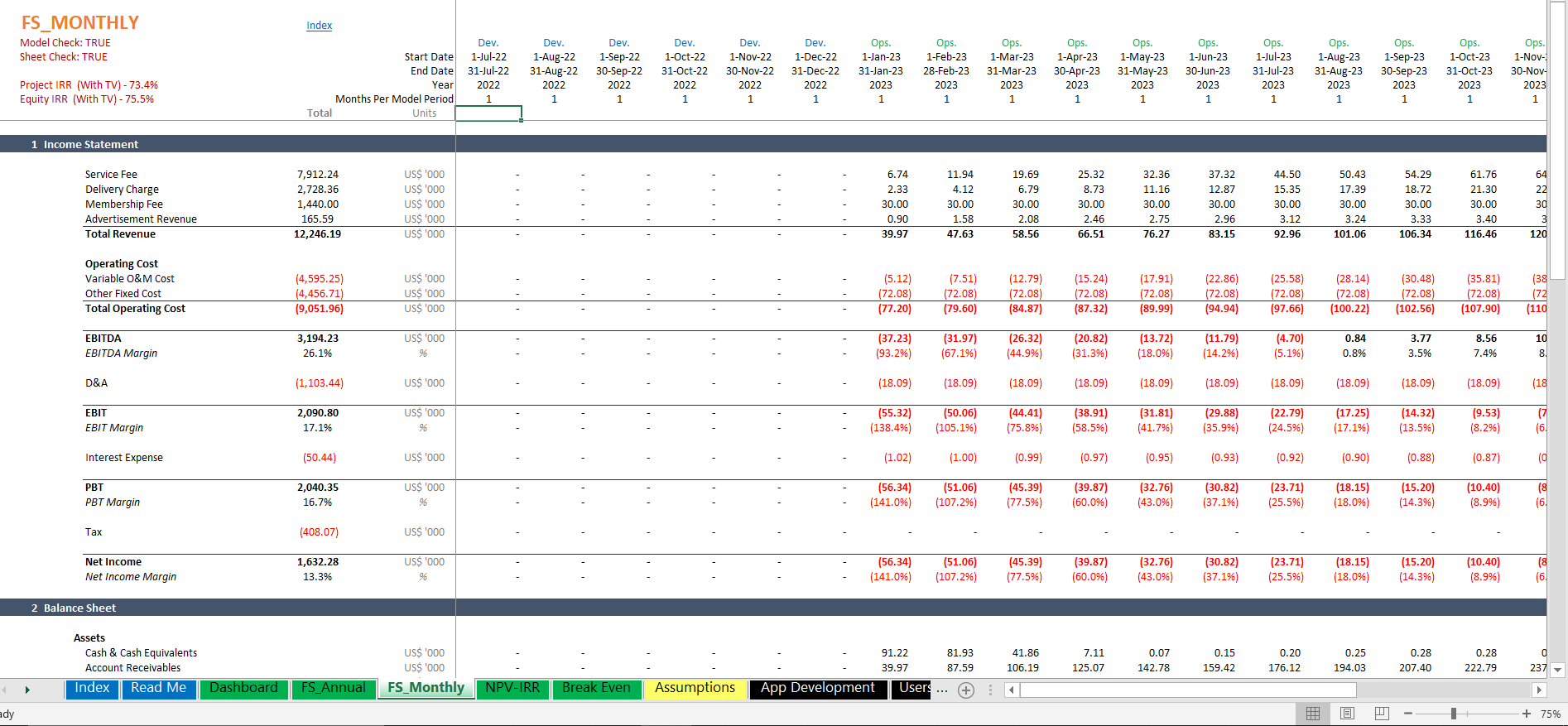
This food delivery financial model is built for exactly that. Revenue is driven from a user funnel — downloads, retention and active-user rates — and a partner base that grows month by month, monetised through four separate streams. App development is treated as the capitalised, amortised intangible it genuinely is, and the whole platform flows through to a complete, investor-ready output set.
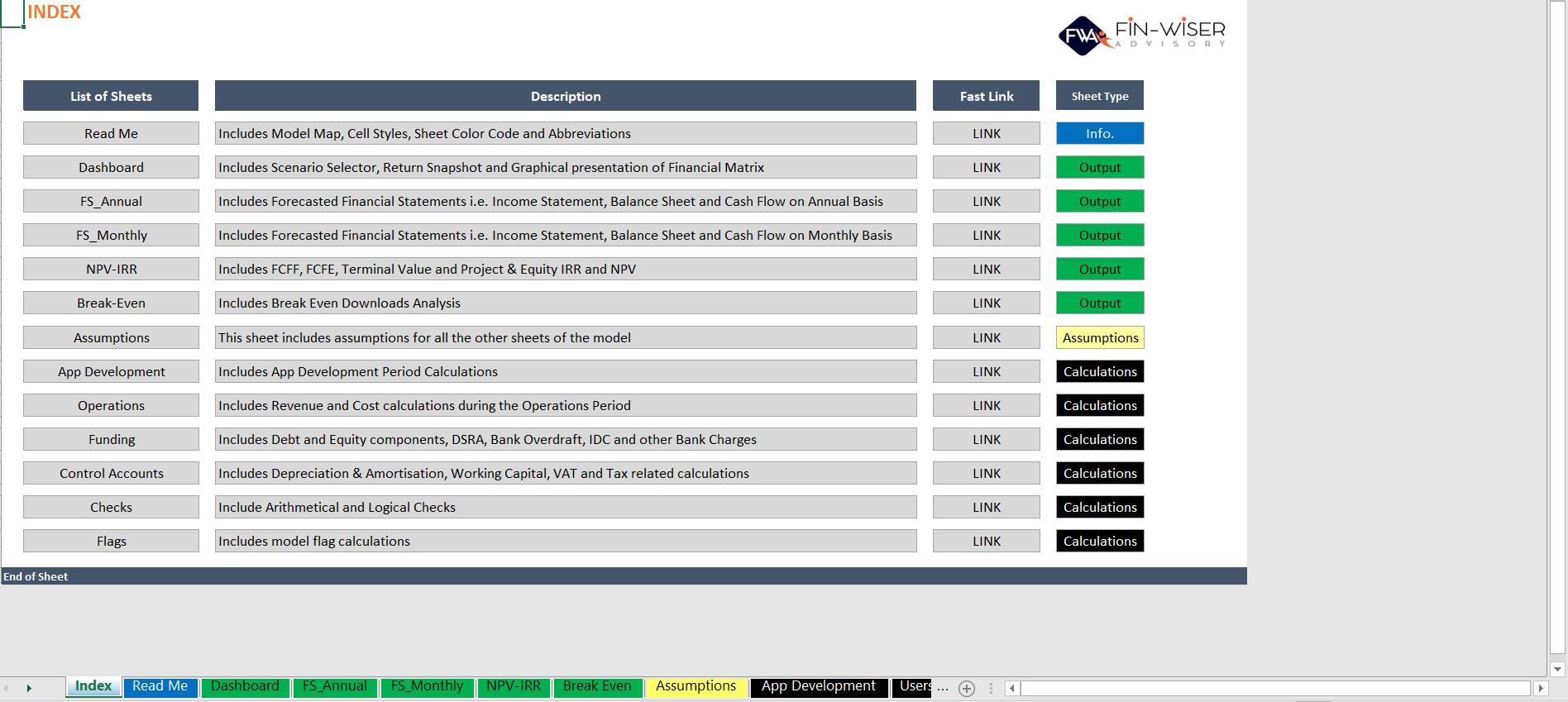
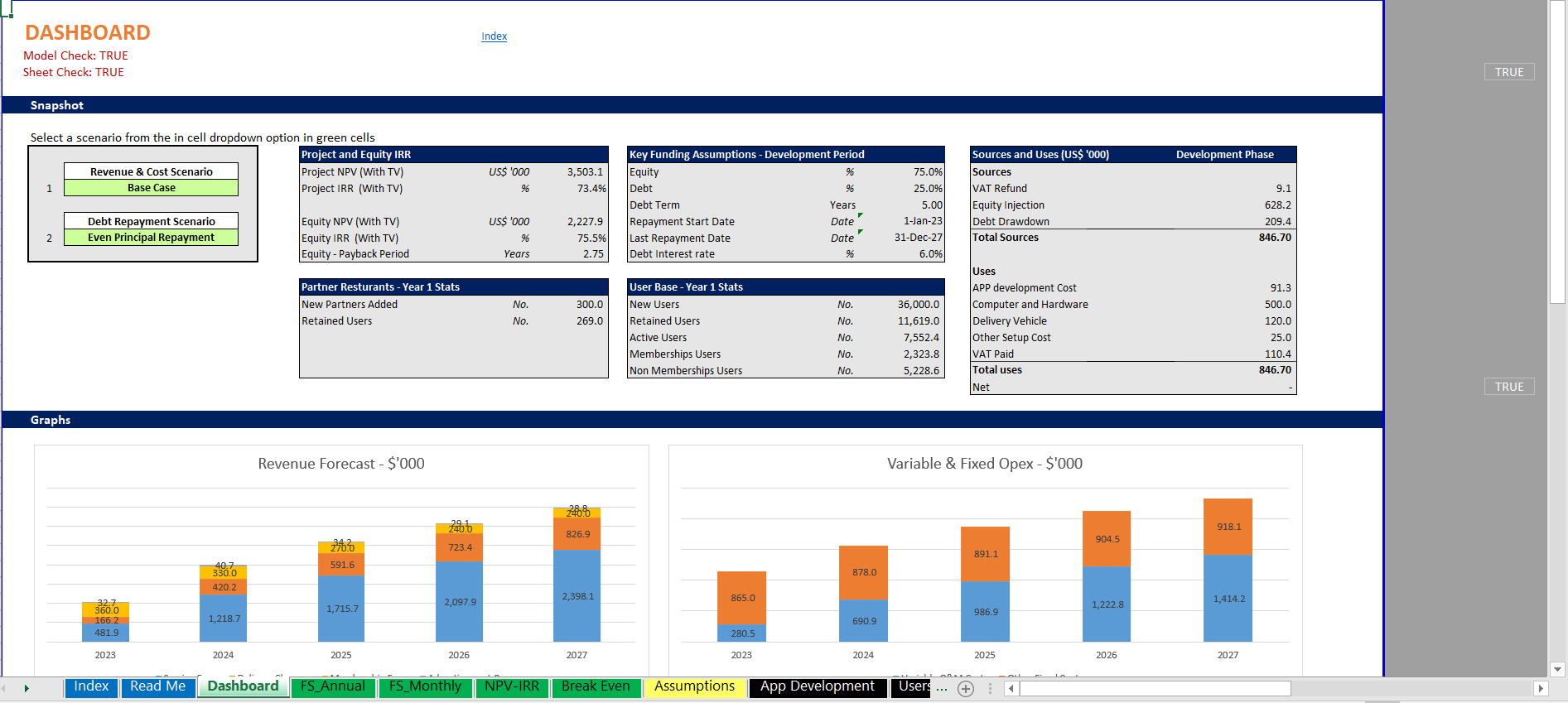
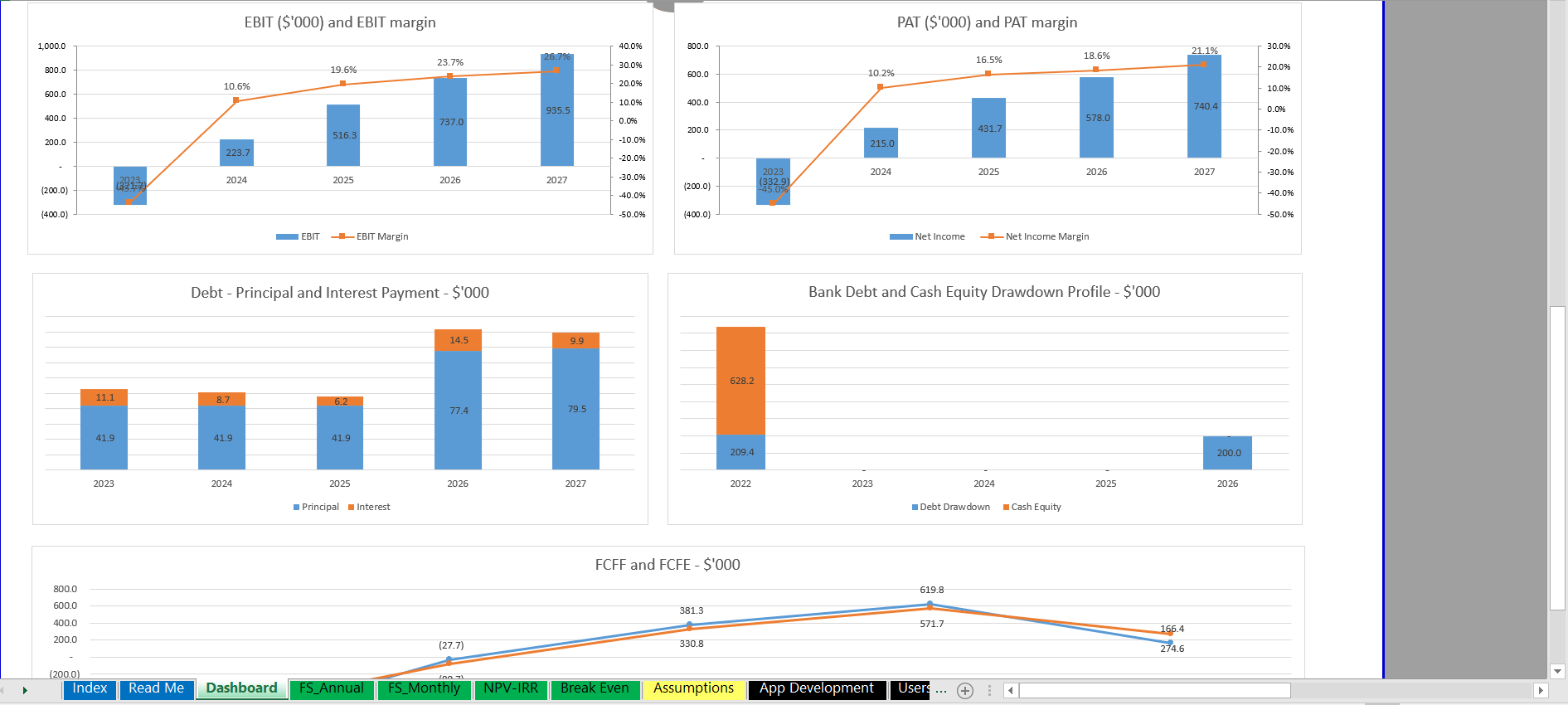
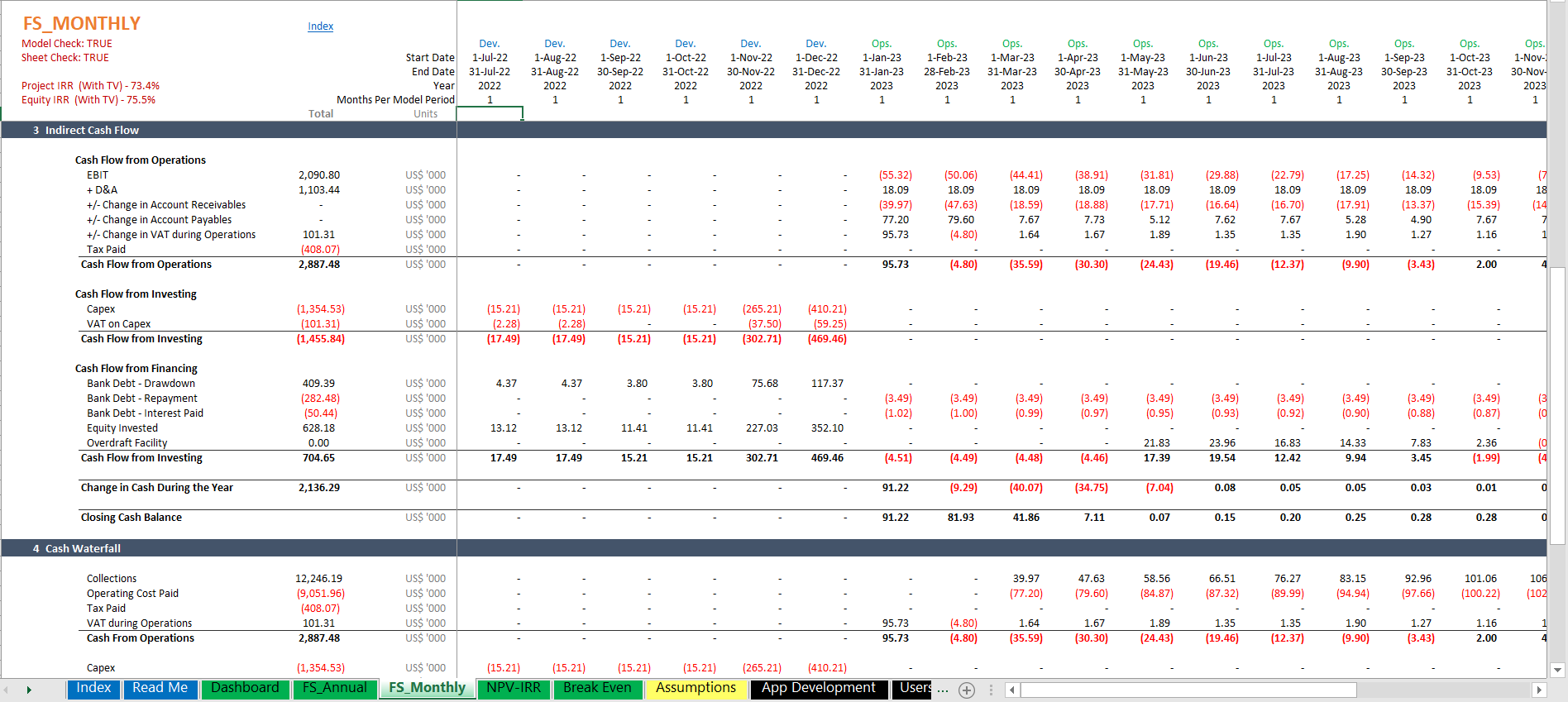
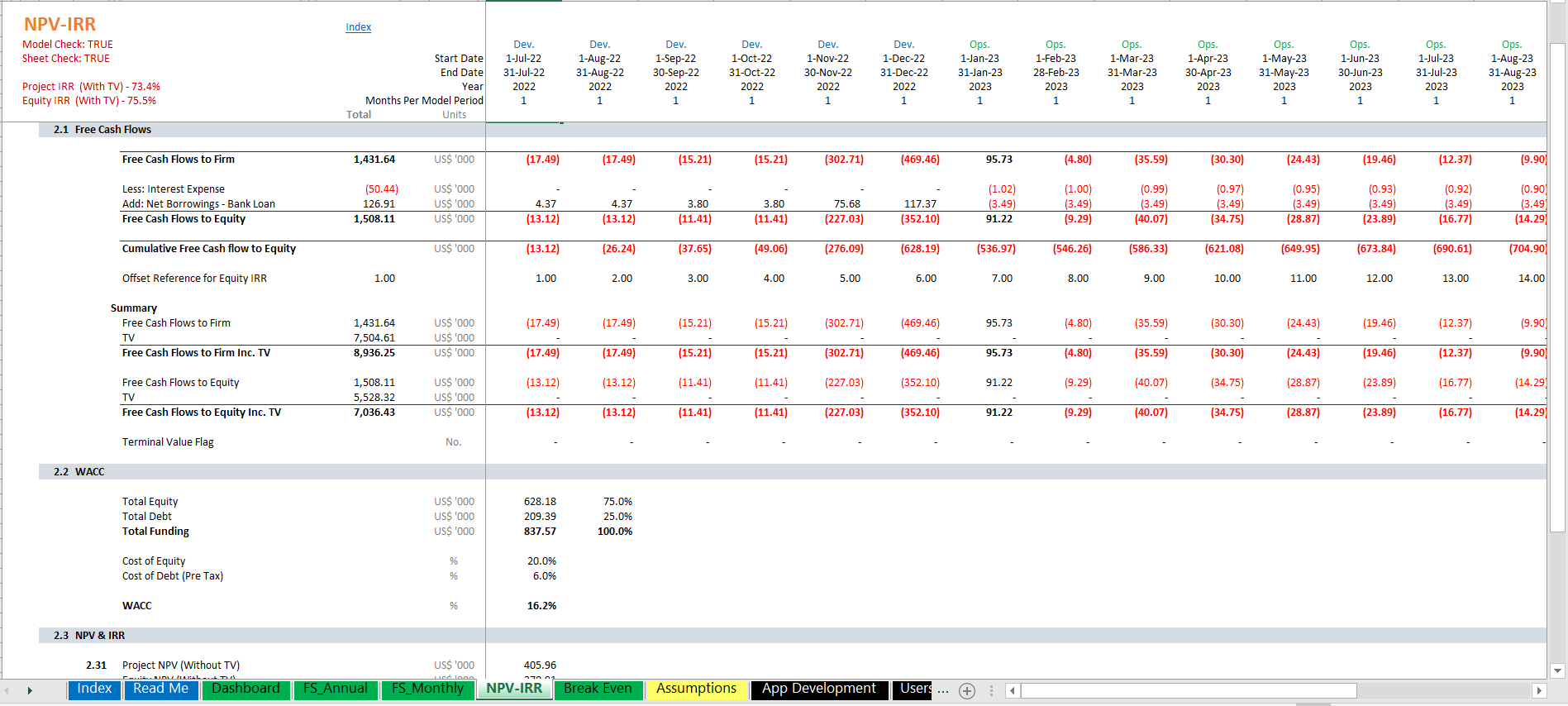
The output set is comprehensive: Project and Equity IRR and NPV (with and without terminal value), equity payback, break-even analysis, a DCF valuation and a fully linked dashboard.
The model builds its user base the way a platform actually grows one: app downloads and web users added each month, a monthly retention rate that compounds, and an active-user percentage applied to those retained. That funnel is the heart of the business — because in a marketplace, the gap between users acquired and users still ordering three months later is the difference between a platform that scales and one that quietly bleeds out.
On the supply side, partner restaurants are added month by month, each contributing a number of orders per day at an average order value. The two sides meet in the order volume that drives revenue — and because both are explicit inputs, you can test the classic marketplace questions: how much does retention matter versus acquisition, and how many partners you need to make the unit economics work.
The strength of this food delivery financial model is that it captures every way an aggregator makes money, separately:
Modelling these apart is what lets you tell a credible growth story. Early platforms lean on commission and delivery fees; mature ones increasingly monetise membership and advertising. Being able to show that shift — and quantify it — is exactly what a marketplace investor wants to see.
Every driver of the platform is an explicit, editable input. The assumptions cover:
| User Base | App downloads and web users per month, monthly retention rate and active-user percentage |
| Partner Restaurants | Partners added per month, orders per partner per day and average order value |
| Revenue Streams | Service fee percentage, delivery charge per order, membership take-up and price, and advertising by session, impressions and CPM |
| Rider Costs | Deliveries per rider per day, rider salary, fuel cost and other rider cost |
| Fixed Costs | Management salary, technical and other staff, rental, office expenses, SPV cost, insurance and security |
| App Development Capex | UI/UX, native Android and iOS, backend, admin panel, DevOps and project management, amortised as an intangible |
| Other Capex | Computer and hardware, delivery vehicles and other setup cost, with refresh capex at end of life |
| Financing | Debt-equity ratio, development and operations debt, term and repayment schedule |
Unlike a bricks-and-mortar model, the primary capital outlay here is software. The model treats app development cost — across UI/UX, native apps, backend, admin panel and DevOps — as a capitalised intangible, amortised over its useful life rather than expensed at once, with refresh capex to fund the rebuild every platform eventually needs. That accounting treatment matters: it’s what makes the early-year statements realistic and the valuation defensible to anyone who understands how software businesses are actually reported.
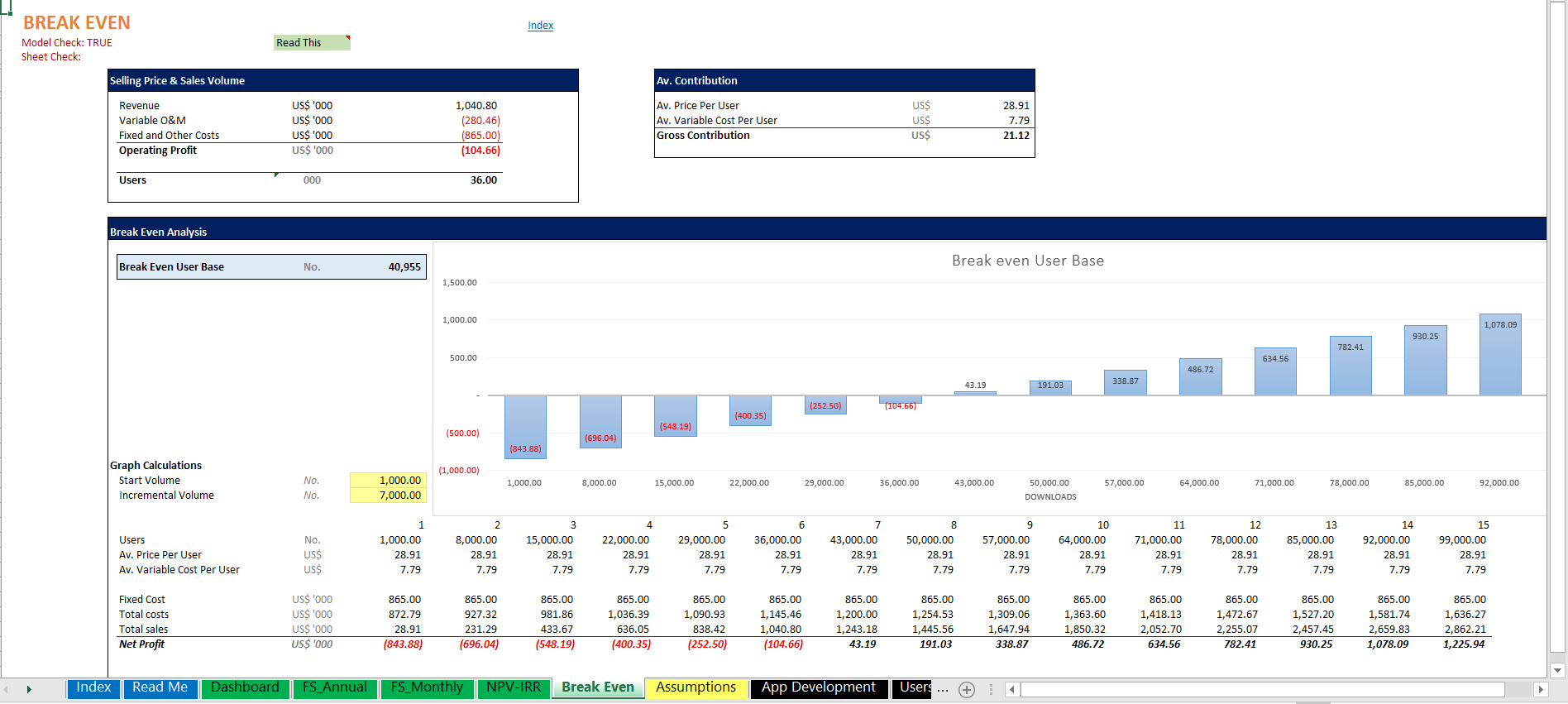
A dedicated break-even analysis shows when the platform’s revenue overtakes its cost — the milestone every marketplace investor probes, given how long two-sided businesses can take to turn. Alongside it, a full DCF valuation derives Project and Equity NPV and IRR both with and without terminal value, so you can see how much of the value depends on the long-run exit versus the years in view.
The model forecasts across development and operation on a monthly basis, with financial statements on both monthly and annual views. Every revenue and cost assumption can be entered across three scenarios and switched at the click of a button, so a conservative retention case sits beside an aggressive-growth one — and because the model uses no macros, every change flows through instantly.
A retention funnel on the demand side and a growing partner base on the supply side, meeting in order volume.
Commission, delivery, membership and advertising modelled apart, so you can show the monetisation shift over time.
App development capitalised and amortised as an intangible — the accounting a platform investor expects.
New to these metrics? Read an overview of internal rate of return. For a model built to your own specification, see our financial advisory services, or browse the full range of business plan Excel models.
A user funnel, partner network and four revenue streams, with app development amortised and a full valuation — five years of monthly projections, ready in Excel.