$99.00
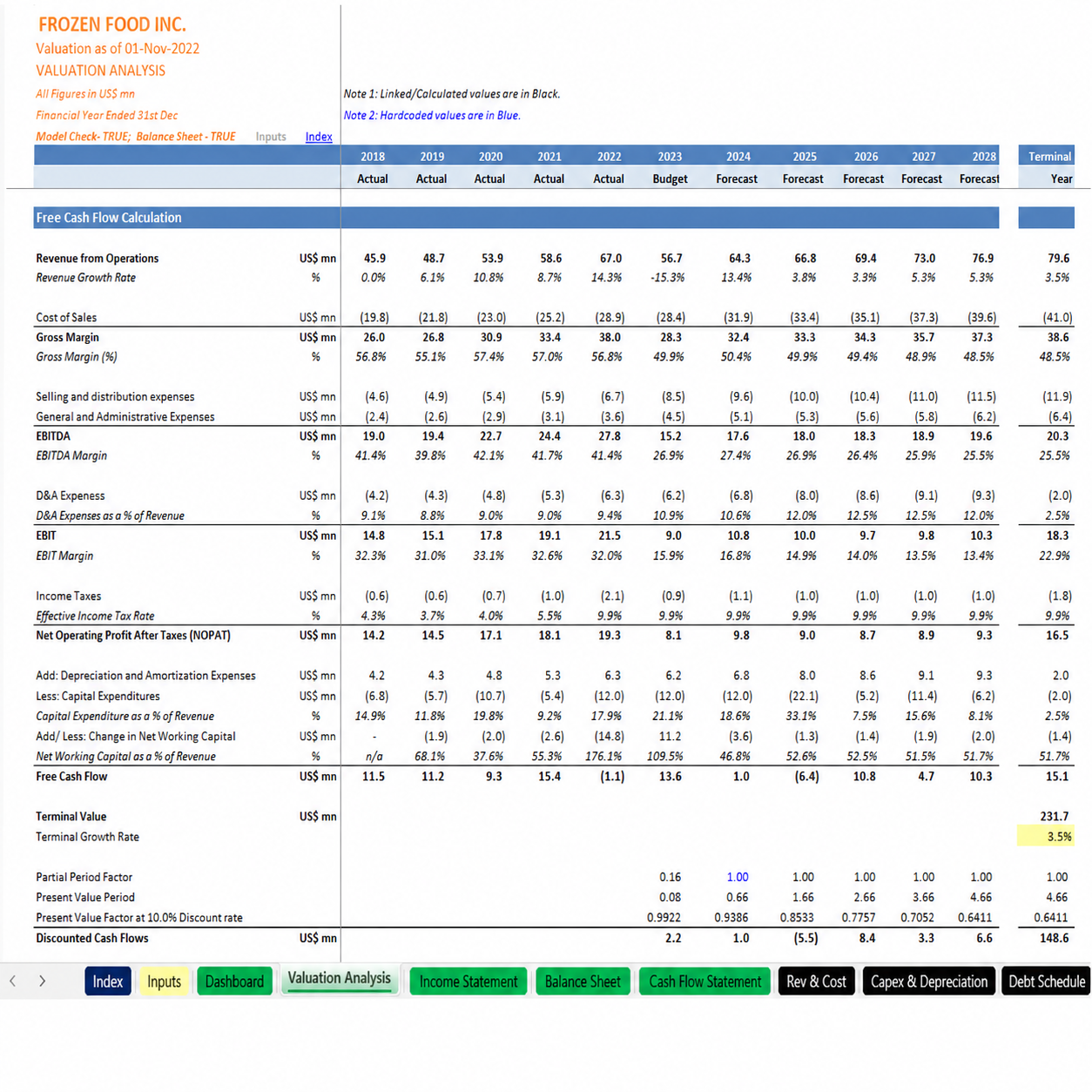
A detailed, user-friendly frozen food manufacturing financial model with three integrated financial statements and full DCF-based valuation, built entirely in Excel.
Frozen food manufacturing is a volume business with a cold chain running through the middle of it. Product lines differ in economics — french fries, cold cuts and ready meals carry different price points, production costs and margins — and transportation is not a rounding error when every unit has to stay frozen from factory to shelf. A model that rolls all of this into a single revenue line and a flat cost percentage tells you very little about where the money is actually made.
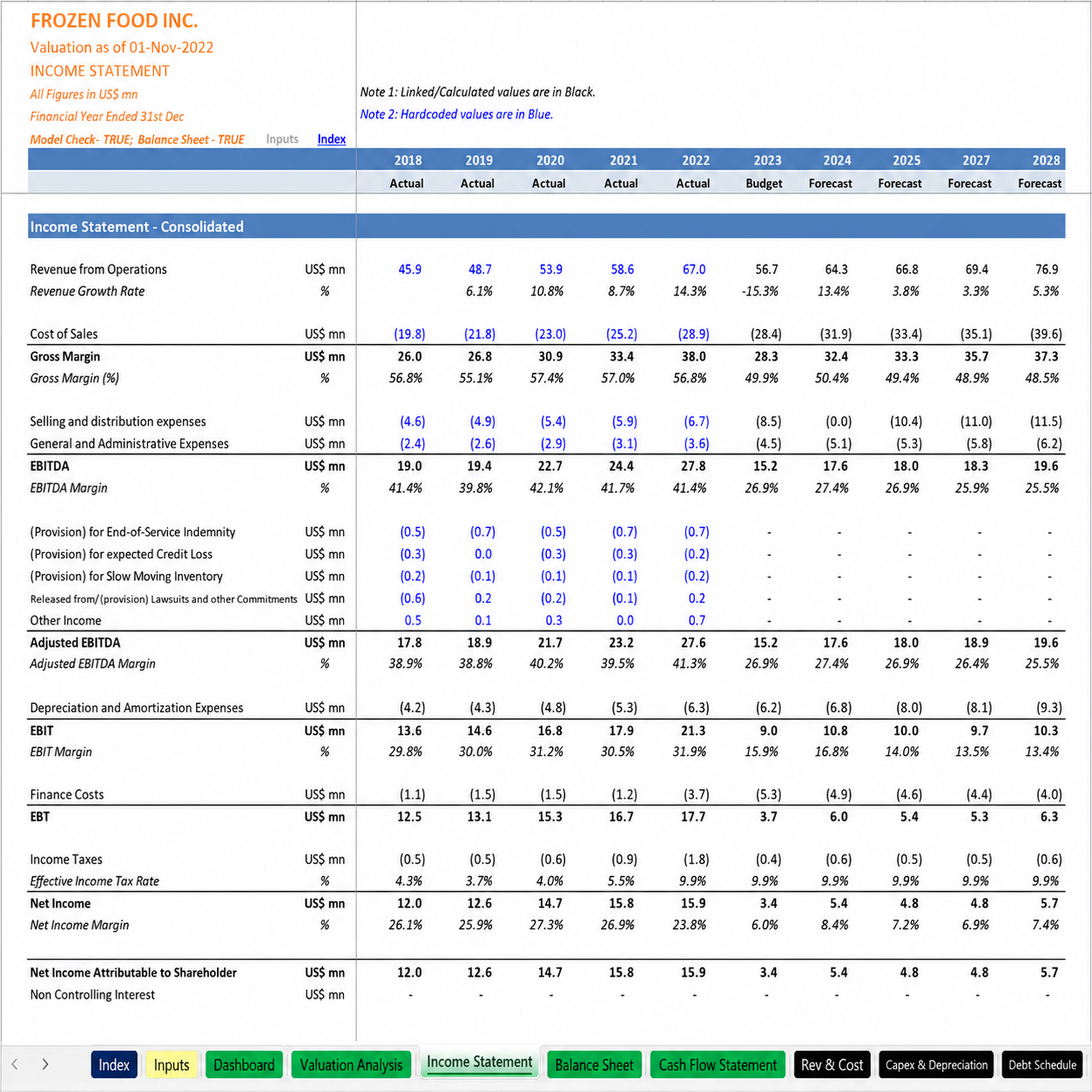
This model builds revenue from sales volume split by production type, multiplied by unit price, so you can model a shift in product mix and watch it flow through gross margin, working capital, tax and ultimately enterprise value. Production cost and transportation are kept separate — a distinction that matters a great deal when logistics and refrigeration are a genuine cost driver rather than an afterthought.
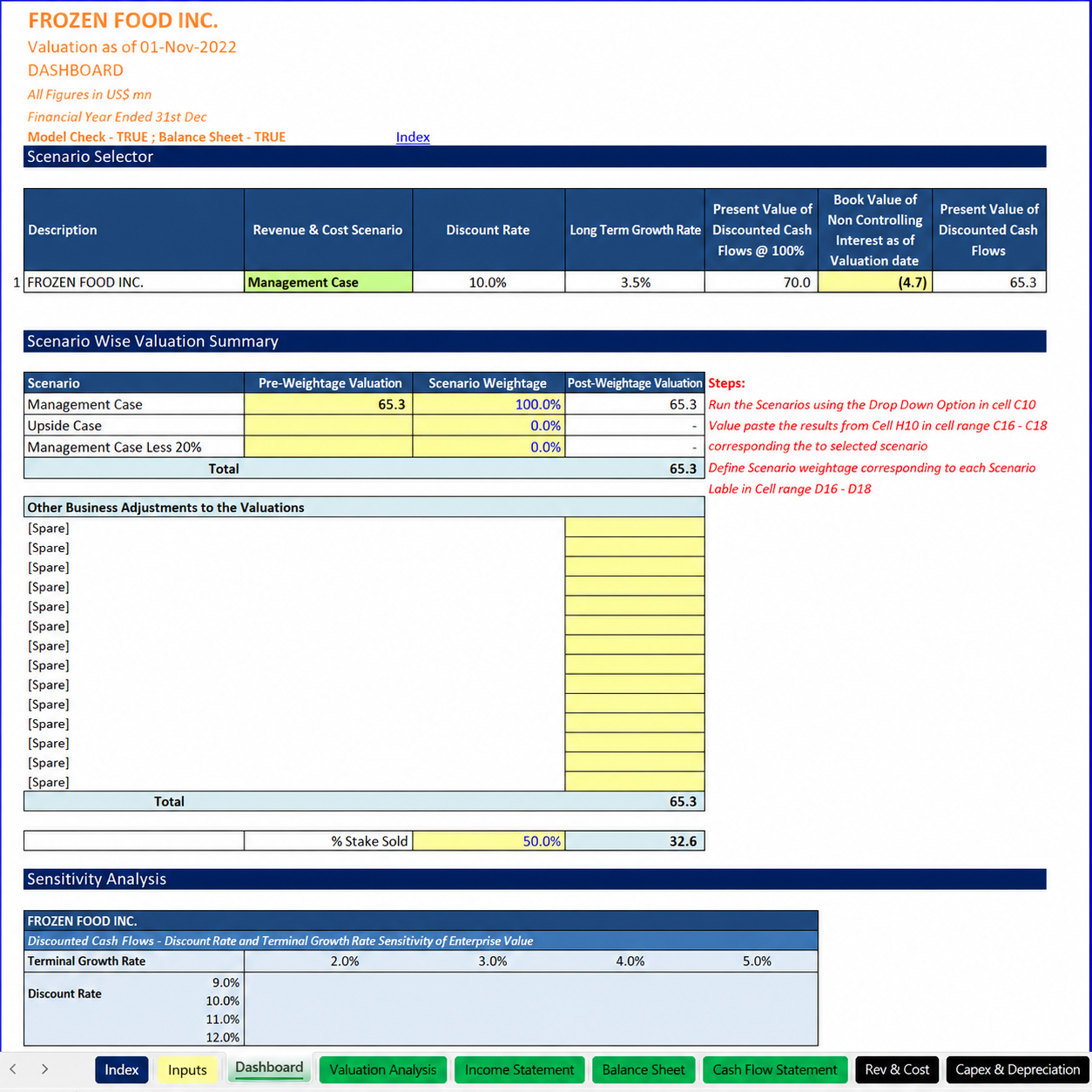
The model covers 3 years of historical data plus a 5-year forecast period. Valuation is derived from the forecast using discounted cash flow methodology, with terminal value and discount rate assumptions fully under your control.
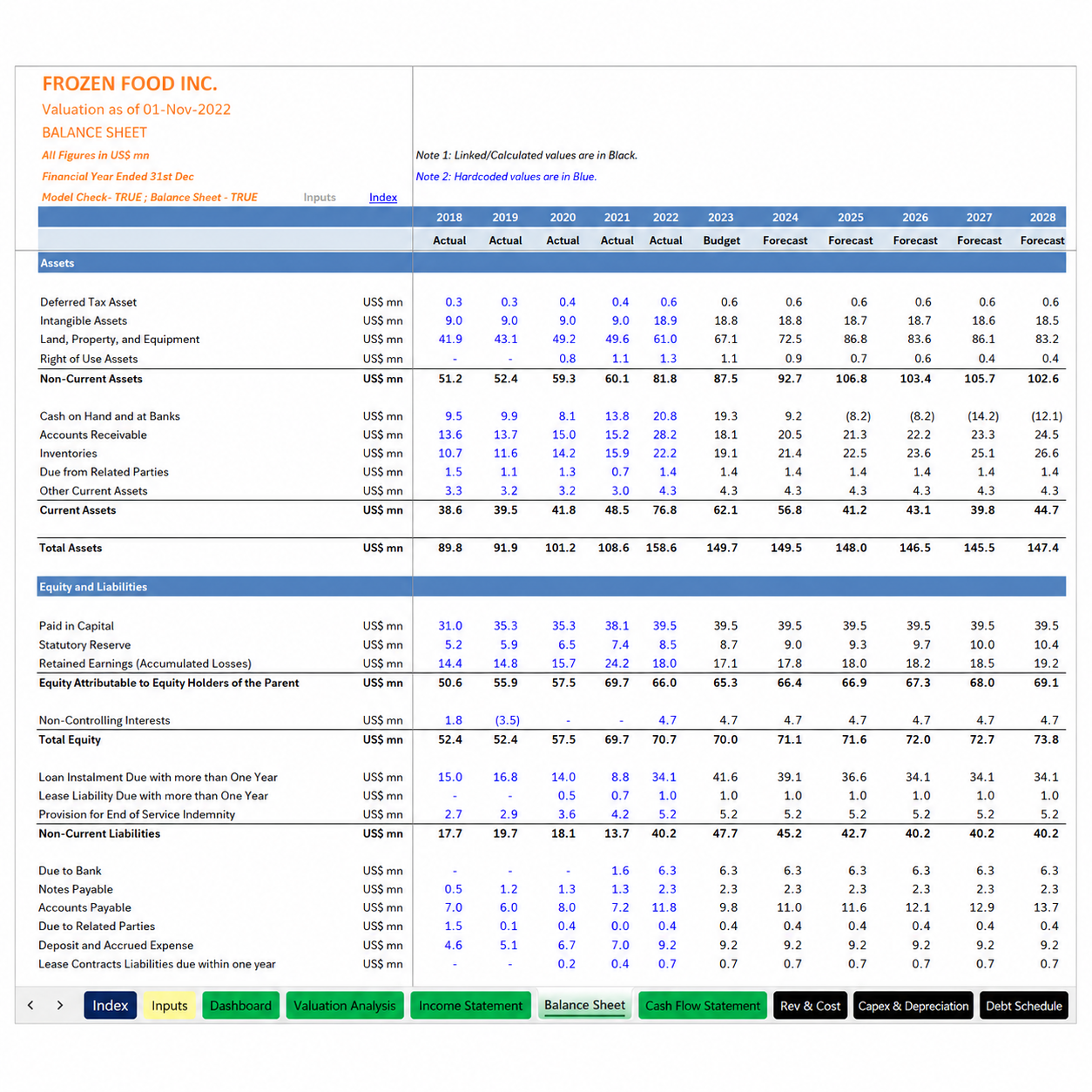
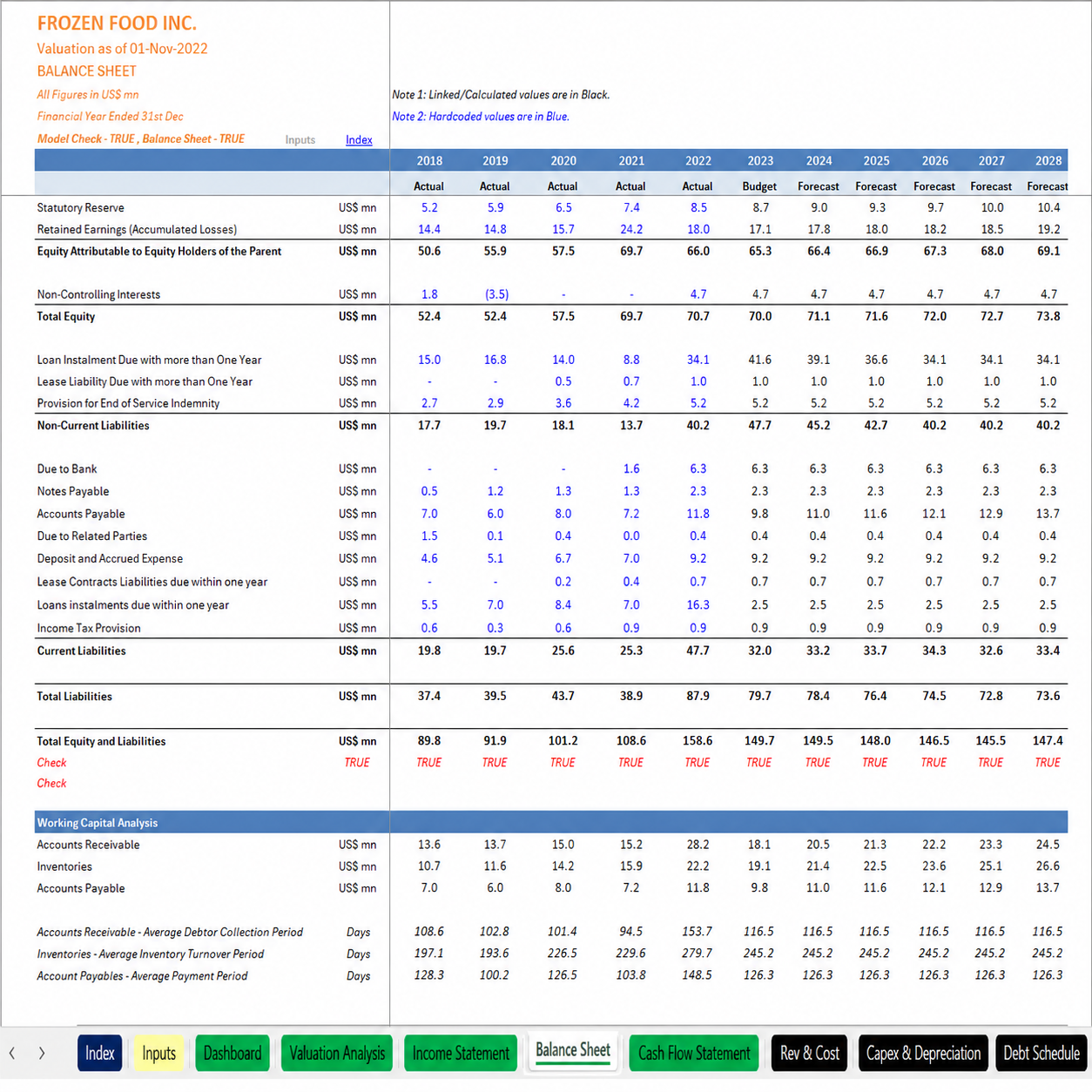
Working capital gets full treatment across receivables, payables and inventory. In frozen food this is not optional detail — inventory ties up real cash, shelf life constrains how much stock you can hold, and a model that ignores the working capital cycle will systematically overstate free cash flow and therefore the valuation.
Because product mix and unit pricing sit at the top of the model, you can test a premium-versus-value strategy directly: shift volume toward higher-margin lines, or model a price-led push into a competitive category, and see the valuation respond the way the business would.
A single assumptions tab drives the entire model. Change an input and every statement, ratio and valuation output updates automatically. The inputs cover:
| Revenue | Sales volume by production type and unit price |
| Costs | Production cost, transportation and other operating expenses |
| Income Tax | Effective and statutory tax treatment |
| Working Capital | Receivables, payables and inventory |
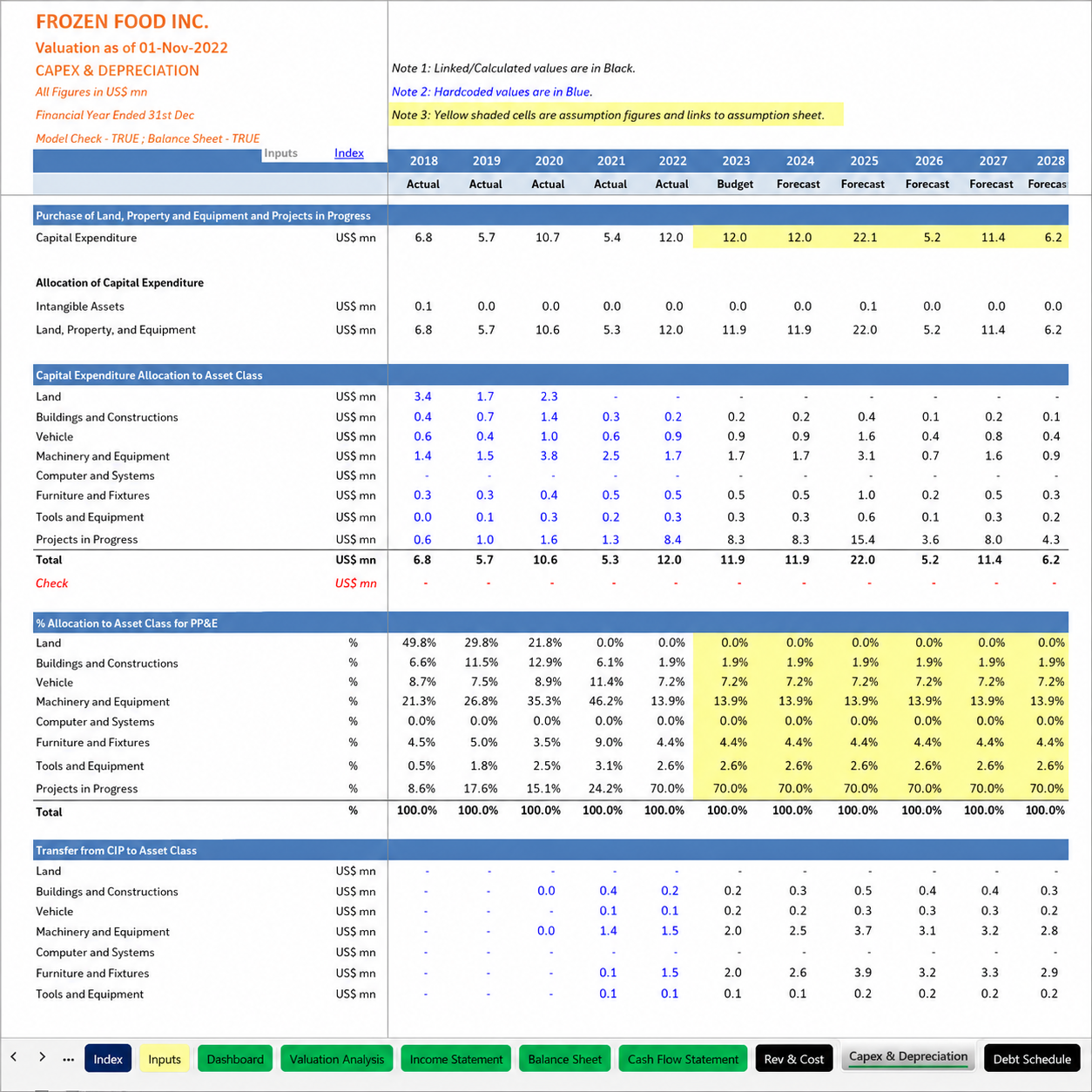
| Capex & Depreciation | Tangible and intangible assets, with full amortisation schedules |
| Debt | Long-term and short-term borrowings |
| Share Capital | Issue of new shares and reserve accounts |
| Dividends | Interim and final dividend, including tax impact |
| Interest | Interest income and interest expense calculations |
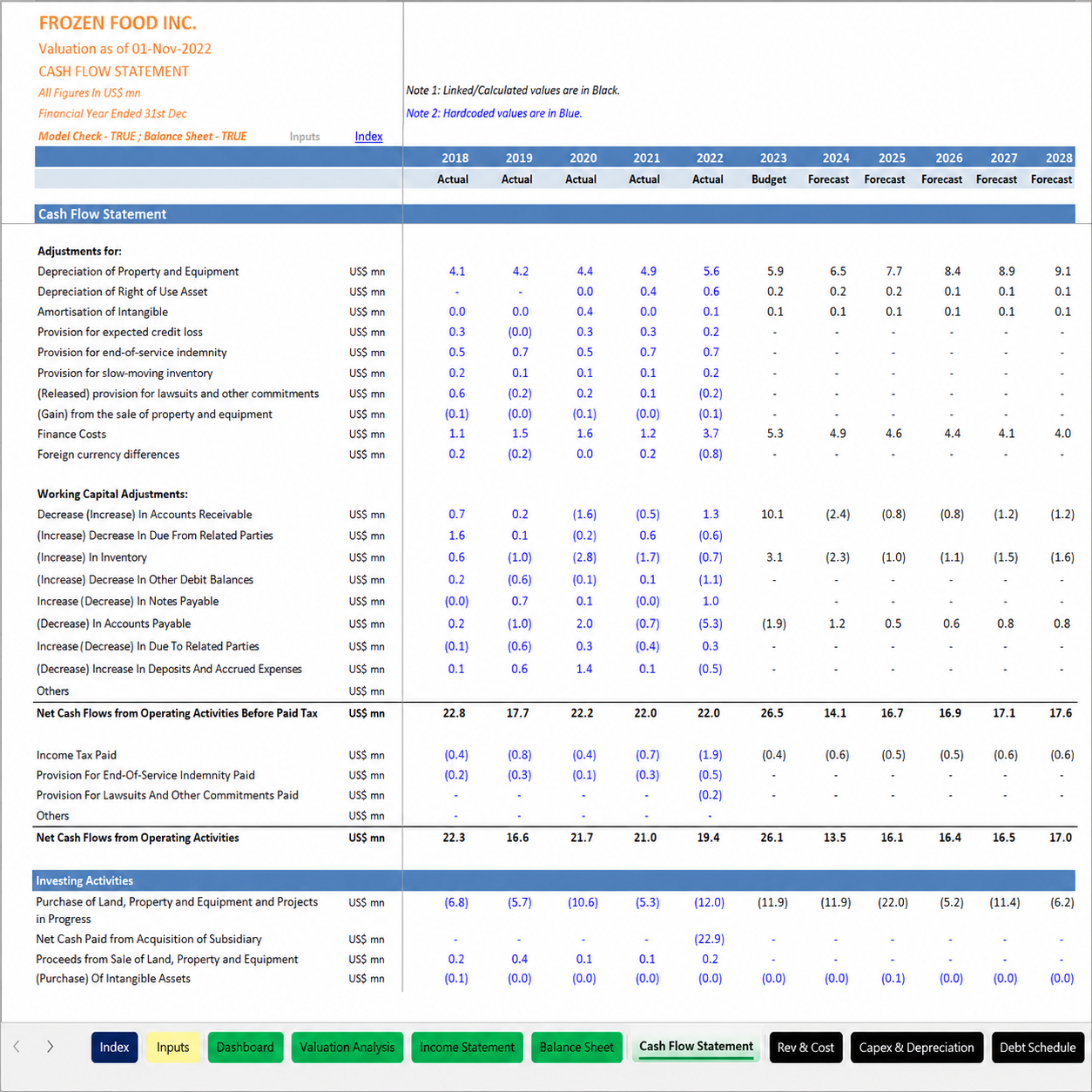
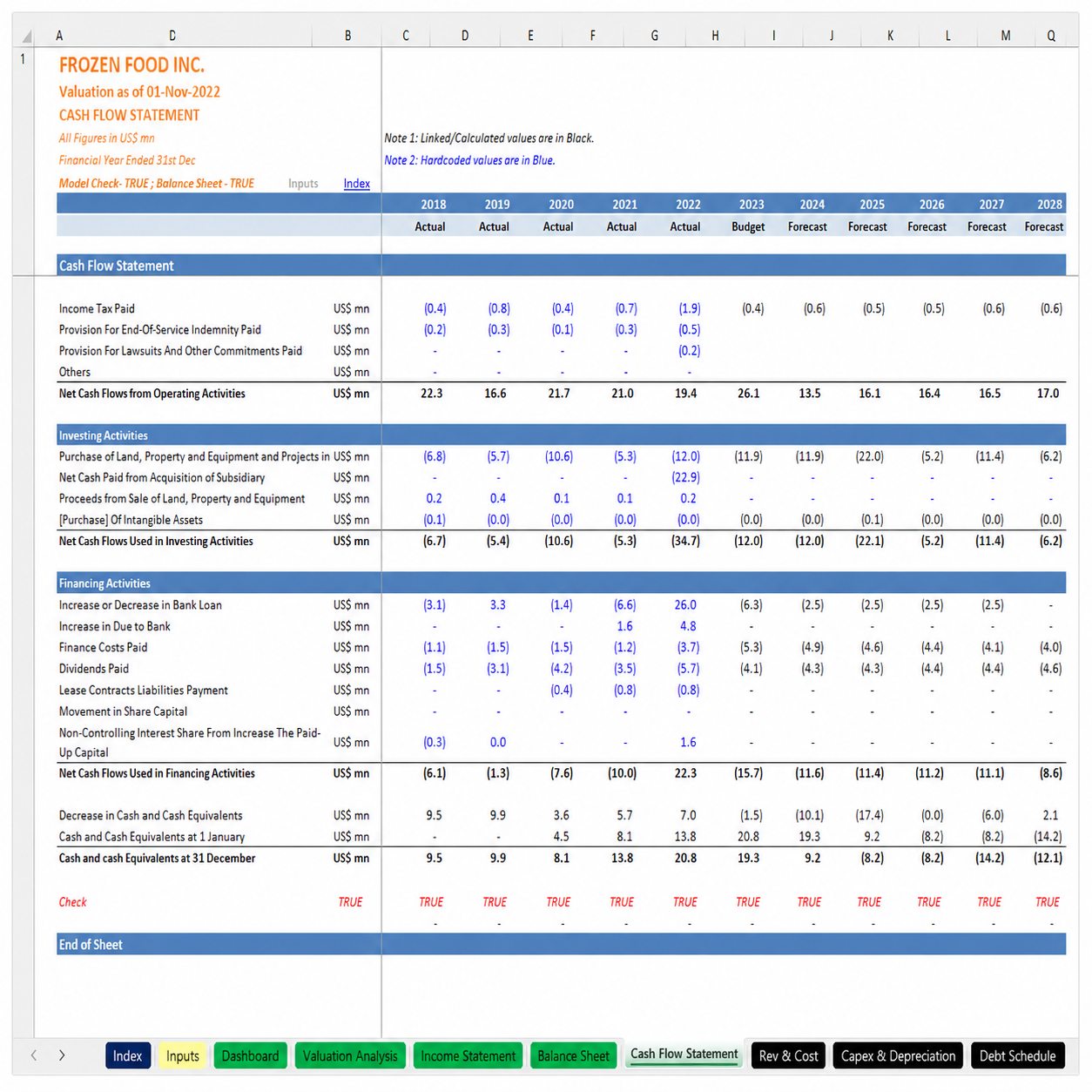
Comprehensive calculations run off your inputs to generate a complete set of outputs:
The analysis sheet goes considerably beyond a standard ratio summary, giving you the metrics an analyst would expect in a full valuation pack:
Price and EV-based valuation ratios, enterprise value, plus per-share data including EPS, DPS and FCFF per share.
Margin ratios, return ratios and a full DuPont decomposition of ROE into its operating, efficiency and leverage components.
Gearing ratios, liquidity ratios and coverage ratios for assessing balance sheet resilience.
Activity ratios covering asset and working capital efficiency, plus investment ratios for shareholder analysis.
Volume by production type and unit pricing drive revenue, so you can model a shift between product lines and see the valuation impact directly.
Inventory, receivables and payables are modelled properly — essential where cold storage and shelf life shape the cash cycle.
Every formula is visible and traceable. Audit the logic, adapt it to your own business, or use it to see how a proper DCF is constructed.
Need a model built to your own specification? See our financial advisory services, or browse the full range of DCF valuation templates.
Product-mix driven revenue, three years of history, a five-year forecast, DCF valuation and a complete ratio pack — ready to use in Excel.